The maritime sector is a significant contributor to the EU's greenhouse gas emissions, with 3% of the EU's total CO2 emissions coming from this sector in 2024. This translates to 145.2 million tonnes of CO2, which is equivalent to the annual emissions of around 30 million cars.
However, it's not just the overall emissions that are a concern - it's also where these emissions occur. Ports account for 5-7% of total maritime emissions, with 6.5 million tonnes of CO2 being released into the atmosphere in 2024 alone.
This is having a devastating impact on local communities and port residents, who are often exposed to poor air quality and increased health risks due to these emissions.
In addition to the environmental concerns, there's also an economic case for reducing emissions from shipping. The EU's Port Strategy aims to make ports key green energy hubs, which could create new opportunities for sustainable growth and development.
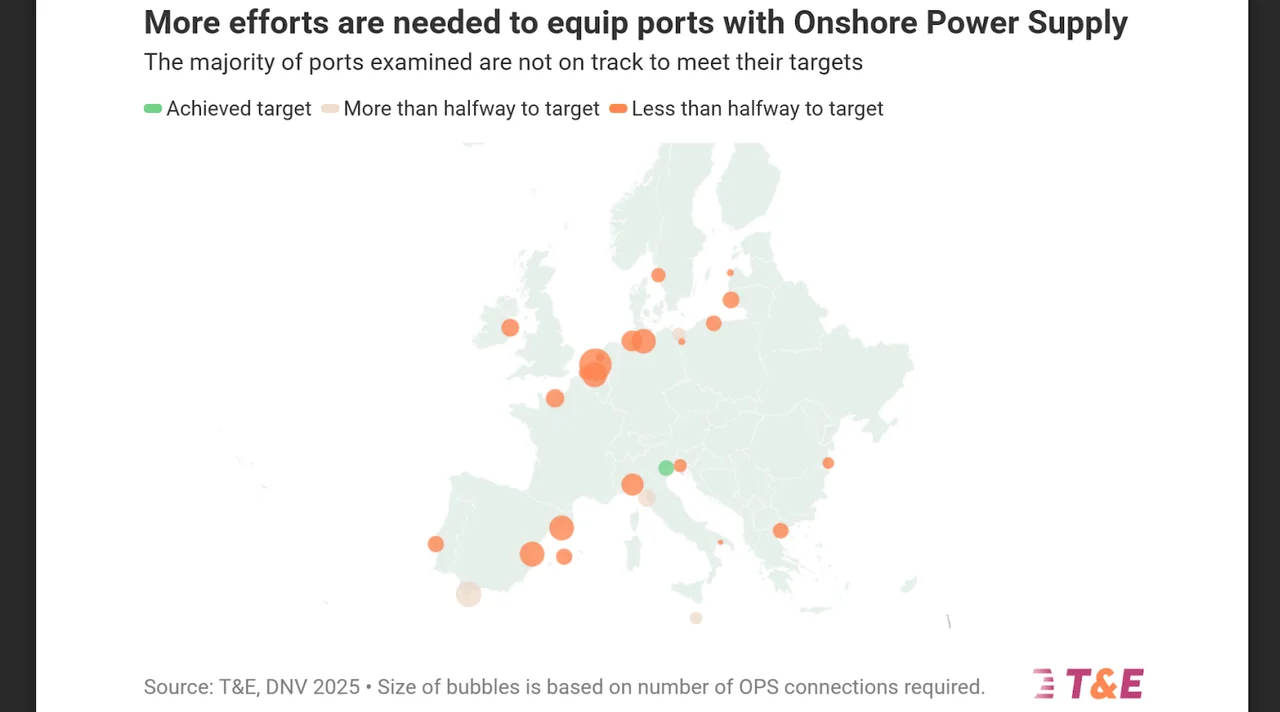
The Alternative Fuels Infrastructure Regulation is a crucial step in achieving this goal, requiring ports to provide shoreside electricity to specific vessels by 2030 and ensuring sufficient alternative fuel bunkering infrastructure is available across European waters.
However, the regulation falls short of enabling a complete decarbonisation of shipping. The electrification mandate only targets a portion of all ships, while the fuel mandate only mentions fossil gas infrastructure.
To make a meaningful impact, the EU needs to take a more comprehensive and ambitious approach to regulating emissions from shipping. This could include measures such as stricter emission limits, increased investment in alternative fuels technologies, and enhanced enforcement mechanisms.
By taking action now, the EU can not only reduce its greenhouse gas emissions but also support the development of new clean energy technologies, improve working conditions for seafarers, and strengthen Europe's energy security in an increasingly unstable world.
Ultimately, the success of this regulation will depend on the willingness of ports and shipping companies to adapt and invest in cleaner technologies. If we fail to act now, the consequences for our environment and public health will be severe.
The EU must take a proactive approach to decarbonizing its shipping sector, which currently accounts for 3% of the EU's total CO2 emissions.