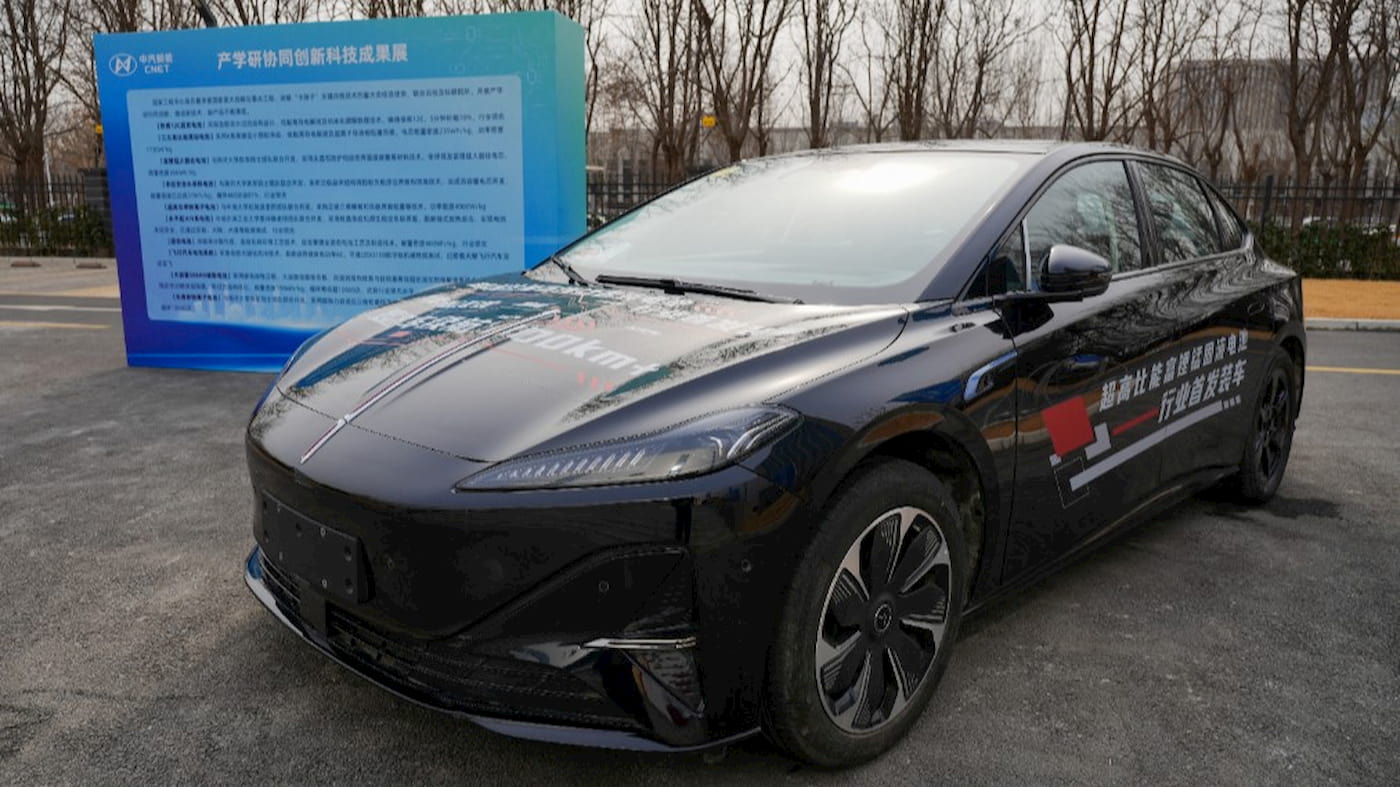
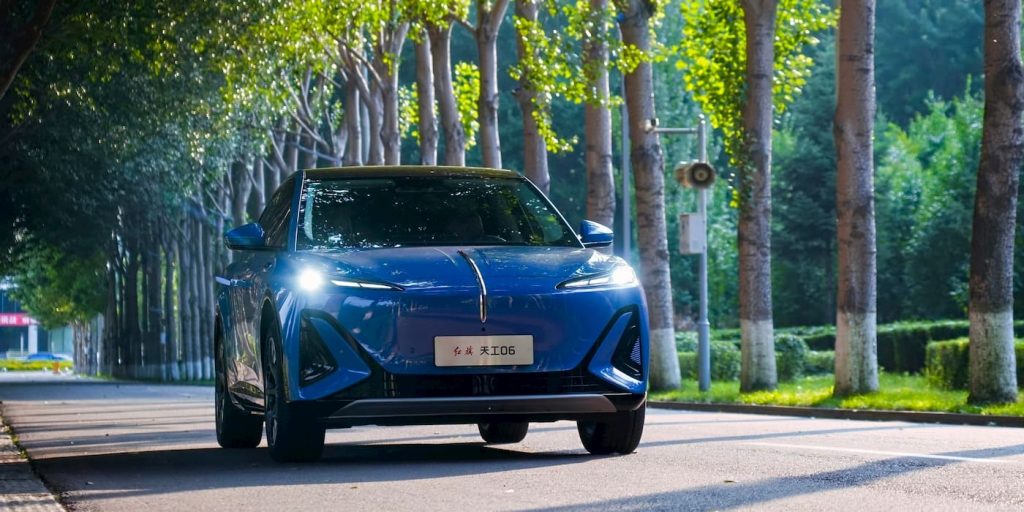
Automakers and battery manufacturers are racing to bring solid-state EV batteries to market, promising significant improvements in energy density, charging, and driving range. FAW Group, one of China's largest automakers, has made a breakthrough by installing the industry's first lithium-rich manganese semi-solid-state EV battery in a vehicle.
The ultra-high-energy-density battery developed by FAW's battery unit and a team led by Academician Chen Jun at Nankai University enables a CLTC driving range of over 1,000 km (620 miles). With several 'breakthroughs' in the past month, mass-producing solid-state batteries is becoming more feasible.
This development comes after SAIC Motors claimed to have delivered the world's first mass-produced semi-solid-state electric vehicle, the new MG4, in December, and Dongfeng Motors began testing a solid-state battery-powered prototype in extreme cold last month. China is dominating global EV battery sales, with CATL and BYD accounting for over 55% of global EV battery usage in 2025.
Automakers and battery manufacturers are not only seeking to stay ahead of the competition but also aim to develop safer, more efficient alternatives to traditional lithium-ion batteries. The timeline for small-scale production starting in 2027 or 2028, likely for higher-end models, and mass production beginning around 2030, aligns with what most are aiming for.
The development of semi-solid-state batteries is a significant step forward in the pursuit of more efficient and sustainable electric vehicles. As we move towards mass production, it will be crucial to address the challenges of scalability and cost-effectiveness while maintaining the safety and performance benefits offered by these innovative batteries.