
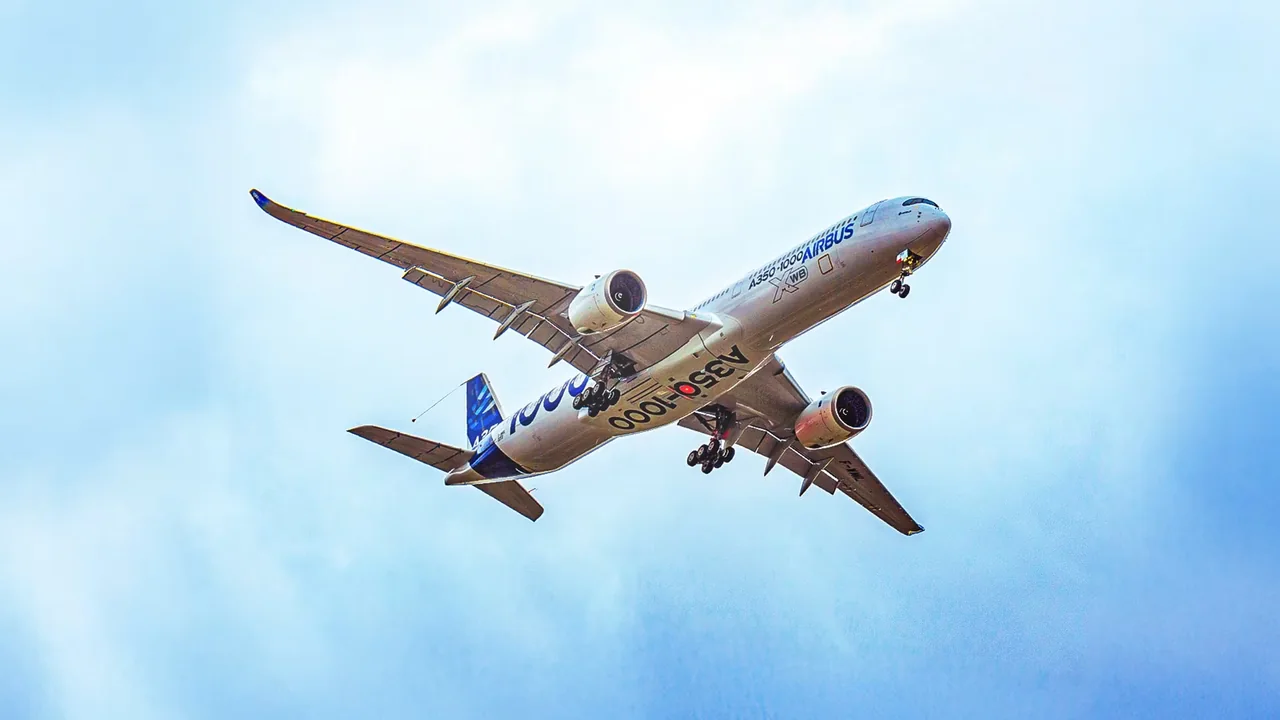
The recent viral video of a Cathay Pacific Airbus A350-1000 landing at London Heathrow sparked debate among aviation enthusiasts. However, the aircraft's design allows for a more nuanced understanding of its behavior during touchdown.
The A350-1000 is a massive aircraft, weighing over 520,000 lbs upon arrival, requiring sophisticated coordination between multiple systems to manage energy. The oleo-pneumatic struts, flexible carbon-fiber wing structure, and bogie geometry work in tandem to ensure safe landing even at higher-than-ideal descent rates.
The misconception about firm landings is that they are inherently violent or catastrophic. However, the A350-1000's design allows for a 'firm' touchdown without structural damage, as long as the G-load limits are not exceeded.

A hard landing, by definition, exceeds the manufacturer's certified G-load limits. Most viral hard landings are actually firm touchdowns where the landing gear's compression is visually dramatic but well within its mechanical envelope.
The oleo-pneumatic shock absorber supports the aircraft upon touchdown, absorbing energy through a multi-stage sequence. This design prioritizes pilot safety over mechanical perfection.
Airbus and Collins Aerospace engineers have crafted a system that can handle punishing landings, turning them into manageable thermal events. This engineering feat is a testament to modern aviation's emphasis on safety.

The A350-1000's landing gear system is designed to move, flex, and heat up in response to impact. Understanding this behavior can help demystify the often-perceived violence of large aircraft landings.
By prioritizing pilot safety, the A350-1000's design allows for a more nuanced understanding of its behavior during touchdown. This approach has significant implications for future aircraft development and aviation safety regulations.
The A350-1000's resilience is a result of years of research and collaboration between engineers at Airbus and Collins Aerospace. Their work has set a new standard for aircraft design, emphasizing the importance of safety in modern transportation.

As the aviation industry continues to evolve, understanding the intricacies of large aircraft landings will be crucial in developing safer, more efficient transportation systems.
The A350's resilience is a testament to modern engineering, prioritizing pilot safety over mechanical perfection.