
The use of metric units for engine displacement is a widespread practice globally, but it's not without its exceptions. In America, automakers still often describe engines in cubic inches, even in their marketing materials.
Despite the shift towards metric standards over 40 years ago, cubic inches have maintained a niche presence in certain markets. This phenomenon can be attributed to the fact that many American muscle cars and motorcycles continue to prioritize nostalgic branding over purely technical specifications.
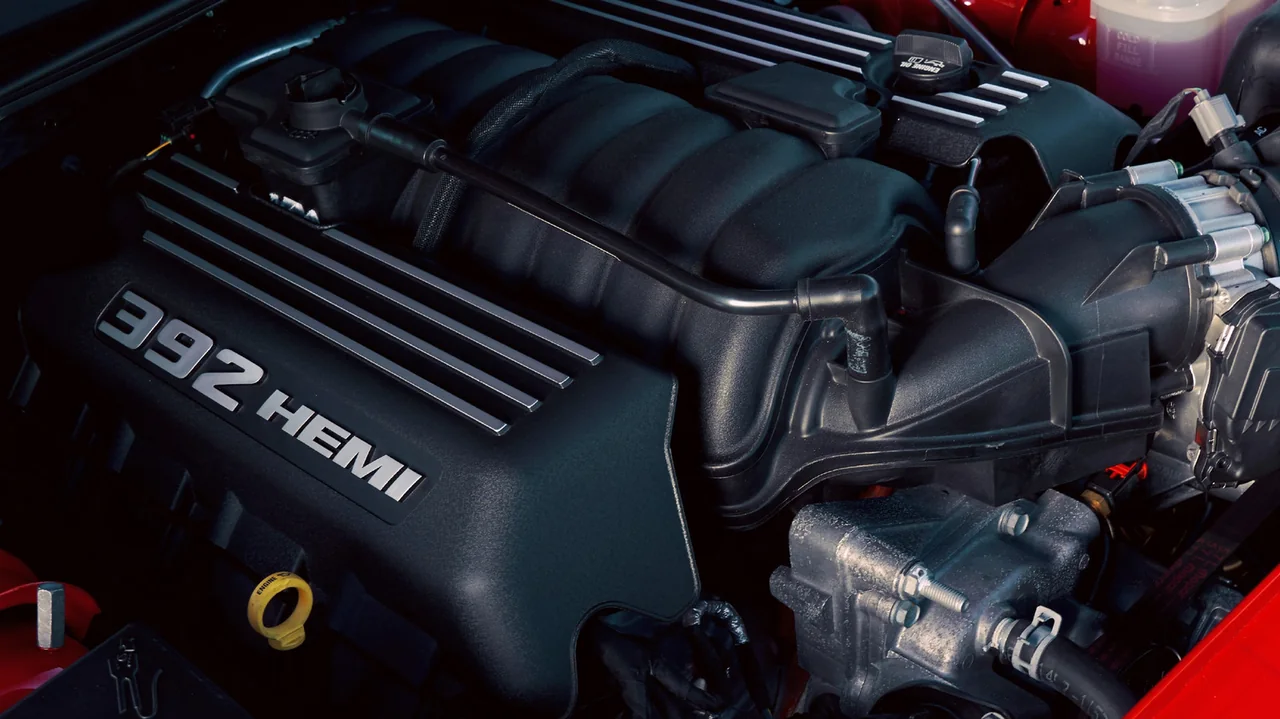
The most notable example of an automaker still using freedom units is Stellantis, which has made it a staple of its Mopar performance catalog. The 6.4-liter crate Hemi engine, for instance, is sold as a '392' and was fitted in Dodge's Charger and Challenger Scat Pack for years.
Ford Performance also follows this trend, prominently featuring cubic inch displacements in its crate engine listings. The 347 and 460 engines, for example, are marketed with headline displacements that reflect their cubic inch measurements.
Chevrolet takes it a step further by organizing its entire crate engine universe around freedom units. The company's performance catalog features big-block offerings like the 572 crate engine, which boasts a displacement of 572 cubic inches.
The use of freedom units is not limited to cars alone. Motorcycles also continue to feature cubic inch displacements in their specifications, with Indian Motorcycle describing its Scout Sixty as having a '60 cu-in liquid-cooled engine' and Harley-Davidson listing the Fat Boy cruiser with only its cubic inch displacement ('117 cu in.')

The persistence of freedom units reflects the enduring appeal of nostalgia and branding in the automotive industry. In America, where muscle cars are an integral part of the national identity, these displacements serve as a tangible connection to the past.
Furthermore, the use of freedom units allows automakers to tap into the emotional resonance of their brand heritage. By emphasizing cubic inch displacements, manufacturers can create a sense of authenticity and tradition that resonates with enthusiasts.
The fact that freedom units persist in American performance and motorcycle scenes is a testament to the industry's ability to adapt to changing trends while remaining true to its roots.
As the automotive industry continues to evolve, it will be interesting to see whether this trend towards nostalgia-driven branding persists or if metric units become the sole standard for engine displacement.
The persistence of freedom units reflects the enduring appeal of nostalgia and branding in the automotive industry.