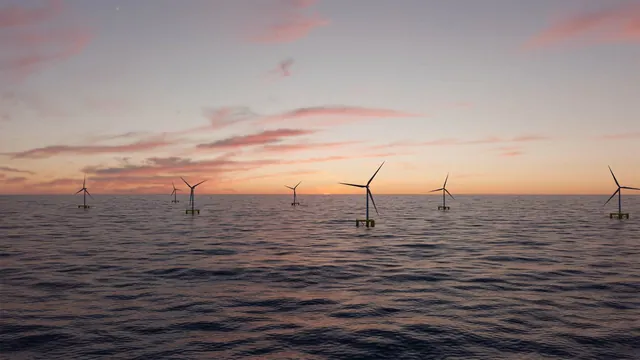

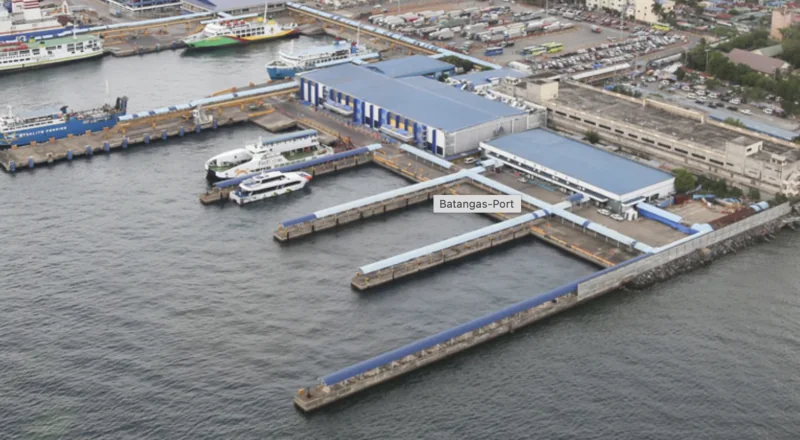
The country's most advanced offshore wind zones are beginning to reveal a hard truth about the energy transition: the real starting point is not generation, but logistics. And in offshore wind, logistics means ports.
Despite more than 40 gigawatts of awarded Offshore Wind Energy Service Contracts and growing investor interest, the Philippines has yet to move a single project into offshore construction. Turbines have not been installed. Foundations have not been laid.
The Global Wind Energy Council's 2026 study makes this point implicitly but repeatedly. San Miguel Bay and the Guimaras Strait were not chosen only for their wind resource. They were selected because they already have identifiable port pathways.
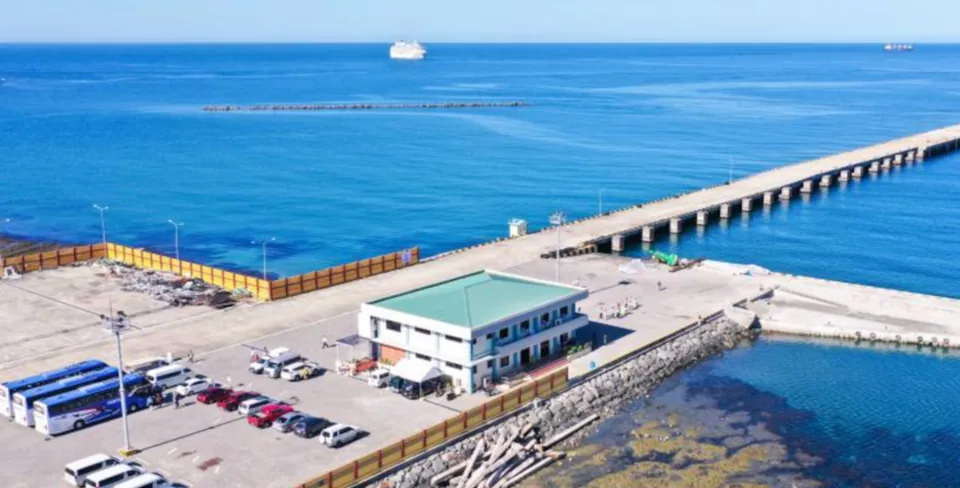
In Camarines Norte, Pambuhan Port is being positioned as a potential offshore wind hub through government-led planning. In the Guimaras corridor, Pulupandan is emerging as a privately driven logistics base supported by nearby industrial centers.
Offshore wind turbines are among the largest machines ever deployed in the energy sector. A single unit can exceed 15 megawatts, with blades longer than a football field and components that cannot be transported or assembled using conventional port infrastructure.
Building offshore wind at scale requires specialized 'marshaling ports' capable of handling heavy-lift operations, deepwater berths, vast laydown areas, and continuous assembly workflows.
In effect, the port becomes the factory floor of offshore wind. This is where the Philippines faces its first real bottleneck.
The country does not yet have a fully developed offshore wind port capable of supporting turbine assembly and large-scale deployment. Existing ports were not designed for this type of industrial activity.
Retrofitting them — or building new ones — takes years, significant capital, and coordinated policy support.
Offshore wind is often framed as a clean energy technology. But in reality, it is also a heavy industrial system. And the transition to offshore wind is as much about building new coastal industrial ecosystems as it is about generating zero-carbon electricity.
The Philippines' offshore wind transition is hindered by a lack of developed ports capable of supporting turbine assembly and large-scale deployment.