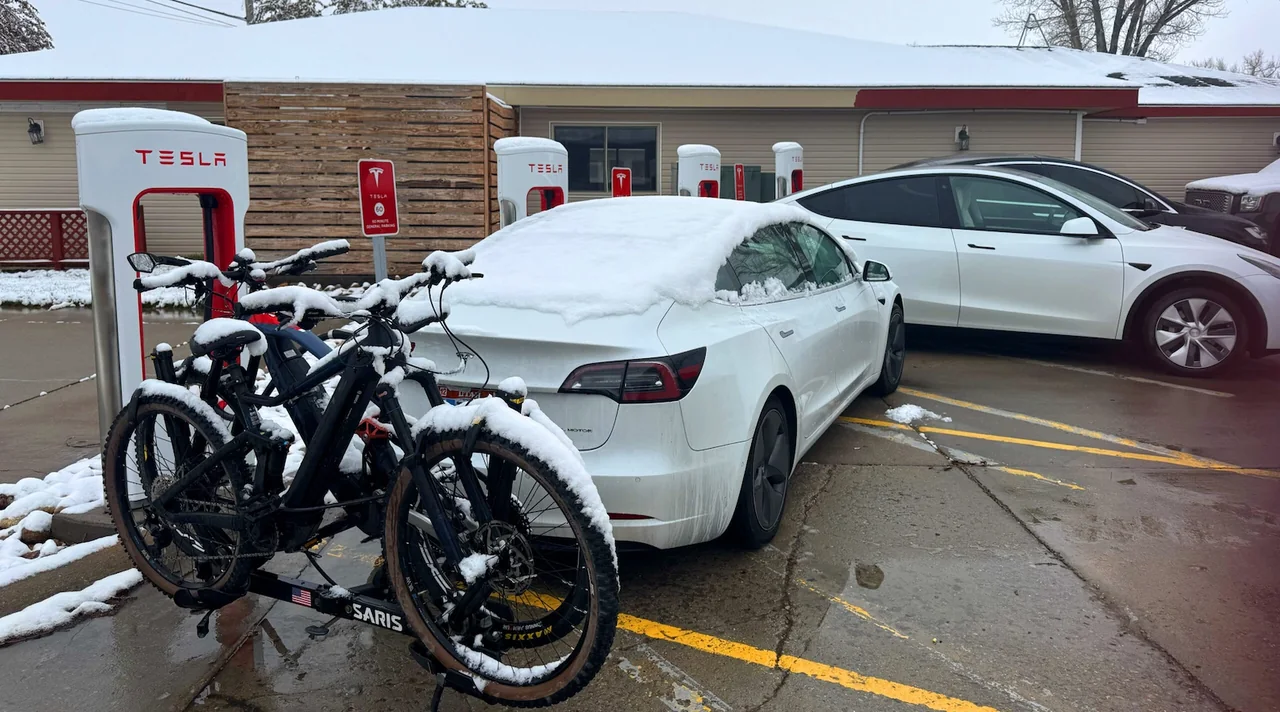
A Tesla Model 3, even after seven years and 175,359 miles, can still be used for a cross-country trip. However, its reduced range poses significant challenges to travelers. The initial EPA range of 310 miles has decreased to approximately 243 miles, resulting in a loss of 67 miles or around 22% over time.
To mitigate this issue, drivers must adopt a charging strategy that takes into account the available Supercharger network and the car's reduced range. This includes using Superchargers that are typically 100 miles apart or less, such as those along I-80 in Wyoming.
The driver's approach to charging is crucial in ensuring efficient cross-country travel with an older EV. By planning their route carefully and using the Tesla app to determine the most suitable charging stops, drivers can minimize their time spent waiting at chargers and maximize their driving range.
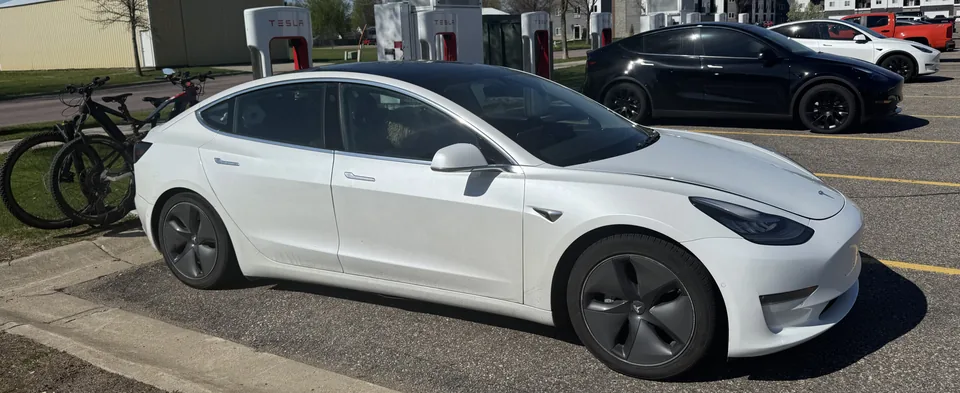
Despite the Supercharger network's limitations, there are still opportunities for improvement. The addition of more Superchargers along key routes would greatly enhance the long-distance travel experience for EV owners.
The driver's decision to add a hardware upgrade to take advantage of non-Tesla chargers is not a viable option due to its estimated cost of around $300.
In order to determine the optimal charging time, drivers must consider factors such as wind direction and speed, which can impact their driving range. On this particular trip, the headwind was never more than 3 mph, allowing for relatively smooth travel.

The use of weather data to inform charging decisions is a crucial aspect of long-distance EV travel. By taking into account wind conditions, drivers can optimize their route and charging schedule to ensure a safe and efficient journey.
To further improve the long-haul experience for Tesla owners, manufacturers must prioritize expanding their Supercharger network and providing more detailed information about charging times and availability.
Ultimately, the success of a cross-country trip in an older Tesla Model 3 depends on the driver's ability to plan and execute a strategic charging strategy. By doing so, EV owners can minimize their range anxiety and enjoy a safe and enjoyable journey.

The increasing complexity of electric vehicle charging infrastructure and the need for strategic planning are major factors in determining the feasibility of long road trips with an older EV.