

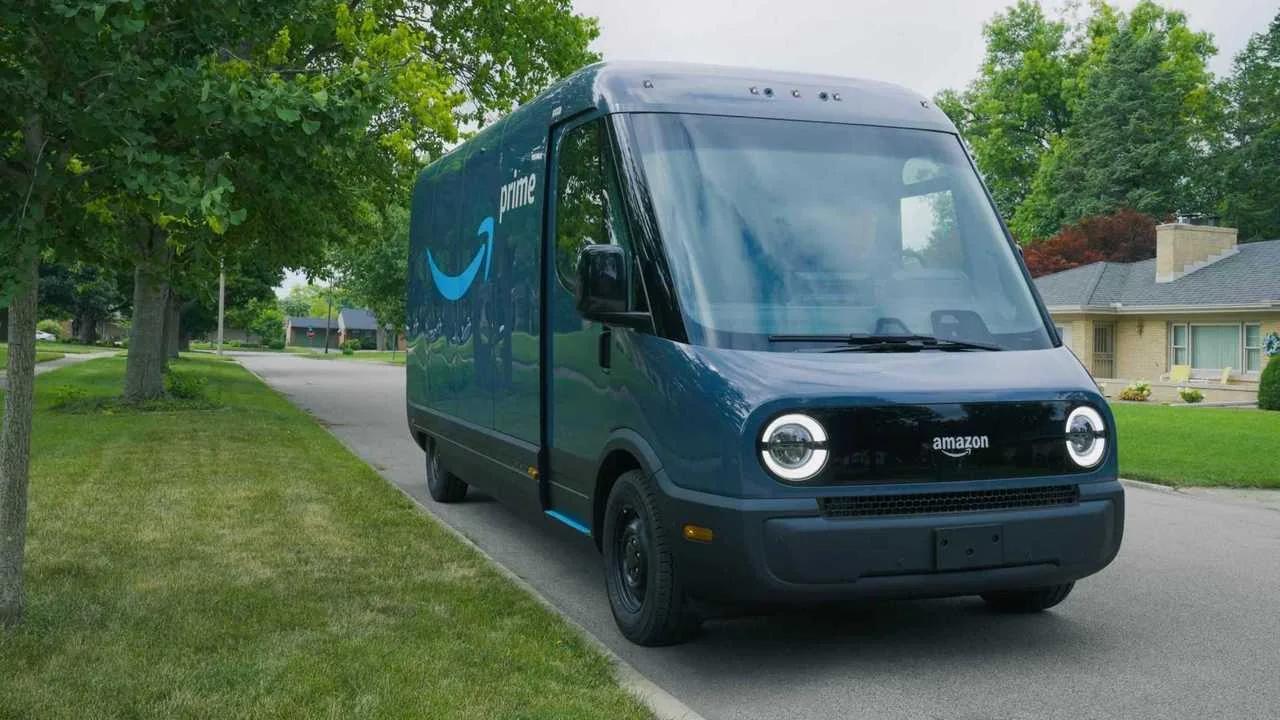
The year 2025 has been a pivotal moment for Amazon's partnership with California-based EV startup Rivian. The company has announced that its electric van fleet has experienced a significant surge, jumping by an impressive 50% compared to the previous year. This remarkable growth is a testament to the increasing adoption of electric vehicles in the logistics and transportation sector.
The jump in Rivian's electric van fleet is attributed to Amazon's ambitious plans to electrify its entire delivery network by 2030. As part of this initiative, Rivian has been contracted to deliver an impressive 100,000 electric vans to the American e-commerce giant over the next five years. This massive order is a major milestone for Rivian and underscores the company's commitment to sustainable transportation solutions.
The growing demand for electric vehicles in the logistics sector is driven by increasing concerns about climate change and air pollution. As governments around the world implement stricter regulations on emissions, companies are under pressure to adopt more environmentally friendly practices. In this context, Rivian's partnership with Amazon represents a significant step towards reducing carbon footprint in the transportation industry.
The electric van market has experienced rapid growth in recent years, driven by decreasing battery costs and improving technology. As a result, companies like Rivian are well-positioned to capitalize on this trend and establish themselves as major players in the industry. However, the challenge of scaling production while maintaining quality remains a significant hurdle for these startups.
The partnership between Amazon and Rivian also highlights the importance of supply chain management in the logistics sector. As companies seek to reduce their environmental impact, they must carefully consider the sustainability of their supply chains. In this context, Rivian's ability to deliver high-quality electric vans on time has been a major factor in Amazon's decision to partner with the company.
The growth of Rivian's electric van fleet also raises questions about the future of traditional fossil fuel-based transportation. As more companies adopt sustainable practices, we can expect to see significant changes in the logistics sector over the coming years. In this context, startups like Rivian are likely to play a major role in shaping the future of transportation.
The jump in Rivian's electric van fleet is also a testament to the company's innovative approach to product development. By investing heavily in research and development, Rivian has been able to create high-quality electric vans that meet the demands of large-scale logistics operations. However, the challenge of maintaining production volumes while ensuring quality remains a significant challenge for the company.
The partnership between Amazon and Rivian is also expected to have a positive impact on the wider automotive industry. As companies seek to reduce their environmental impact, they must carefully consider the sustainability of their supply chains. In this context, Rivian's ability to deliver high-quality electric vans on time has set a new benchmark for the industry.
As Rivian continues to grow and expand its operations, it is likely to play an increasingly important role in shaping the future of transportation. With its commitment to sustainable practices and innovative approach to product development, the company is well-positioned to capitalize on the growing demand for electric vehicles in the logistics sector.
As the demand for electric vehicles continues to rise, startups like Rivian are poised to play a significant role in shaping the future of transportation.