
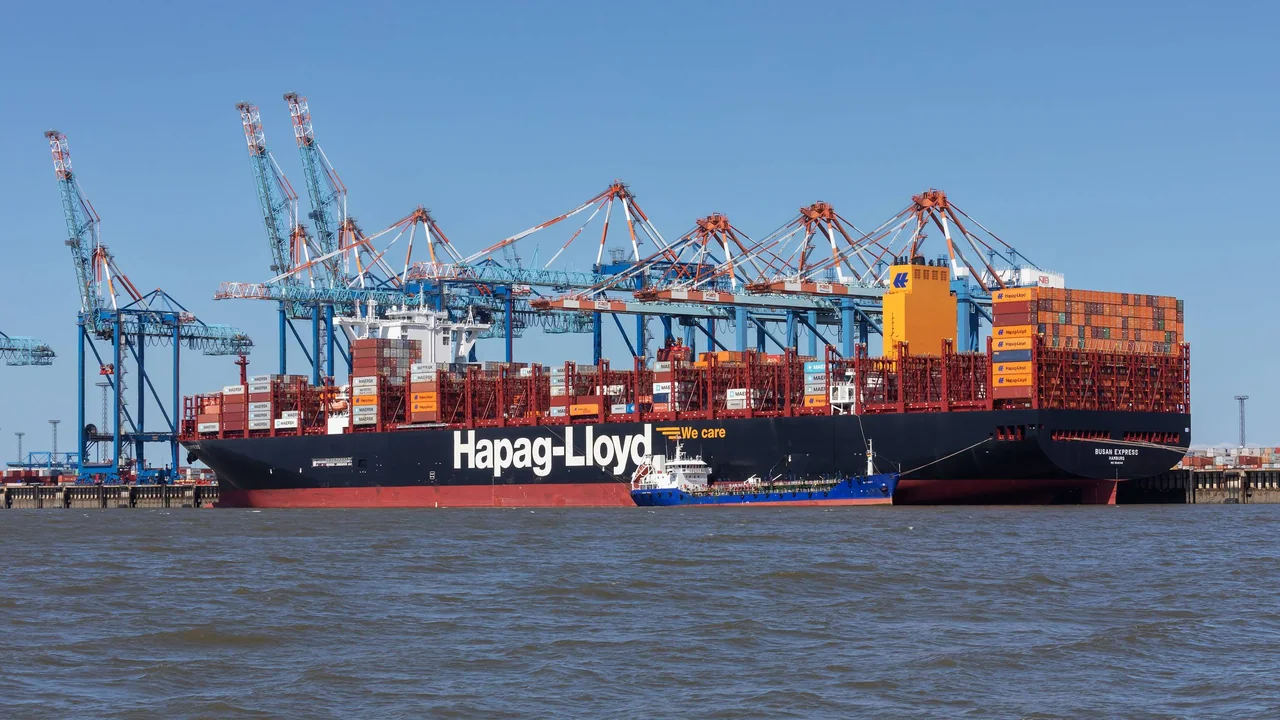
The global liner landscape is undergoing significant changes with the recent announcement of Hapag-Lloyd's acquisition of ZIM Integrated Shipping Services Ltd. for approximately $4.2 billion. This all-cash transaction represents a 58% premium to ZIM's prior-day closing stock price, a 90% premium to its 90-day VWAP, and a 126% premium to its unaffected share price in August 2025. The deal is expected to close by late 2026, subject to shareholder and regulatory approvals.
The acquisition will significantly expand Hapag-Lloyd's service offerings across various trade routes, including the Transpacific, Intra-Asia, Atlantic, Latin America, and East Mediterranean regions. This move will complement Hapag-Lloyd's participation in the Gemini network, further solidifying its position as a major player in the container shipping industry.
The combined company is projected to operate over 400 vessels, with total capacity exceeding 3 million TEU and annual cargo volumes of more than 18 million TEU by 2027. This will enable Hapag-Lloyd to better compete in the volatile freight markets and rising regulatory costs associated with fuel transitions.
Hapag-Lloyd's acquisition of ZIM marks another significant consolidation move in the container sector, as carriers seek scale, network breadth, and cost efficiencies. The deal is expected to remove one of the industry's most agile mid-sized carriers from the public markets and fold it into a larger global platform.
The new entity 'New ZIM' established by FIMI Opportunity Funds will operate 16 vessels focused on key global trade routes into Israel, ensuring secure liner connectivity for the country. This structure is designed to address the Special State Share requirements and provide commercial support from Hapag-Lloyd.
ZIM's President and CEO Eli Glickman framed the acquisition as the culmination of a strategic turnaround that began in 2017. The company has modernized its fleet, adopted LNG propulsion, and invested heavily in equipment renewal and digital investments to support industry-leading EBIT margins and operational agility.
The deal underscores the ongoing trend of consolidation in the container sector, driven by factors such as volatile freight markets, rising regulatory costs, and a desire for scale and network breadth. As carriers navigate these challenges, the acquisition highlights the importance of strategic partnerships and acquisitions in driving growth and competitiveness.
Hapag-Lloyd's intention to maintain a significant business presence in Israel and retain ZIM employees demonstrates its commitment to preserving local expertise and relationships. This will be crucial in ensuring the continued success of the combined entity in the region.
The acquisition is expected to have far-reaching implications for the container shipping industry, with potential impacts on competition, network efficiency, and regulatory compliance. As the market continues to evolve, it will be essential for carriers to adapt to changing market conditions and regulatory requirements.
The acquisition highlights the ongoing trend of consolidation in the container sector, driven by factors such as volatile freight markets, rising regulatory costs, and a desire for scale and network breadth.