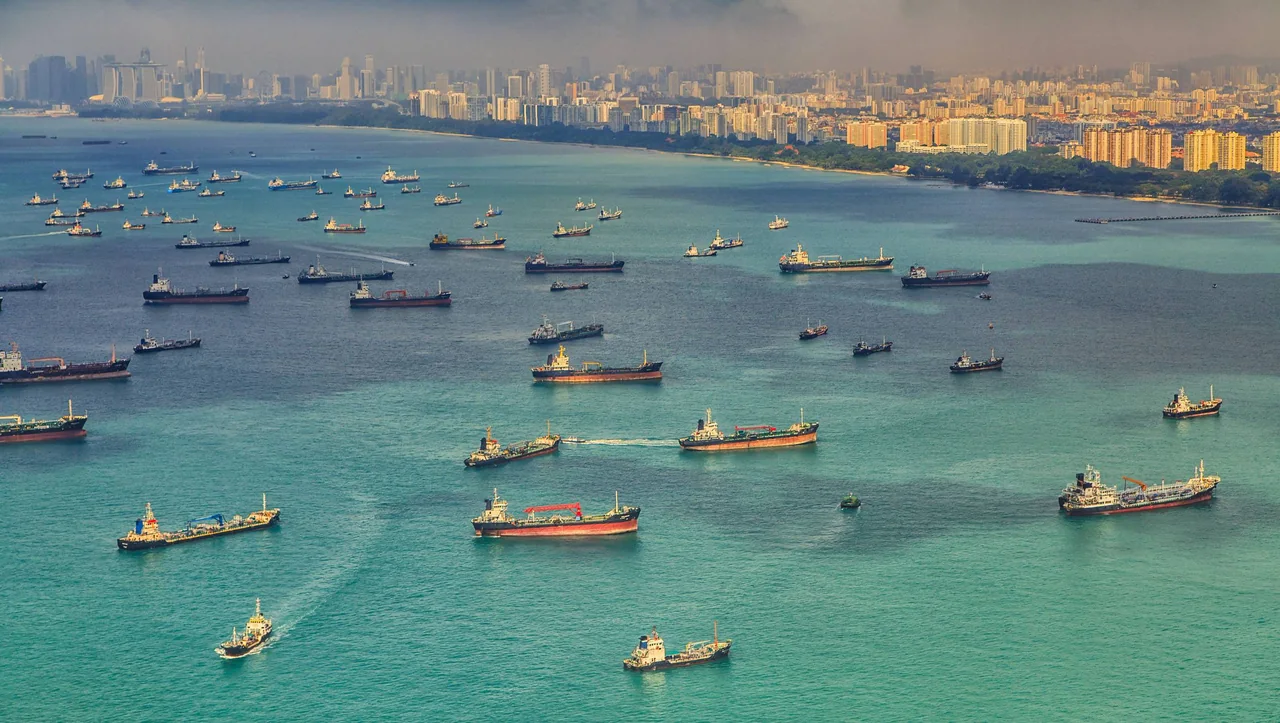
Singapore's marine fuel sales kicked off 2026 on a strong note, driven by robust demand and higher price premiums. The world's largest bunker hub reported 5.23 million metric tons of marine fuel sales in January, a 16.5% year-on-year increase from the previous month. This growth was largely attributed to healthy spot demand, which is typically a strong month for seasonal demand ahead of Lunar New Year.
Container throughput at Singapore decreased by 0.7% from the prior month to 3.89 million twenty-foot equivalent units (TEUs) in January, while vessel calls for bunkering remained stable, climbing 1.5% to 3,778 calls. This indicates that despite a decline in container volumes, the demand for marine fuel remains robust.
Bunker market sources in Singapore reported that spot demand was largely healthy in January, with volumes of low-sulphur fuel oil (VLSFO) totaling 2.56 million tons, down 9.5% from December but higher year-on-year. High-sulphur marine fuel volumes were up 2.0% from December at 2.16 million tons.
The tighter barging schedules in Singapore contributed to the increase in price premiums for bunker deliveries. As of end-January, Singapore delivered-basis bunker premiums for prompt deliveries rose above $20 a metric ton, compared to low $10s in early-January. This indicates that the market is responding positively to the increased demand and supply chain constraints.
Marine gasoil sales dipped slightly month-on-month, down 2.3% at 404,100 tons. On the other hand, alternative fuels such as marine biofuel and liquefied natural gas bunker sales retreated, with volumes sliding 33.9% to 60,200 tons and 22.0% to 42,600 tons, respectively.
The delay in a formal net-zero framework for shipping could potentially dampen the adoption of low-carbon marine fuels. However, shipping companies and suppliers have reaffirmed their commitment to green investments, indicating that they will continue to pursue sustainable alternatives despite the uncertainty.
The strong start to 2026 is a positive indicator for Singapore's bunker market, which has been experiencing stagnant price premiums for several months. As the industry continues to navigate the transition to low-carbon fuels, it will be essential to monitor the market trends and adjust strategies accordingly.
The robust demand for marine fuel in Singapore suggests that the market is responding positively to the increased supply of bunker fuel. This growth could have significant implications for the global shipping industry, particularly as it seeks to reduce its carbon footprint and meet increasingly stringent environmental regulations.
In conclusion, the strong start to 2026 for Singapore's marine fuel sales is a promising sign for the industry. As the market continues to evolve, it will be crucial to balance supply chain constraints with demand-driven growth, ensuring that low-carbon fuels remain a viable option for shipping companies.
The delay in a formal net-zero framework for shipping may impact the adoption of low-carbon marine fuels, but companies are committed to green investments.