The divide between high-tier travel options has shifted significantly over the last decade, sparking debate among frequent flyers. On short continental hops, the distinctions can often seem nominal, restricted to a slightly wider armrest or an extra complimentary beverage. However, when crossing multiple oceans on ultra-long-haul sectors extending well past 12 hours, those incremental upgrades compound into entirely distinct travel experiences.
A lie-flat seat has long been the ultimate differentiator, but modern cabin configurations have democratized that luxury across almost all long-haul corporate fleets. To justify a top-tier fare in the current market, carriers must offer an experience that feels more like a hotel than just a seat on a plane.
The rapid evolution of business class seating has forced aviation designers to rethink the entire geometry of the premium cabin. Today, the vast majority of modern intercontinental business class configurations guarantee direct aisle access and fully flat beds as an industry baseline.

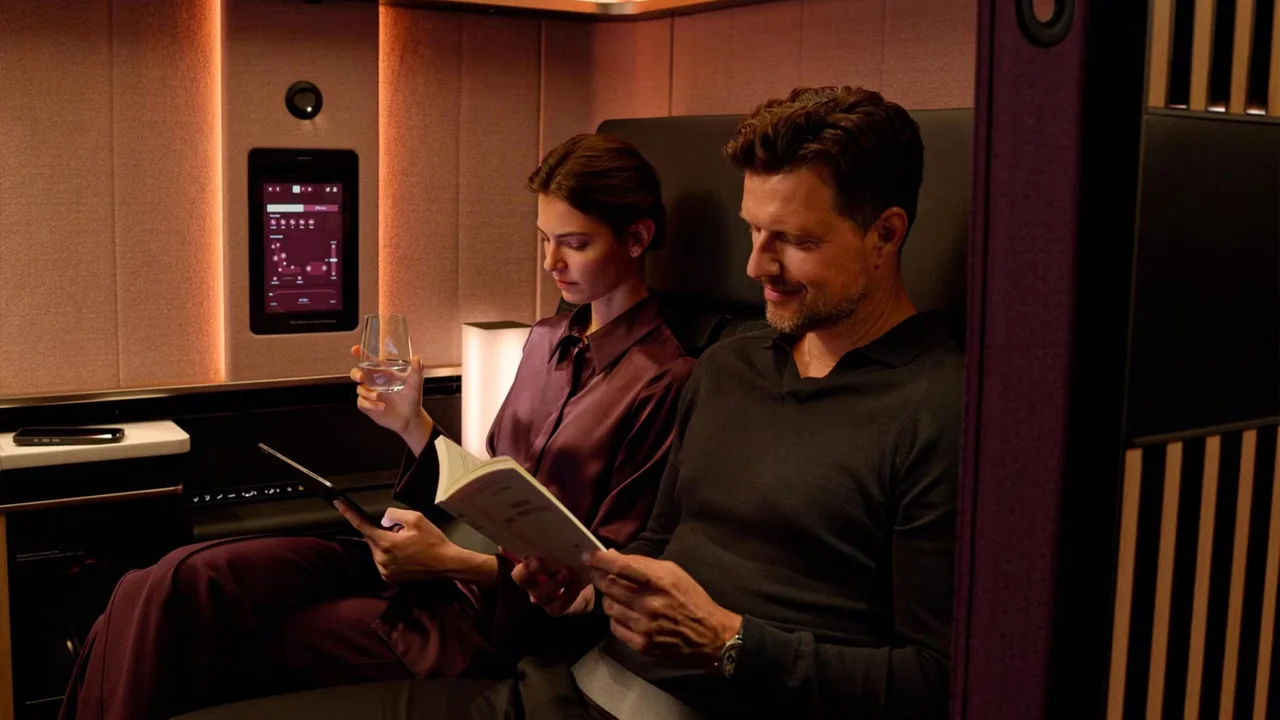
To preserve the exclusivity of their premier offerings, several leading carriers have turned to full-height closing doors and modular suite architecture. This spatial contrast directly dictates the level of individual attention a passenger receives throughout a long flight.
Emirates' Airbus A380 first class cabin features just 14 enclosed suites, each served by a dedicated team, establishing an intimate 1:2 crew-to-passenger ratio. In contrast, the business class cabin on the exact same double-decker aircraft scales up to roughly a 1:6 ratio, creating a more structured, high-volume service environment.
In a standard business class cabin, the flight attendants operate on a carefully synchronized timeline, delivering multi-course meals to dozens of passengers at fixed intervals after takeoff. This structured approach can become an operational challenge, especially for airlines catering to diverse passenger preferences.

The culinary quality in business class is typically high, but this structured service model can limit the flexibility of menu options and wine pairings. Airlines must adapt to meet the evolving expectations of discerning travelers.
As the luxury travel market continues to evolve, airlines will need to strike a balance between comfort, exclusivity, and operational efficiency. The boundaries between business and first class are becoming increasingly blurred, but one thing remains certain: top-tier travel requires an experience that feels like a hotel.
The industry's focus on comfort and luxury has led to a blurring of lines between business and first class.