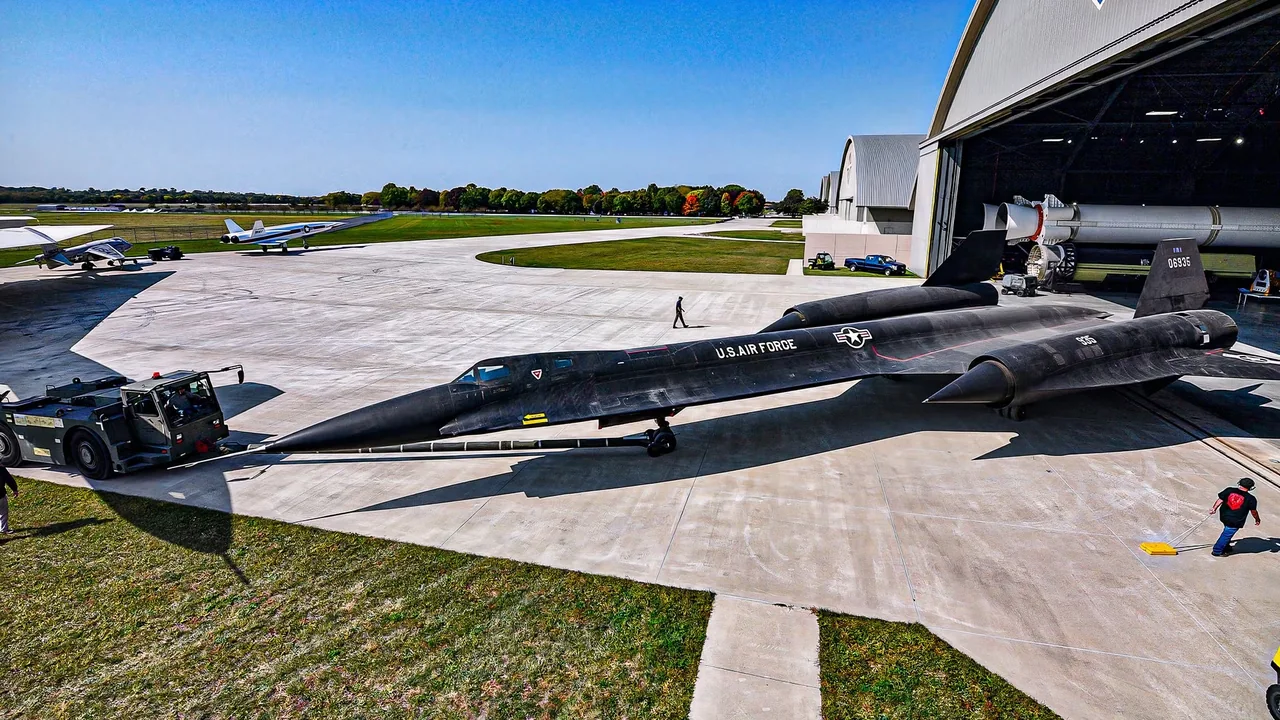
The development of advanced interceptor concepts like the Lockheed Martin YF-12 was a response to evolving air defense challenges.
In the early years of the Cold War, the nuclear arsenals of both the US and the Soviet Union were predominantly composed of gravity bombs.
The Tupolev Tu-4 was a reverse-engineered Boeing B-29 Superfortress that served as the Soviets' first credible long-range strategic bomber.

By 1958, the Soviets had expanded their medium bomber fleet, particularly the Tupolev Tu-16 'Badger', with an estimated 900 aircraft in operational units.
The CIA report stated that attacks could be carried out by staging through Arctic bases, Badgers could reach Alaska, Greenland, and part of Canada on unrefueled two-way missions; more of Canada and a small portion of the US on refueled two-way missions; all of Canada and much of the US on unrefueled one-way missions; all US targets on refueled one-way missions.
The geographically closest bases to the US were in Chukotski region, Kola peninsula, along the Baltic, and Eastern Germany.

This threat was a significant concern for military planners on both sides of the Cold War.
The development of advanced bomber technology like the Tu-4 and Tu-16 highlighted the evolving nature of nuclear warfare during this period.
The YF-12 interceptor was designed to counter the Soviet bomber threat, but it never entered service due to technical issues.

The Soviet bomber threat was a real concern for the US military during the Cold War.