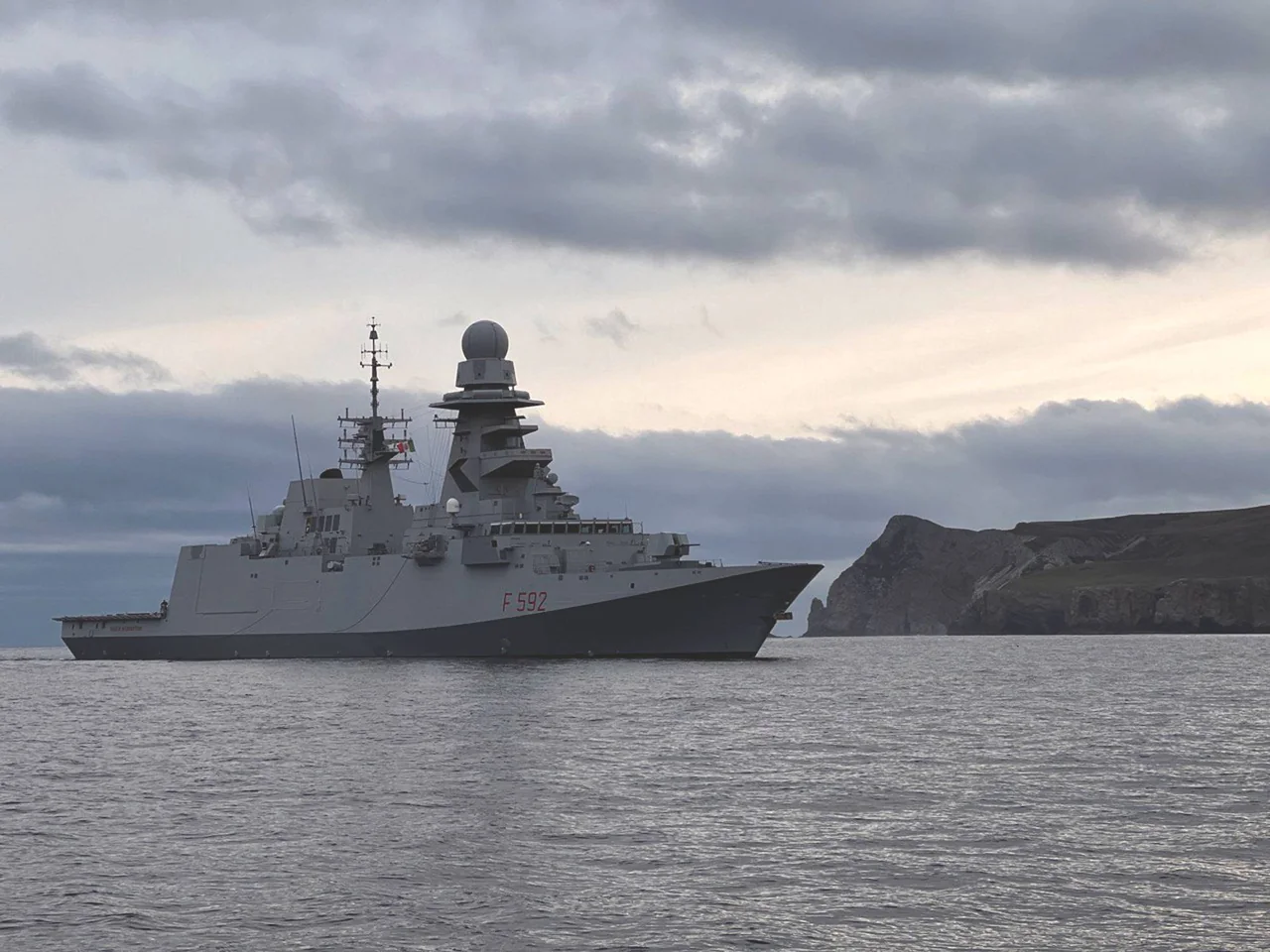
The US Navy's Constellation frigate program, which spent approximately 3 billion dollars, was shut down without achieving any notable results. The program's demise highlights the challenges faced by the Navy in designing and building ships for its needs. A recent Op-Ed article titled 'America can't make what the Navy Needs' shed light on the issue, suggesting that the problem lies not with US shipbuilders, but rather with the Navy's inability to define a clear design standard. The article featured an animated graphic illustrating how the design evolved over time, which was both informative and alarming for engineers. This development sparked widespread discussion on LinkedIn, with many expressing their disappointment and confusion regarding the program's failure.
The Constellation frigate program is not an isolated incident; it is part of a broader trend of large-scale naval projects facing significant challenges. The Navy has become increasingly risk-averse, bureaucratic, and reliant on contractors, making it difficult to implement innovative designs and achieve timely completion within budget constraints. In the past, wartime circumstances have allowed for these obstacles to be overcome, but decades without actual naval combat have resulted in a counterproductive morass. This situation is often referred to as 'mission creep,' where designers feel pressured to add features that increase displacement or capabilities, leading to unmanageable costs and complexity.
The Navy's reliance on proprietary computer-aided design systems, such as CREATE-SH, has also contributed to the program's failure. These systems are intended to simplify ship design but often result in designs becoming overly complex and difficult to manage. For example, when the Arleigh Burke design was run through this system, it required over 30% additional displacement to carry the same combat systems. This highlights the need for more efficient and effective design processes that balance innovation with practicality.
One potential solution to these problems is to introduce legislation that imposes stricter constraints on Navy ship designs. By setting maximum displacement, top speed, and range limits, the Navy can be given a clearer direction and focus. The proposal would also establish a fixed fleet procurement budget, allowing the Navy to select from a pool of pre-approved designs. If prototype vessels fail to meet these criteria, funding for subsequent vessels would be automatically halted, providing a strong incentive for designers to prioritize simplicity and effectiveness.
This approach has already shown promise in the Arleigh Burke destroyer program, where conservative initial designs were later modified to include more advanced capabilities. However, it is essential to recognize that no design will always be successful, and some may require multiple iterations to achieve optimal performance. The key is to learn from failures and adapt to changing circumstances. By embracing this approach, the Navy can break free from the cycle of second-guessing and allow engineers to focus on delivering effective designs.
The American engineering approach of building something and then refining it through iteration is a valuable concept in complex design fields. However, this requires strong pushback against those who would second-guess or undermine efforts. As seen with Elon Musk's Space X rocket failures, perseverance and determination are essential for overcoming seemingly insurmountable challenges.
The Navy's Constellation frigate program serves as a cautionary tale about the dangers of complacency and the importance of clear design standards. By acknowledging these lessons and implementing reforms, the Navy can move forward with renewed focus and purpose. The development of a Smithsonian-level exhibit center for commercial maritime, such as SL7Expo, highlights the need for industry-wide efforts to promote innovation and efficiency in shipbuilding.
In conclusion, the Navy's Constellation frigate program failure is a symptom of broader issues within the organization. By introducing legislation that imposes stricter design constraints and promoting a culture of simplicity and effectiveness, the Navy can break free from its current cycle of confusion and cost overruns. The industry as a whole must also recognize the importance of innovation and perseverance in overcoming complex challenges.
Ultimately, the success of future naval projects depends on the ability to balance innovation with practicality, and to prioritize clear design standards and effective processes. By embracing these principles, the Navy can build ships that are both capable and efficient, and move forward with renewed confidence and purpose.
The Navy's inability to figure out what it wants US shipbuilders to build has led to a costly and confusing program.