
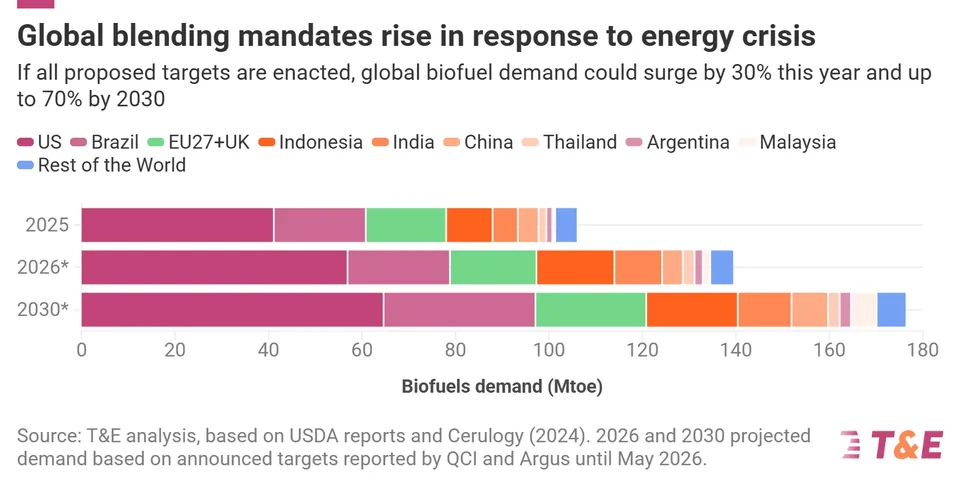
The current scramble for biofuel feedstocks could see biofuel consumption globally rise by 30% this year and a staggering 70% by 2030. This risks putting severe pressure on global food prices with vegetable oil prices already at a post-2022 peak.
Prices for most food commodities — especially vegetable oils — have increased for three consecutive months, repeating the pattern that followed the Russian invasion of Ukraine back in 2022.
The US-Israeli attack on Iran and subsequent high oil prices have led governments to bring forward new biofuel blending targets. At the same time, export powerhouses like Brazil and Indonesia are limiting the exports of key biofuel crops.
Kädi Ristkok, energy and climate director at T&E, warns that governments are playing a dangerous game by promoting food for fuel.
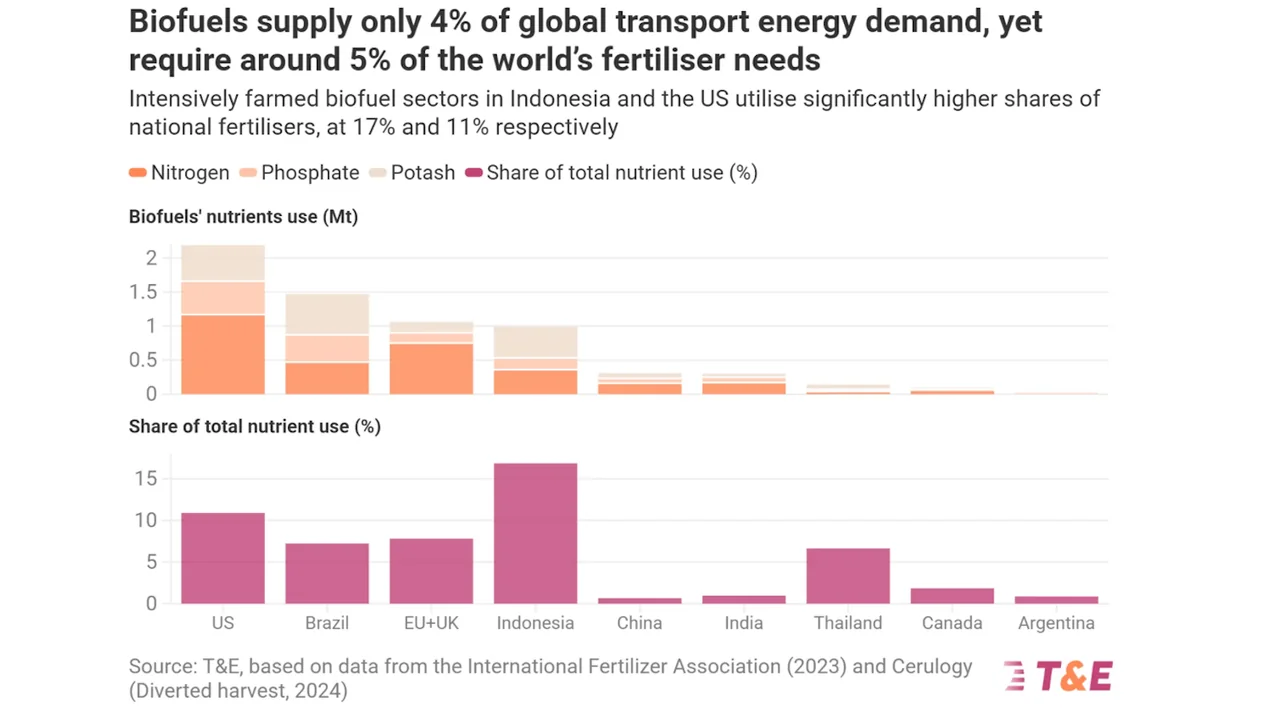
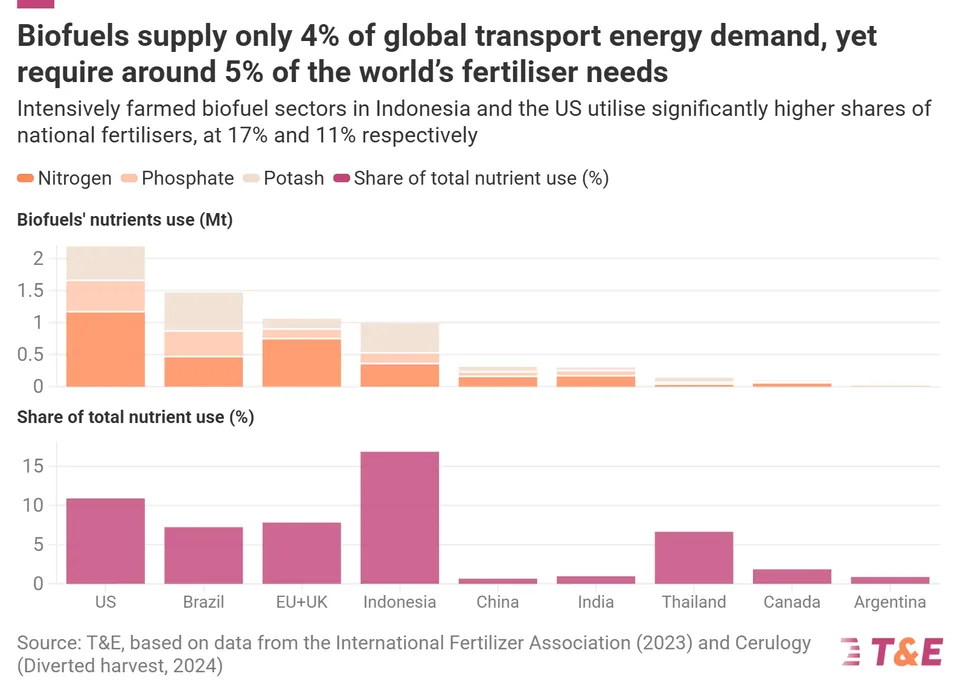
Biofuels already use up 5% of the world’s fertilisers to produce just 4% of global transport fuels. Any increase in biofuels production would put further strain on a market that has been heavily disrupted by the blockage of the Strait of Hormuz.
The situation is particularly stark in certain countries, with Indonesia devoting close to a fifth of its total fertilisers to biofuels and the US allocating one-tenth. The world’s major biofuels producers rely on Russia, China and the Middle East for over 50% of their fertiliser imports.
Increasing biofuel supplies without competing with food crops is hard to achieve. An additional 130 million hectares of land would be needed to meet a 20% global road fuel mix — equal to the entire land mass of South Africa.
The loss of ecosystems and subsequent deforestation would result in significantly more carbon emissions than the fossil fuels they replace. Governments must prioritise food over fuel, concludes Kädi Ristkok.
A global fertiliser crunch risks unravelling global food security. While governments are searching for ways to stockpile fertilisers, no one is talking about biofuels.
The unintended impacts of promoting biofuels as a solution to the energy crisis are enormous, with devastating consequences for the environment and global food security.