
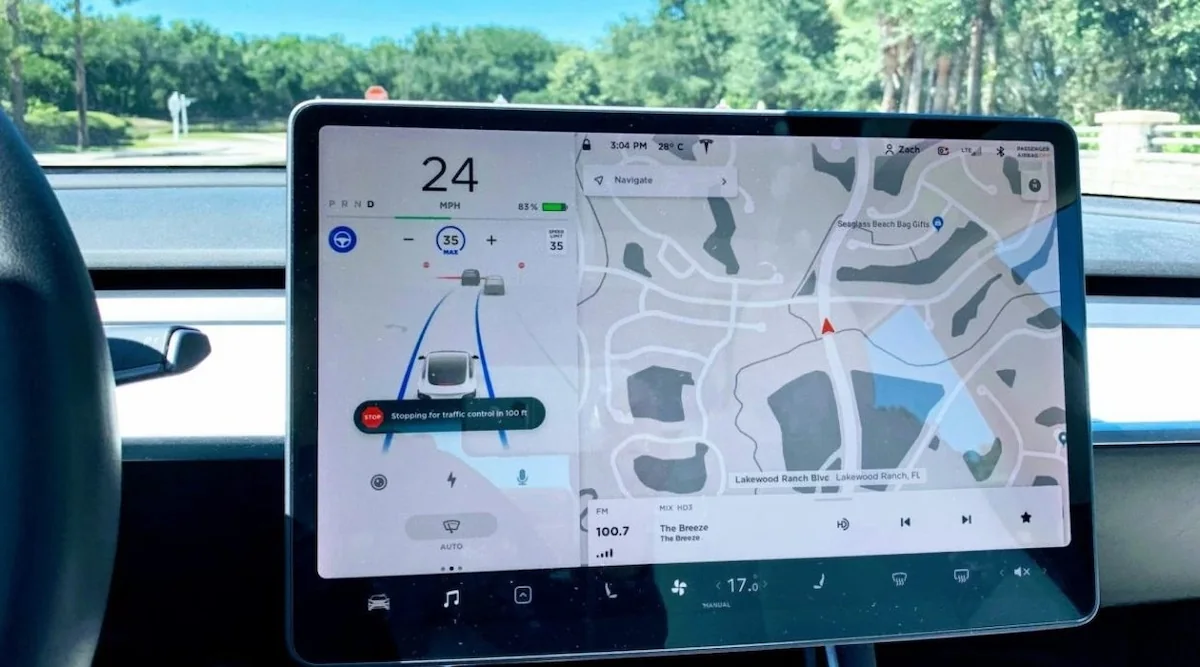
Tesla's Full Self Driving (FSD) system has been touted as a revolutionary innovation in autonomous driving, but a recent investigation by Reuters reveals that many former employees who worked on the project have serious doubts about its capabilities.
The FSD system is designed to enable Tesla vehicles to drive themselves without human intervention, but according to the former employees, this is not possible without extensive training and geofencing. The system requires hundreds of hours of labor-intensive work to train it on specific routes before it can be deployed in a public setting.
Contrary to Elon Musk's claims that FSD can be easily turned on across the US, the former employees say that this is not feasible due to the lack of localized mapping and hazard detection. The system simply wasn't good enough to warrant such widespread deployment without further testing and refinement.
The investigation also found that Tesla fans have been overly critical of rival companies like Waymo, which require geofencing for their self-driving systems. However, it appears that Tesla's approach may not be as effective in practice, at least not yet.
Moreover, the former employees' concerns about FSD's safety record are well-founded. Researchers have found that Tesla inflates its safety numbers by comparing airbag-deployment crashes in FSD vehicles against a federal crash database that includes far less severe incidents. This raises serious questions about the accuracy of Tesla's claims and the reliability of its technology.
The fact that seven out of nine former data labelers would not trust FSD to drive them, let alone ride in a Tesla robotaxi, is a stark reminder of the limitations of this technology. It highlights the need for more rigorous testing and validation before FSD can be widely deployed.
Furthermore, the investigation raises concerns about Elon Musk's leadership style and his willingness to push forward with a technology that may not be ready for prime time. The fact that he has been critical of rival companies while pushing his own company's approach is concerning.
The future of autonomous driving is uncertain, but it's clear that FSD still has a long way to go before it can be trusted. As the industry continues to evolve, it's essential that we prioritize safety and transparency over hype and marketing claims.
Ultimately, the story of Tesla's Full Self Driving system serves as a cautionary tale about the importance of humility and skepticism in the face of emerging technologies. It highlights the need for rigorous testing and validation before we can confidently say that FSD is ready for widespread deployment.
s have long warned about the limitations of FSD, but recent revelations from former employees further erode trust in the technology.