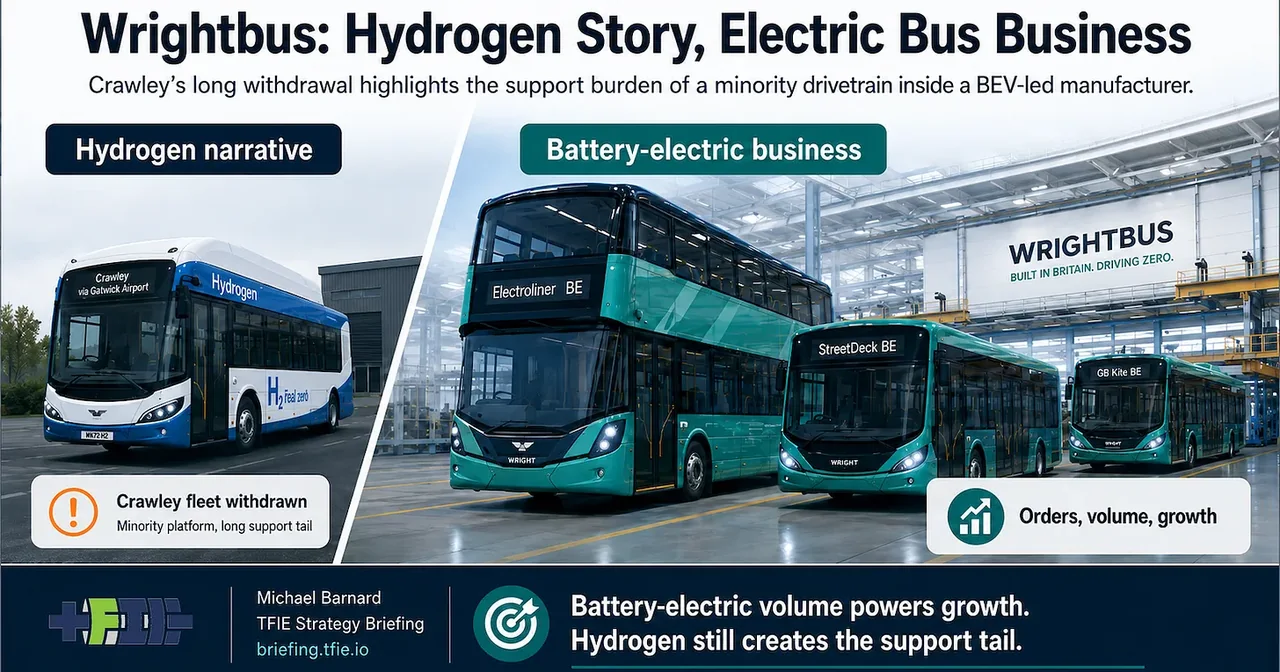
Wrightbus, a UK-based manufacturer, had high hopes for its hydrogen bus project in Britain. The company partnered with various organizations to showcase zero-emission buses and promote domestic manufacturing. However, a recent fire on one of the hydrogen buses has raised concerns about the operational challenges associated with this technology. The incident has led Wrightbus to reassess its focus, with battery-electric buses now taking center stage due to their lower maintenance and service requirements.
The initial fleet consisted of 20 Wrightbus GB Kite Hydroliner buses, which were supplied by Metrobus for routes around Gatwick, Crawley, and Horley. The buses were equipped with liquid hydrogen storage at the Metrobus depot in Crawley, allowing them to travel long distances without refueling. Despite the initial enthusiasm for hydrogen buses, the fire has cast a shadow on this technology.
The cause of the fire is still under investigation, but the impact on Wrightbus's operations is already being felt. The company has withdrawn its single-deck hydrogen buses from service as a precaution, and it is now relying on loaned buses from other operators to maintain services. This temporary solution highlights the operational challenges associated with small hydrogen fleets.

The incident serves as a reminder that even zero-emission technologies have their drawbacks. Battery-electric buses, on the other hand, are becoming increasingly popular due to their lower maintenance and service requirements. Wrightbus's shift in focus towards battery-electric buses is a strategic move to ensure its commercial success.
Wrightbus's decision to prioritize battery-electric buses is not surprising, given the growing demand for sustainable transportation solutions. As governments around the world set ambitious targets for reducing greenhouse gas emissions, manufacturers like Wrightbus are responding by investing in cleaner technologies.
The hydrogen bus project was initially touted as a showcase for domestic manufacturing and zero-emission transport. However, the fire has raised questions about the viability of this technology. Wrightbus's decision to focus on battery-electric buses is a pragmatic response to the operational challenges associated with hydrogen fuel cells.

As the transportation industry continues to evolve, manufacturers like Wrightbus must adapt to changing consumer demands and technological advancements. The shift towards battery-electric buses is a significant development that will have far-reaching implications for the industry.
The incident in Crawley serves as a wake-up call for transit agencies and manufacturers alike. Small hydrogen fleets can create large operational problems, highlighting the need for careful planning and maintenance. Wrightbus's experience provides valuable lessons for those involved in the transportation sector.
Ultimately, the future of sustainable transportation depends on the success of innovative technologies like battery-electric buses. As Wrightbus continues to invest in this area, it is likely that we will see a significant shift towards cleaner, more efficient vehicles in the years to come.