

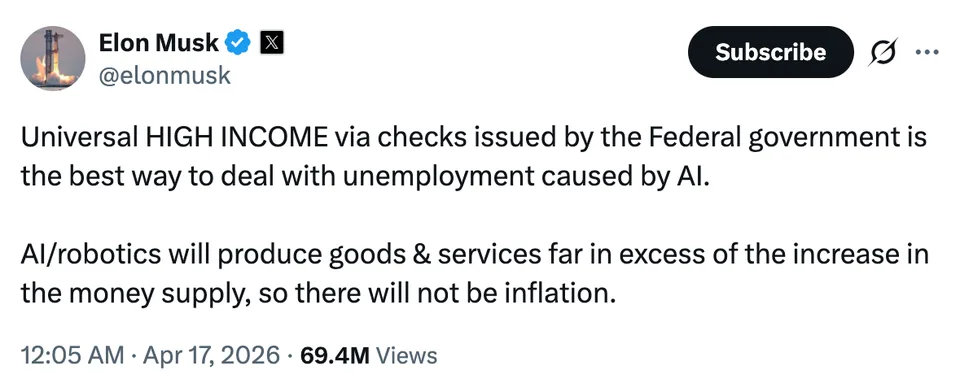
Musk recently proposed a radical idea: universal high-income checks issued by the federal government to address unemployment caused by artificial intelligence (AI). This proposal seems to be at odds with his previous statements on AI and robotics, which suggested they could end inflation. However, the more concerning aspect of Musk's plan is its potential impact on existing social programs and government expenditures.
The USAID organization has faced criticism for its inability to provide minimal support to those in dire need due to alleged corruption. Musk's proposal to distribute high-income checks to everyone instead seems to overlook the complexities of poverty and inequality. Furthermore, his attacks on Social Security as a 'biggest Ponzi scheme' raise questions about the feasibility of replacing existing social safety nets with a universal basic income.
Musk's plan also appears to contradict his previous statements on reducing government expenditures and cutting the deficit. The US deficit has increased by approximately $2.5 trillion since 2025, despite Musk's warnings that excessive spending would lead to financial ruin. This inconsistency raises concerns about the sincerity of his proposal and its potential impact on the economy.
Another issue with Musk's plan is its lack of practicality. He suggested that everyone can have a penthouse apartment, which is unrealistic given the scarcity of luxury housing options. This raises questions about how the government would provide such accommodations for all citizens, while also addressing the needs of those who cannot afford them.
Musk's proposal has sparked widespread criticism and confusion, with many questioning his detachment from reality and poor logic. His statements seem to be driven by a desire to address unemployment caused by AI, rather than a nuanced understanding of the complex issues involved.
The idea of universal high-income checks is not new, but Musk's proposal seems to be particularly concerning due to its scope and potential impact on existing social programs. It remains to be seen whether his plan would be effective in addressing unemployment and poverty, or if it would exacerbate existing problems.
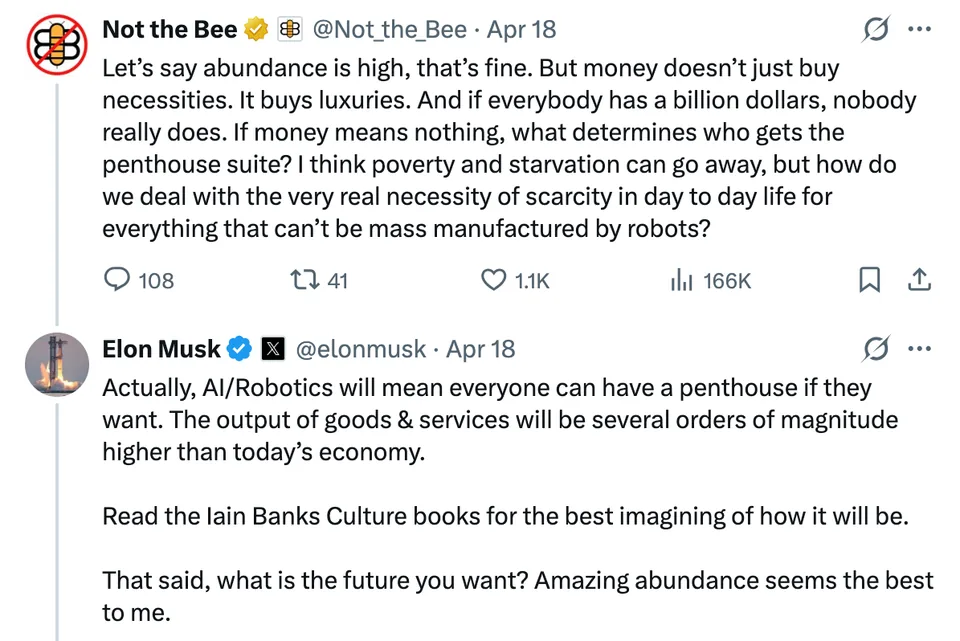
Musk's comments have also raised questions about his understanding of economics and policy. His proposal seems to ignore the complexities of supply and demand, as well as the need for targeted support programs to address specific social issues.
Despite the controversy surrounding Musk's plan, it is clear that he has sparked a necessary conversation about the role of government in addressing unemployment and poverty. However, it is essential to approach this discussion with a critical eye and consider the potential consequences of such a proposal.
Musk's universal high-income plan highlights the need for careful consideration and nuanced policy-making when addressing complex social issues. It is crucial to prioritize evidence-based solutions that take into account the complexities of poverty, inequality, and economic policy.

Musk's plan raises concerns about feasibility and fairness.