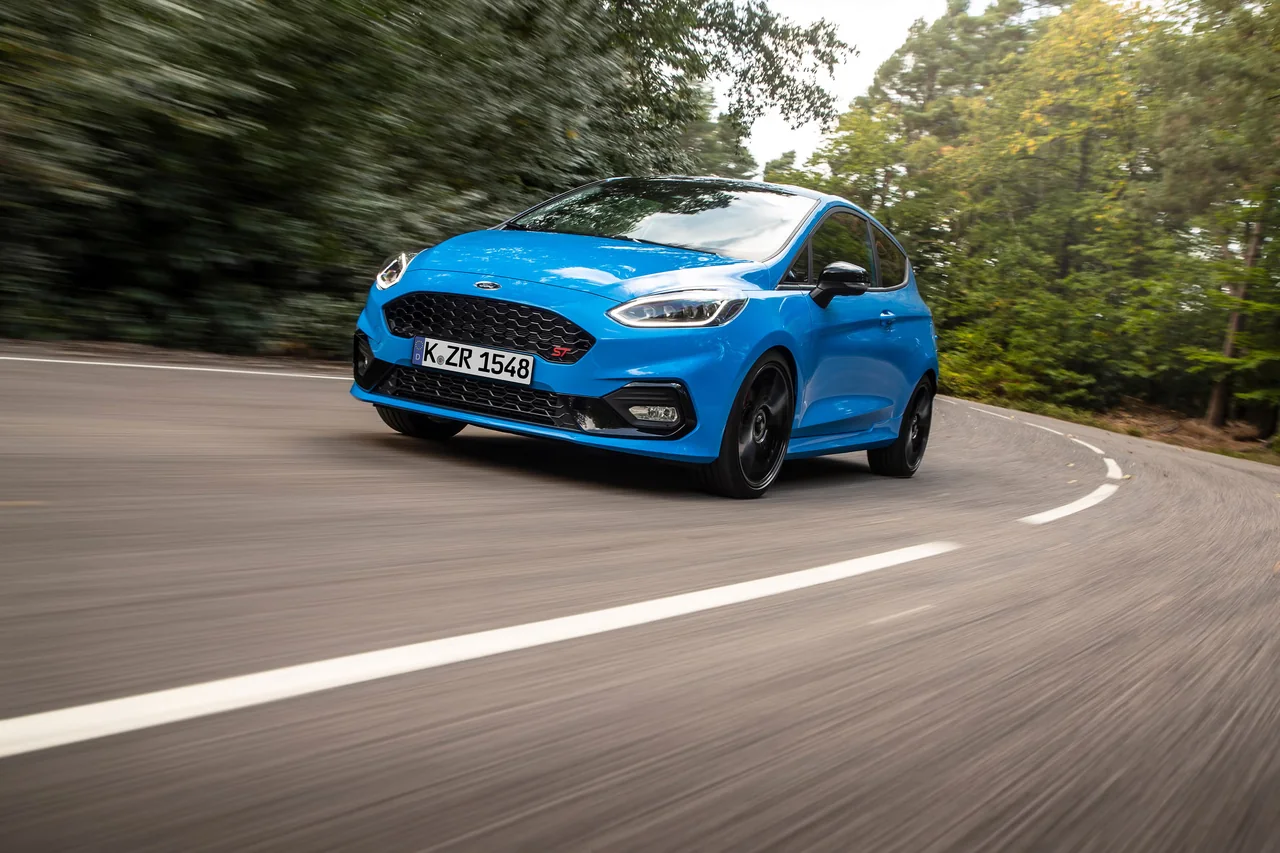
Ford Motor Company has not offered a passenger car other than the Mustang to its customers in the United States since 2020. The decision to kill off the Fiesta, Focus, and Fusion models in the States has had ramifications beyond our truck-loving borders, too. The European-market Mondeo died in 2020, with the global Fiesta and Focus lineups following shortly thereafter in 2023 and 2025, respectively. This move has left a significant gap in the market for Ford's passenger cars, which is expected to be filled by new offerings.
The automaker’s European wing hasn’t quite given up on the traditional passenger car altogether, though, with CEO Jim Farley recently outlining plans for “exciting” new offerings. While not a specific outline of what we can expect from the future products, Farley left no doubt about the brand’s plans for forthcoming passenger cars. The only thing that is truly certain is that the automaker wants to bring real profitability back to the segment, which makes sense given the statement was made during the brand’s Q4 2025 earnings call with investors.
Ford Europe has already made moves to ease this revival, including the appointment of former vice-president of business transformation Christian Weingaertner to the role of general manager, passenger vehicles. This strategic move is expected to play a crucial role in shaping the future of Ford's passenger car segment. The Blue Oval also entered a strategic partnership with Renault, which is set to result in two Ford EVs riding on the French automaker’s Ampere platform.

The EVs are expected to arrive in the sub-compact segment, which is sorely lacking a Ford entry at the current moment. New models, including pure EVs and hybrids, are currently slated for a 2027 arrival. This move is seen as a significant step towards revitalizing Ford's passenger car lineup, which has been largely absent from its European market since 2020.
Given how much fun the previous Focus and Fiesta were, we can’t help but be a little jealous of our European counterparts. That said, the USA isn't being entirely left out of the sedan situation. Farley has already confirmed that a new sedan will come to the U.S. market, but don't expect it to be one of these Euro models.
Ford's new Universal EV Platform, which is simpler and more affordable than the current electric offerings and slated to arrive in 2027 with the launch of its mid-size electric pickup, will also underpin a sedan. Whether or not there is room for a hybridized version will have to be seen. This move is expected to bring a new level of efficiency and cost-effectiveness to Ford's passenger car lineup.

The decision to revive the traditional passenger car segment in Europe marks a significant shift in Ford's strategy, which has been focused on trucks and SUVs in recent years. This move is likely to have a positive impact on the brand's profitability, particularly in the European market. However, it remains to be seen how successful these new offerings will be in terms of sales and customer reception.
The appointment of Christian Weingaertner as general manager of passenger vehicles marks a significant step towards revitalizing Ford's passenger car lineup. His experience in business transformation is expected to play a crucial role in shaping the future of the segment. With the arrival of new models, including pure EVs and hybrids, Ford is poised to make a strong comeback in the European market.
As the automotive industry continues to evolve, it will be interesting to see how Ford's passenger car offerings fare against its competitors. With the introduction of new models and a renewed focus on profitability, Ford is well-positioned to make a significant impact in the European market.
The move marks a significant shift in Ford's strategy to revive the traditional passenger car segment, which has been largely absent from its European lineup since 2020.