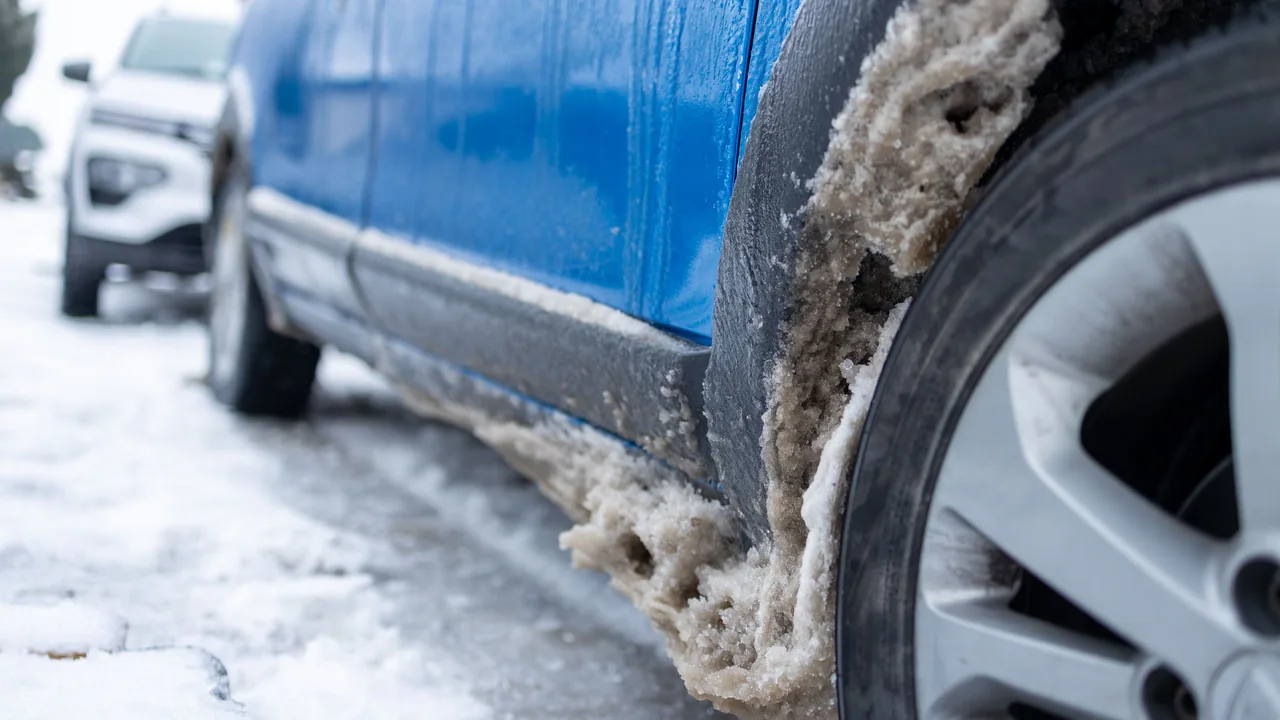
Winter driving is a test of machinery. Look closely at what it's doing to your car, and you'll understand: that white haze creeping up your rocker panels and frosting the wheels isn't just cosmetic, it's a sodium chloride cocktail that accelerates electrochemical corrosion the moment it mixes with moisture. Road salt is brutally effective at keeping water from freezing at its usual temperature, which is great for keeping highways passable but terrible for the long-term health of your sheetmetal.
Modern cars are better protected than the classics, but they're far from immune to the effects of salt. Salt works its way into seams, behind fender liners, inside suspension components, and anywhere the underbody coating has been nicked by a stray rock. Wheels pit, exhaust hardware seizes, and aluminum oxidizes into a dull, chalky mess.
The countermeasure is methodical, not cosmetic. Start with a chloride-neutralizing wash solution designed to break down salt's ionic bond rather than simply diluting it. Apply it with a foam cannon to maximize dwell time and surface coverage, especially along seams and welds. Follow that with a pressure washer delivering controlled PSI, enough to flush contaminants without stripping protective coatings.
The real secret weapon is an undercarriage sprayer attachment: a wide-angle, multi-nozzle bar that slides under the car and targets subframes, control arms, crossmembers, and fuel tank shields from below. Done regularly, this isn't detailing—it's corrosion management. And for anyone who plans to keep a vehicle beyond its warranty period, that distinction matters.
Ignoring salt damage can lead to costly repairs down the road. Brake lines, suspension components, and other critical systems can be compromised by corrosion, resulting in reduced performance, increased safety risks, and decreased resale value.
Regular maintenance is key to preventing salt-related damage. A simple chloride-neutralizing wash solution and pressure washer can go a long way in protecting your vehicle's undercarriage from the ravages of road salt.
It's not just about aesthetics; corrosion can compromise the structural integrity of your car, affecting its safety and performance. A well-maintained vehicle is essential for any driver, and taking steps to protect against salt damage is crucial for long-term ownership.
The consequences of neglecting salt-related maintenance can be severe. From costly repairs to compromised safety features, it's essential to prioritize corrosion management in your vehicle care routine.
By understanding the risks associated with road salt and taking proactive steps to mitigate them, you can help extend the life of your vehicle and ensure a safe driving experience.
Salt is a common substance used to de-ice roads, but it can have devastating effects on your vehicle's undercarriage if not properly maintained.