


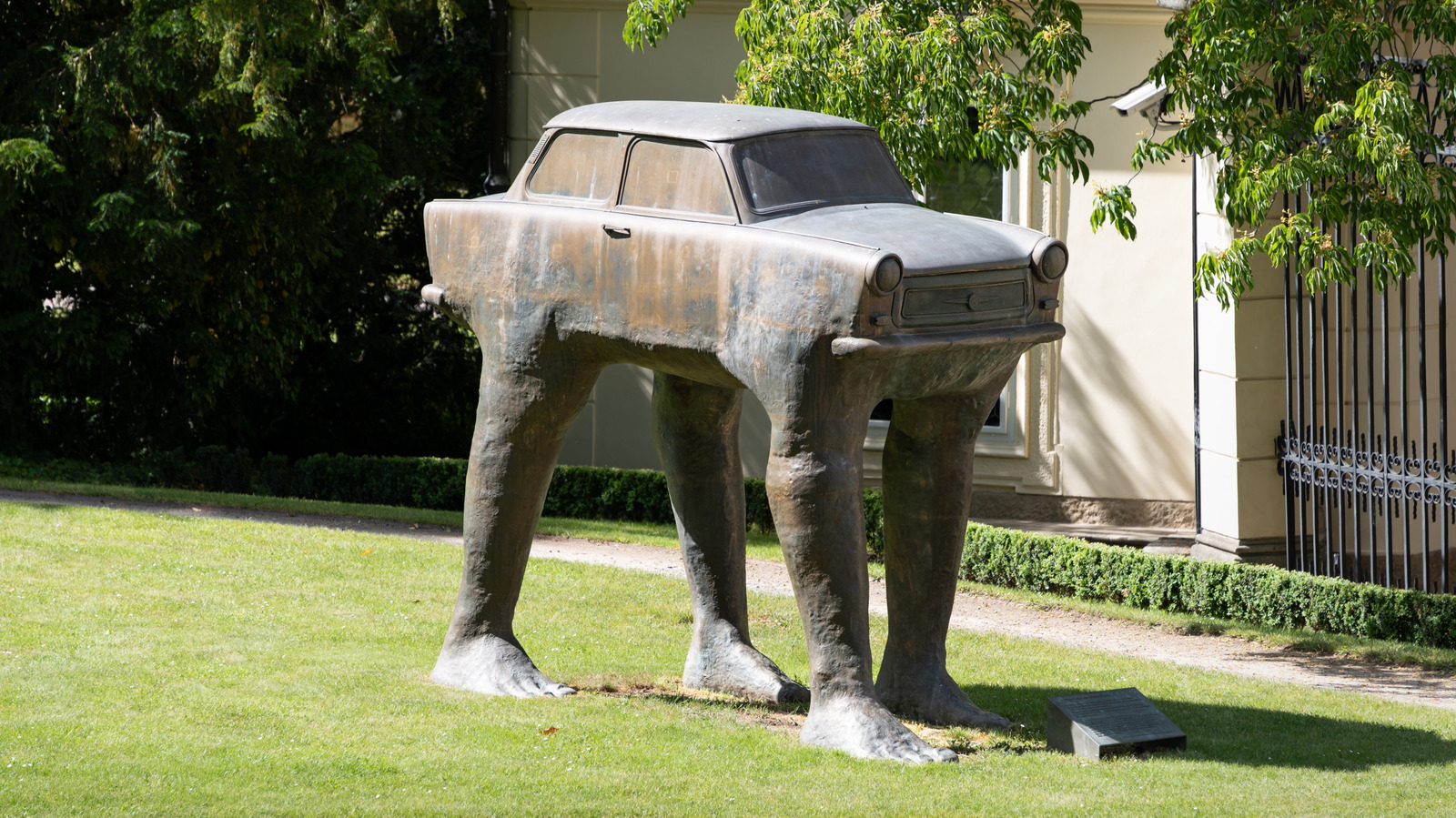
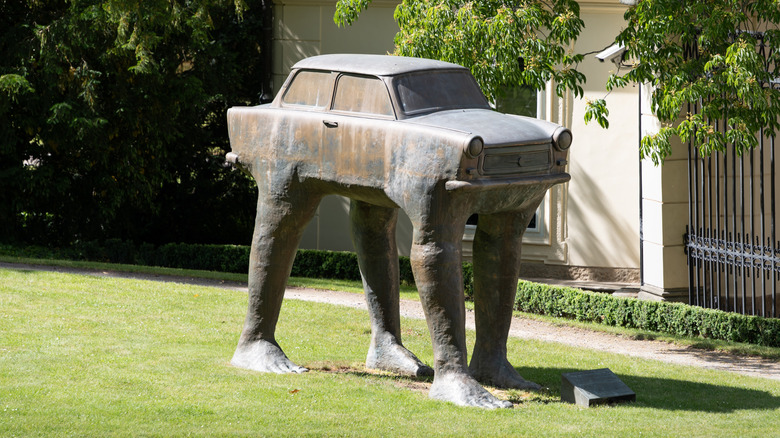
The David Černý sculpture is not just a tribute to the environmentally unfriendly Trabant, but also signifies movement and freedom. The Trabant's role in mobilizing thousands during the latter half of the 20th century cannot be overstated. Its impact on history is still felt today, with many regarding it as an iconic symbol of freedom. The fact that it was often left behind by those fleeing East Germany to West Germany highlights its significance in this context.
The Trabant's journey from being a simple car to an iconic symbol is a testament to the power of art and design. The original sculpture, made from metal and fibreglass, resides in Leipzig, while the bronze casting made in 2001 is arguably more famous. Standing in the gardens of the German embassy, where so many refugees flocked almost 40 years ago, it's a popular tourist attraction.
The Trabant's cultural significance extends beyond its role in history, with many regarding it as a cherished icon. Like other classic cars, such as the Beetle and 2CV, the Trabant has become an enduring symbol of motoring culture. Its simplicity and affordability have made it a beloved vehicle among enthusiasts.
The Trabant's impact on popular culture is undeniable, with its image appearing in various forms of art and media. From graffiti to sculptures, the Trabant has been immortalized in many ways. The fact that it was often featured in artworks, such as Birgit Kinder's iconic graffiti artwork on the Berlin Wall, highlights its significance in the cultural landscape.
The Trabant's affordability is one of its most enduring appeals. In mainland Europe, usable examples can be acquired for as little as €1,000, making it an accessible vehicle for many enthusiasts. The fact that all Trabant 601s are now eligible to import has also made them more desirable among collectors and enthusiasts.
The process of importing a Trabant into the US is not without its challenges, but prices can range from $5,000 to $10,000, making it an attractive option for those looking to own one. However, finding a reliable example may take some time, as only smart imports are typically available.
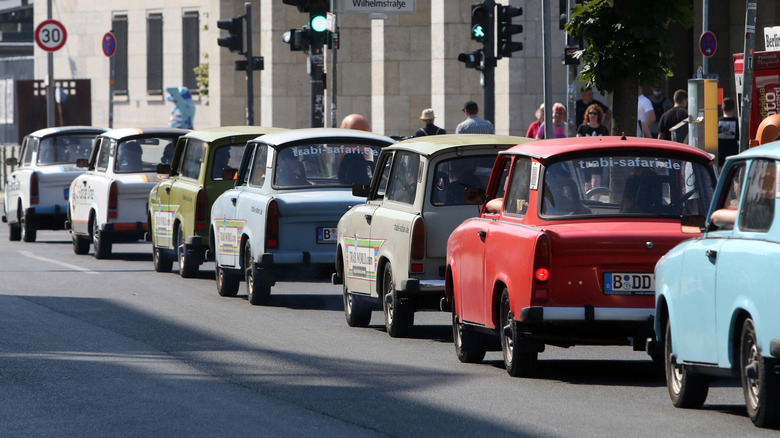
Despite its simplicity, the Trabant has become a symbol of freedom and mobility. Its role in history is still felt today, with many regarding it as an iconic symbol of the latter half of the 20th century. The fact that it was often featured in artworks and sculptures highlights its significance in the cultural landscape.
The Trabant's legacy extends beyond its role in popular culture, with many regarding it as a cherished icon of motoring history. Its impact on the automotive industry is undeniable, with many classic cars, such as the Beetle and 2CV, drawing inspiration from its design. The fact that it has become an enduring symbol of freedom and mobility highlights its significance in the world of motorsports.
The Trabant's haunting legacy is a testament to the power of art and design. Its journey from being a simple car to an iconic symbol is a reminder of the impact that cars can have on our lives and culture. The fact that it continues to be celebrated and admired today highlights its significance in the world of motoring history.