

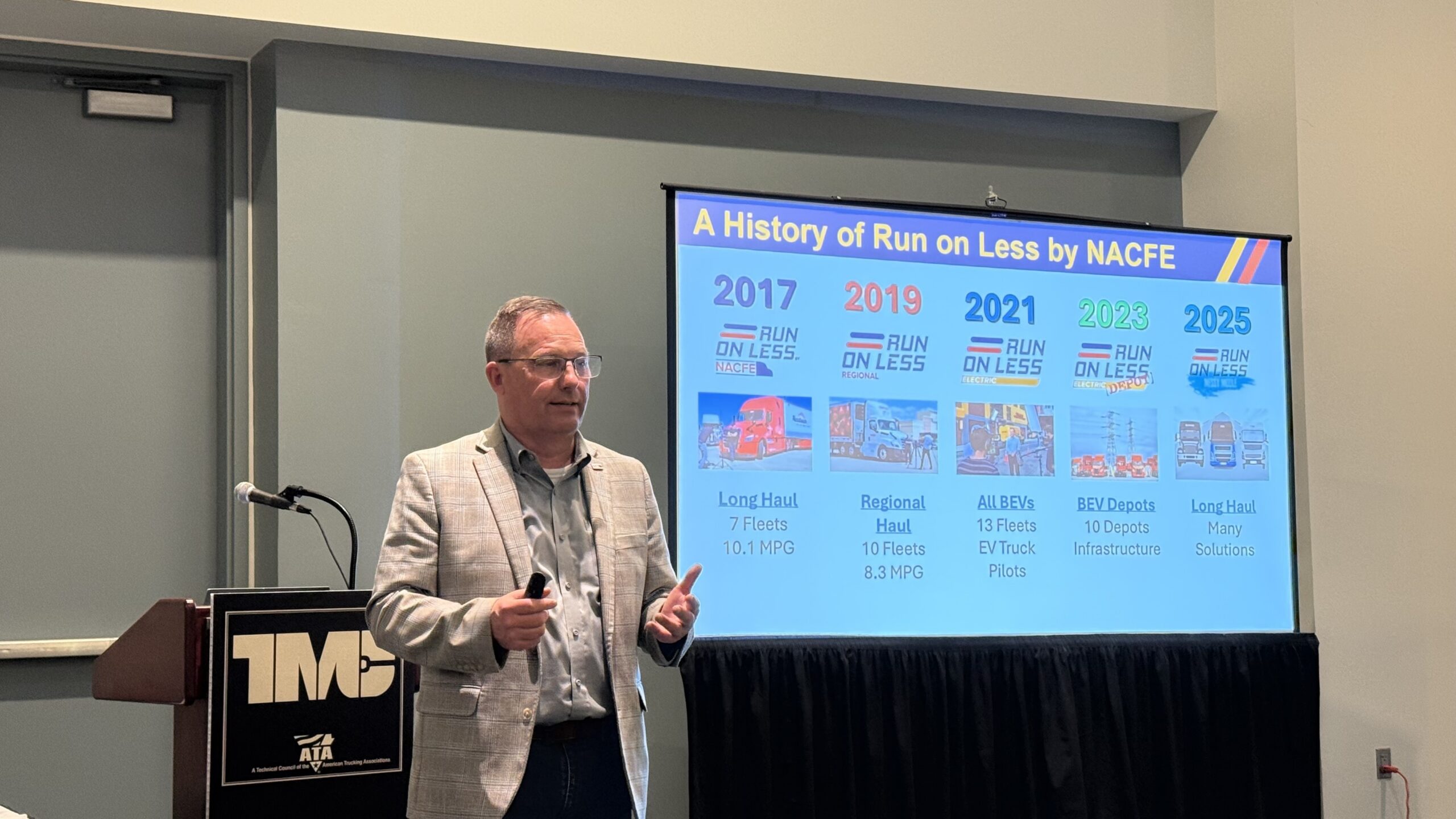
NACFE's 18-day 'Run on Less - Messy Middle' demonstration provided the most detailed real-world powertrain study yet released at TMC 2026. The test involved 26 groups and 28 drivers, fleet managers, and infrastructure personnel sharing their experiences with various powertrains.
Diesel trucks reached an impressive 11.5 miles per gallon during the demonstration, exceeding the national average of 7 mpg, which has climbed from 6 mpg over the past 15 years. However, two other diesel trucks only managed 9.5 mpg, highlighting the variability in fuel economy results.
The test also included three natural gas trucks, five battery-electric vehicles, and two hydrogen fuel-cell units, providing a comprehensive look at various alternative powertrains for Class 8 heavy tractors hauling dry vans, reefers, and flatbeds nationwide.

NACFE collected data every 10 seconds during the demonstration, resulting in over 2 million data points that were analyzed by a 'judges panel' of major fleets, including Amazon, Penske, J.B. Hunt, Covenant, and Pitt Ohio.
The 14 trucks covered a range of Class 8 duty cycles, from long-haul irregular routes with sleeper cabs to city delivery runs as short as 100 miles a day, ensuring that the results were representative of real-world operations.
The 'Run on Less - Messy Middle' series is the second installment in NACFE's powertrain study program, which aims to provide fleets with more accurate information about alternative powertrains for their operations.
NACFE Executive Director Mike Roeth emphasized the significance of the analysis, stating that it provides a detailed look at duty-cycle fit for these solutions and highlights the need for fleets to consider various powertrains in their operations.
Roeth also noted that the test results demonstrate the potential for diesel trucks to achieve better fuel economy with the adoption of new technologies and operational improvements.
The study's findings have implications for the transportation industry, as they provide a more accurate picture of alternative powertrains and their potential for improving fuel efficiency and reducing emissions.
As the transportation sector continues to evolve, it is essential that fleets consider a range of options when selecting powertrains for their operations, including diesel, electric, natural gas, hydrogen, and biodiesel.
Diesel trucks have a lot of untapped potential for fuel economy improvements.