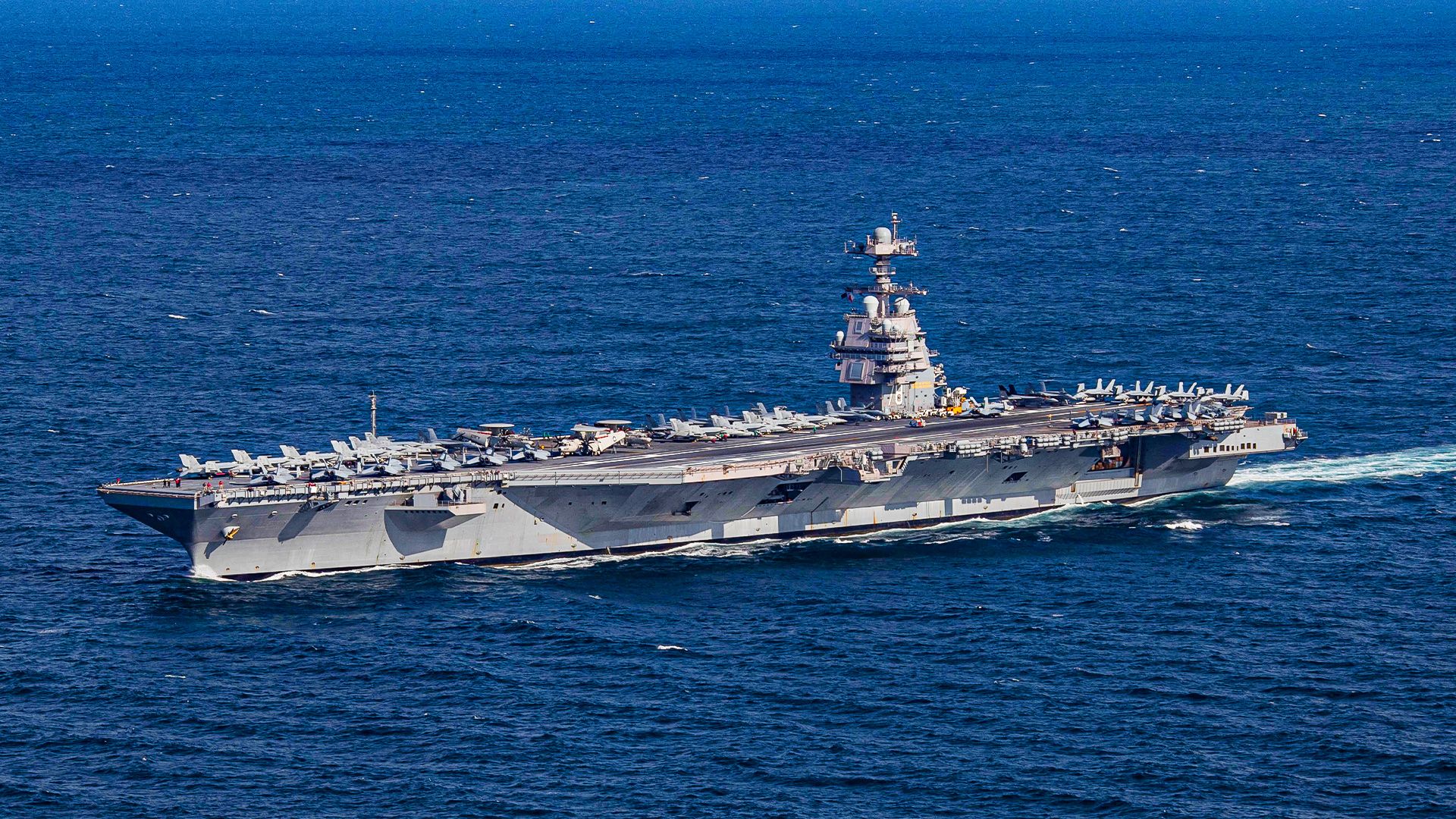
The US Navy's largest active aircraft carriers are designed to deploy US Military power across the globe. These massive ships can carry up to 90 aircraft and generate 160 daily sorties, making them the most powerful naval air platforms ever deployed. The difference in usable aircraft capacity between these carriers and smaller Nimitz-class vessels highlights the importance of each ship's design and operational capabilities.
The Gerald R. Ford-class carriers are the largest class of US Navy supercarriers currently in service, with one operational vessel and another undergoing testing. These ships have a theoretical maximum aircraft capacity of 90, but their actual deployment figures vary depending on the specific ship and its operational requirements. In contrast, Nimitz-class carriers typically operate between 60-75 aircraft in real-world deployments.
The ranking of US Navy supercarriers by aircraft capacity is crucial to understanding the country's defense strategy, particularly in regions such as the Indo-Pacific and the Middle East where carrier strike groups remain central to operations. The ability of these ships to project power without relying on allied airbases is a key consideration for US military planners.
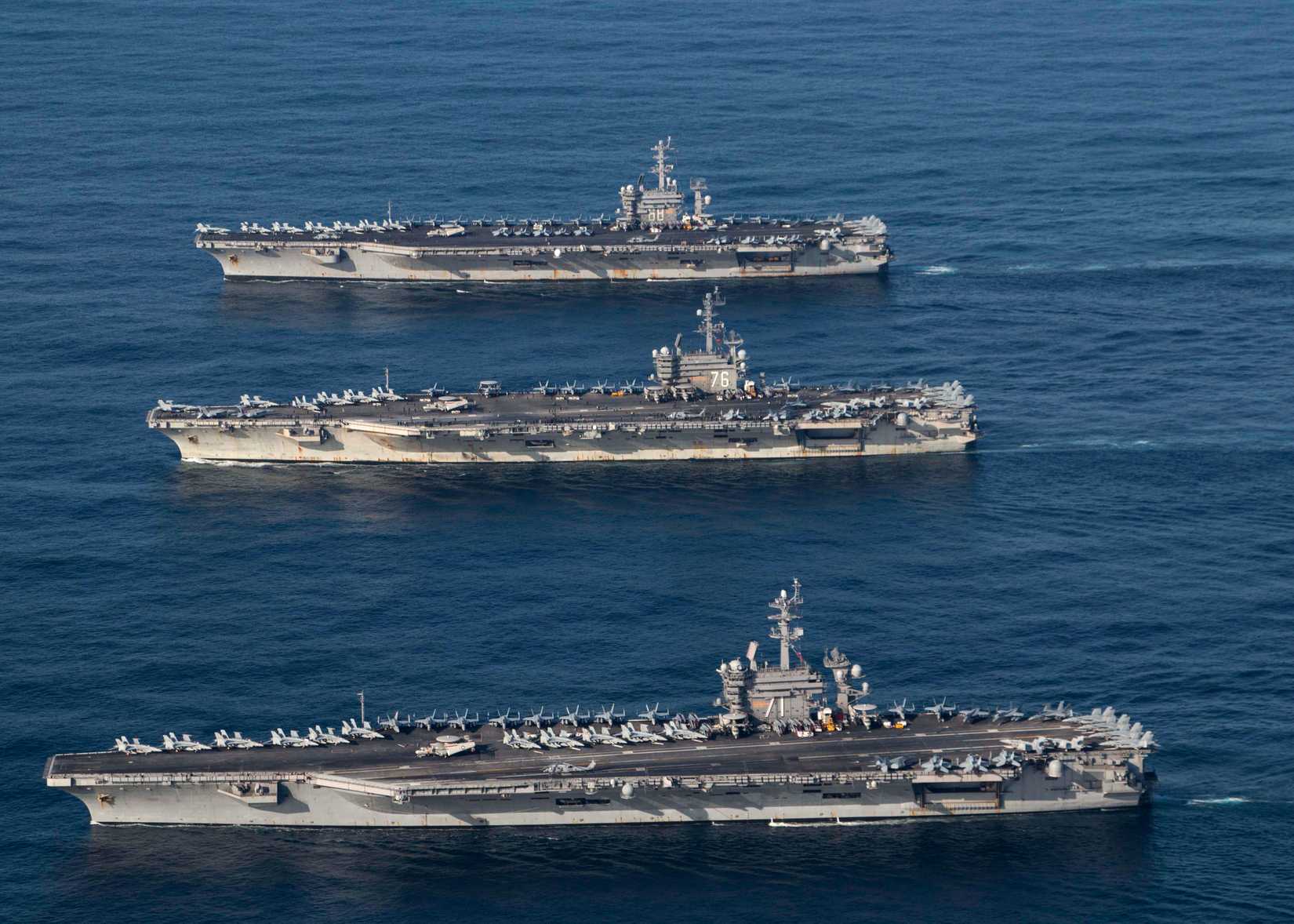
The USS George H.W. Bush holds a unique position among Nimitz-class carriers due to its transitional design, which incorporated several technologies that influenced the Ford-class development. Its aircraft capacity aligns with earlier ships in the class, but it features a redesigned island structure placed further aft, improving flight deck flow and freeing up additional space for aircraft handling.
This redesign aimed to increase sortie efficiency and reduce congestion during high-tempo operations. Even marginal improvements in deck layout can significantly increase the number of aircraft that can be actively cycled through launch and recovery operations. This has a direct impact on the ship's overall effectiveness in combat situations.
Operationally, USS George H.W. Bush has been heavily involved in US military campaigns across the Middle East, including missions against ISIS and support for coalition forces. Its embarked air wings have included F/A-18 Super Hornets, EA-18G Growlers, and E-2D Hawkeyes, forming a balanced strike and surveillance capability.
The ability to sustain a large and flexible air wing under combat conditions cements USS George H.W. Bush's place among the largest carriers by effective aircraft capacity. Its deployment history has demonstrated its value in supporting complex military operations.
In contrast, USS Theodore Roosevelt has long been one of the most battle-proven Nimitz-class carriers, with a rich operational history dating back to 1986. While it may not have the same level of aircraft capacity as some of the newer Ford-class vessels, its experience and reliability make it an essential component of the US Navy's fleet.
The ranking of these supercarriers by aircraft capacity highlights the importance of ongoing investment in naval aviation technology and the need for continued innovation to maintain a competitive edge in global military operations.
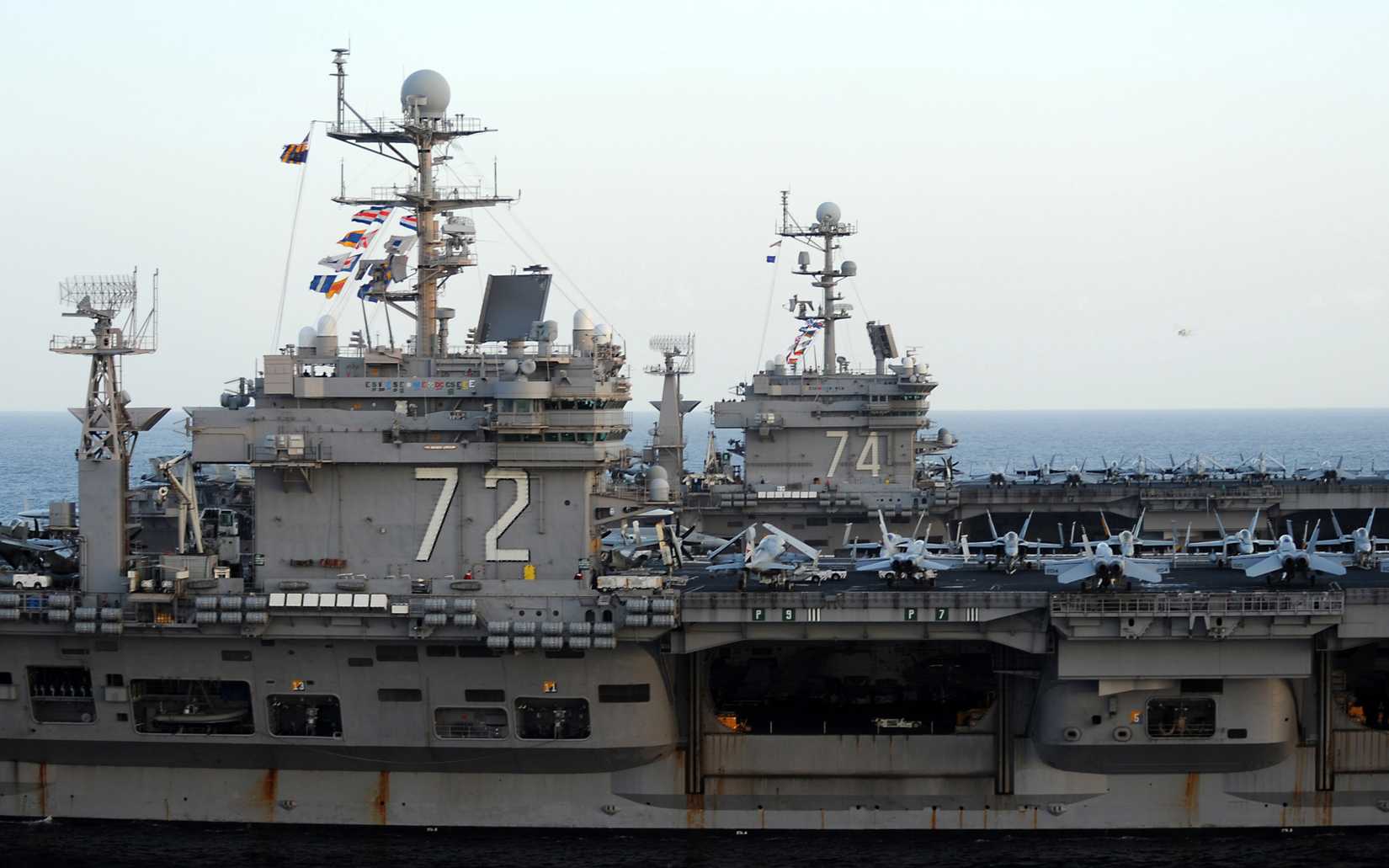
The US Navy's supercarrier fleet plays a critical role in global military operations, with each ship's aircraft capacity significantly impacting its effectiveness.