

The Airbus A350 has become a defining aircraft of modern ultra-long-haul travel, boasting efficient Rolls-Royce engines, extensive composite construction, and a cabin designed for long sectors. This allows airlines to connect city pairs that would have required a stop or were uneconomical to operate previously. As a result, the network of impressively long missions stretches across the Pacific, Indian Ocean, and between North America, Asia, and Southern Africa.
Singapore Airlines features heavily among the longest A350 routes, which is no surprise given its emphasis on nonstop links between Singapore and the United States. These routes push close to the limits of what scheduled commercial flying looks like today, with block times often exceeding 16 hours, depending on winds and operational conditions. The airline's focus on these routes highlights the plane's flexibility outside traditional trunk routes.
The A350 has become one of the world's premier long-haul aircraft due to its ability to fly farther, more efficiently, and with greater consistency than many earlier widebodies could. These ten sectors collectively demonstrate the plane's capabilities, giving it the edge over others in terms of range, capacity management, and flexibility.
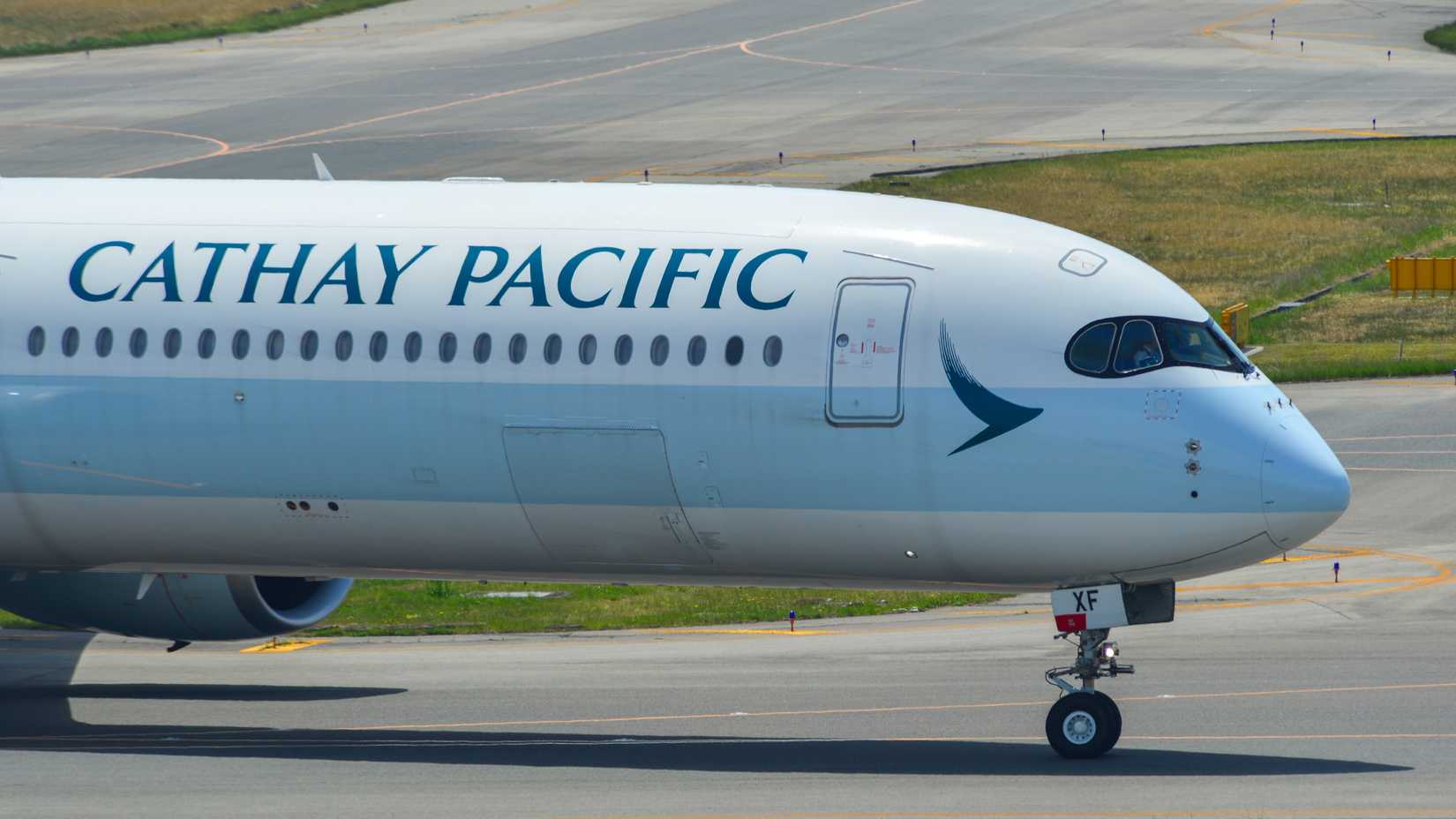
Cathay Pacific's nonstop flights from Dallas/Fort Worth International Airport to Hong Kong International Airport are particularly noteworthy, as they operate using both the A350-1000 and A350-900 variants. This depends mostly on schedule and seasonality, highlighting the route's strategic importance and flexibility.
This service links a major US interior hub with one of Asia's most important international gateways, making it valuable for both local passengers and connecting traffic. It also showcases how airlines use the plane not only for range but also for capacity management.
Airlines like Delta Air Lines are using the A350 to enable nonstop links between extremely distant markets, such as Atlanta to Cape Town. This benefits from the airline's ability to feed passengers from across the United States into Atlanta before sending them onward on one long nonstop sector.

The network depth provided by these routes is essential for airlines looking to expand their reach and offer more competitive services. By leveraging the A350's capabilities, they can tap into new markets and create unique selling points.
As the ultra-long-haul market continues to grow, the Airbus A350 will likely play a significant role in shaping its future. With its impressive range, efficiency, and flexibility, it has established itself as a premier choice for airlines looking to connect distant markets.
The A350's success also underscores the importance of investing in advanced aircraft technology that can support the evolving needs of the aviation industry. As airlines look to expand their routes and services, they will need to continue to innovate and adapt to changing market demands.