

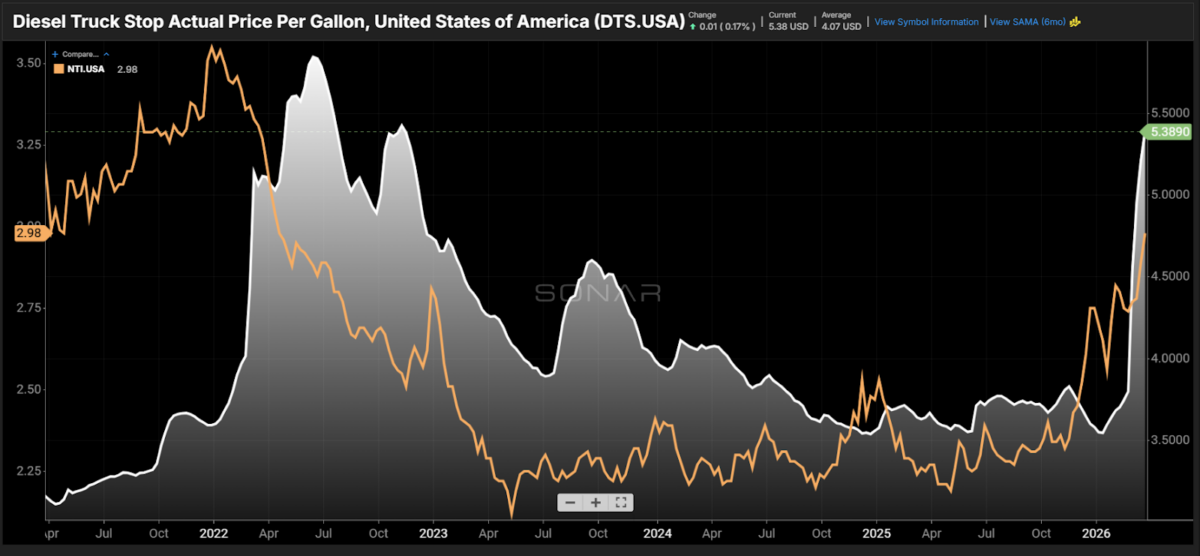
The average retail price of diesel has risen over 41% since March 2, while the average spot rate for dry van truckloads has increased by 7.5% over the same stretch, forming a fairly strong positive correlation of 0.7.
This increase in fuel prices has led to an increase in truckload rates, as carriers seek to pass on their rising costs to shippers.
However, it's essential to note that correlation is not always a perfect indicator of causation, and the relationship between fuel prices and truckload rates can be influenced by various factors.
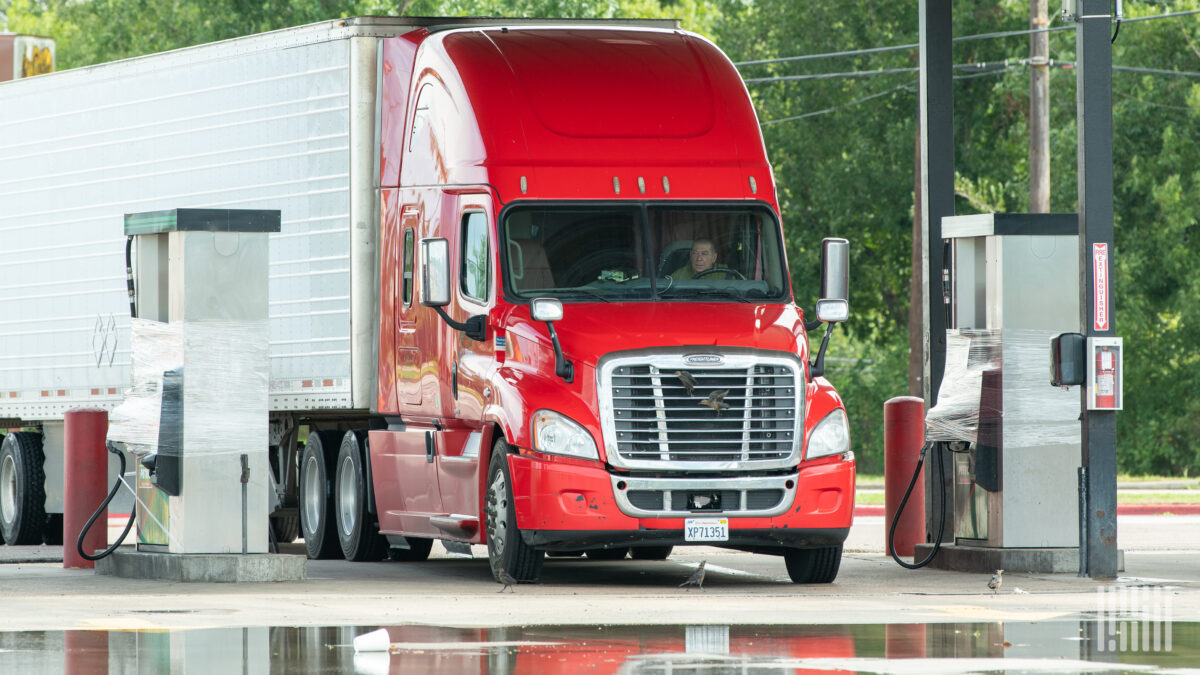
Fuel costs account for roughly 25% of the total operating cost of a truck, which highlights the significant impact of fuel on trucking expenses.
When fuel prices rise sharply, so does their influence on truckload costs, with carriers passing on these increased costs to shippers through variable surcharges.
The majority of truckload moves operate under long-term pricing agreements, which separate out fuel costs as a variable surcharge tied to the average price of diesel, allowing for short-term changes in fuel prices not to affect contract rates.

In contrast, the spot market measures rates that are typically quoted as all-inclusive totals with no component breakouts, reflecting current conditions and eliminating the need for cost separation.
The truckload market experienced a significant collapse in 2022, driven by an imbalance between supply and demand, which led to a rapid decline in demand as shippers realized they had over-ordered during the pandemic era.
As capacity expanded dramatically over the prior two years, the increased competition has helped to stabilize rates in recent months, reducing the impact of fuel price fluctuations on truckload costs.

The relationship between fuel prices and truckload rates is complex, with correlation not always implying causation.