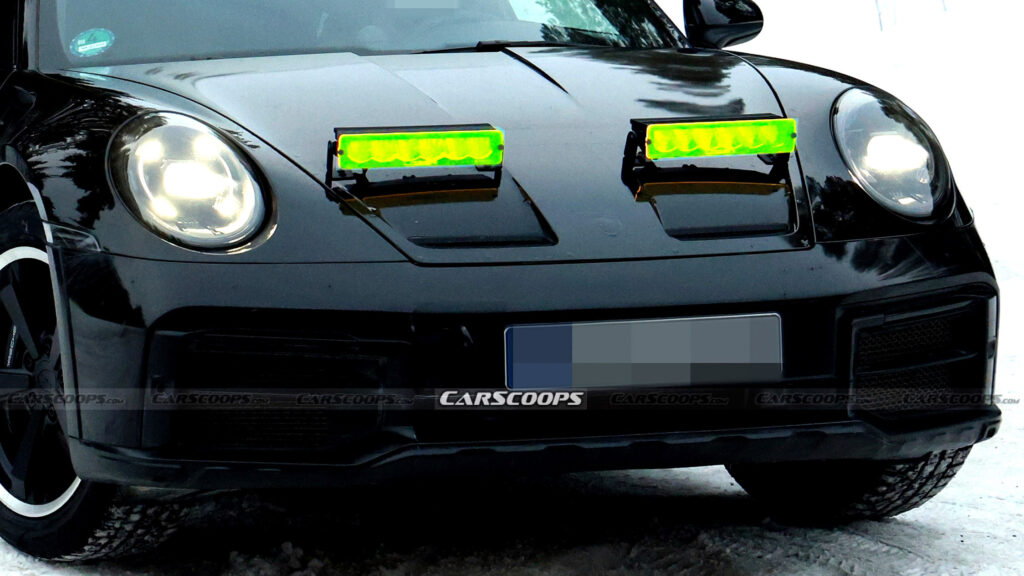
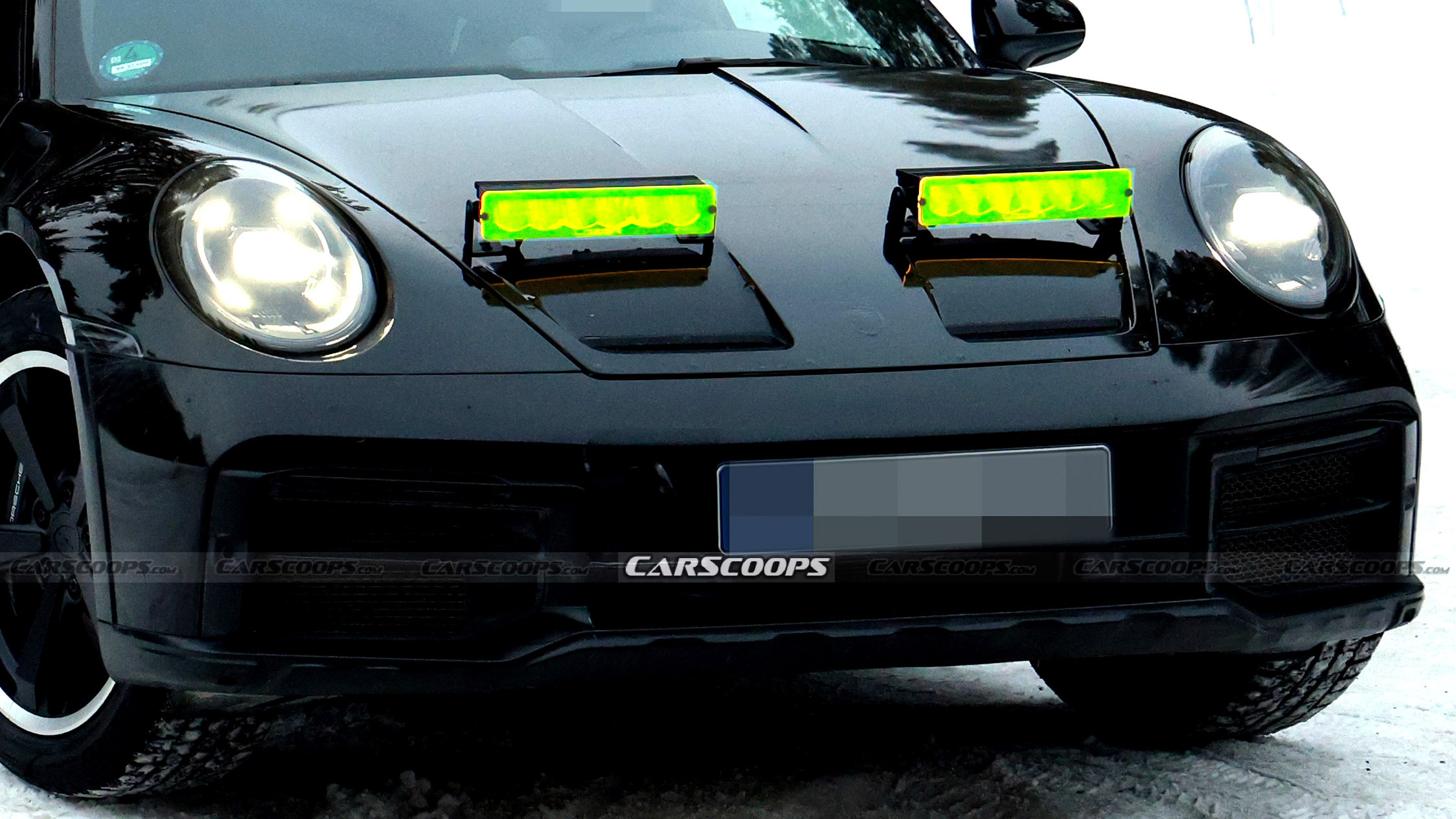
The 911 Dakar is back in the wild, and our spy team has caught a prototype testing, confirming a second-generation Dakar is on the way based on the facelifted 992.2. This comeback was not unexpected, considering the last one sold out almost instantly and now trades for a premium price on the used market.
Visually, the changes are subtle, with the turn signals integrated into the headlights following the facelifted 992.2 design. However, it's worth noting that the 911 design updates rarely bring about revolutionary changes. Instead, they often focus on refining and fine-tuning existing features.
The rear of the prototype appears to be running without a fixed rear wing, instead using the standard model's deployable one, which could be due to ongoing development. Alternatively, this might be a temporary solution until the final design is solidified. Either way, the Dakar's rugged stance and raised ride height are unmistakable.
Inside, some of the bigger updates should happen, such as adopting Porsche's latest digital gauge cluster and updated infotainment setup. There's also a possibility that the new Dakar will ditch the old twist key in favor of a starter button, although this is not confirmed.
The engine powering the GT3 is unlikely to be under the hood of the Dakar, but what will? The original Dakar borrowed its engine from the old Carrera GTS, making around 473 hp. The facelifted GTS now packs a hybrid-assisted 3.6-liter flat-six pushing out 543 hp.
All-wheel drive is a given for the Dakar, and so is a compulsory PDK transmission. However, it's worth noting that this prototype is missing the yellow warning stickers typically found on hybrid test cars, which doesn't necessarily mean it's not electrified. Instead, Porsche might be keeping things low-key for now.
A hybrid Dakar makes sense, given its intended use case of kicking up dust as easily as devouring highways. More power and better efficiency would be a perfect match for a car designed to handle both on-road and off-road capabilities.
Expect the new Dakar to be limited again, as nothing makes a 911 more desirable than telling people they can't have one – unless they're willing to pay a premium price on the used market. This limitation is likely due to Porsche's strategy of creating exclusivity around its high-performance models.