
The allure of a muscle car is a siren's call for many enthusiasts, but the harsh reality is that buying one can be a costly endeavor. For those who cannot afford or want to purchase a brand-new muscle car, buying a used one offers a more affordable alternative. This option allows buyers to secure their desired vehicle while enjoying a reduced price tag.
The depreciation process plays a significant role in this decision, as new cars tend to lose value rapidly in the first few years of ownership. According to recent data, a 2023 Dodge Challenger will have depreciated by 35% over the last three years, while its counterpart, the Charger, has taken an even greater hit, with a 45% decrease in value.
However, the story is not as straightforward as it initially seems. The original MSRP of these models varies, with the entry-level SXT trims starting at $36,920 for the Charger and $34,395 for the Challenger. To get a more accurate comparison, we need to look beyond these basic trims and examine the flagship Scat Pack models. These high-end trims are significantly more desirable and come with higher price tags.
The 2023 Scat Pack trims for both the Challenger and Charger were priced at $50,860 for the standard model and $58,855 for the Widebody, respectively, while the Charger's top trim was set at $53,520 and $59,515. These prices reflect the cars' true muscle car status and make them highly sought after by collectors.
Fast-forward to today, and these cars remain incredibly desirable as some of the last truly iconic muscle cars to have hit U.S. roads. As a result, their depreciation picture is vastly different from that of more basic trims. Many high-end trims have been kept as collectibles, accumulating minimal miles, which has led to them retaining their value exceptionally well.
In isolated sales, it appears that the Charger may have held its value better than the Challenger. A 2023 Charger with 7,000 miles sold at auction for just north of $45,000, while a comparable model with only 1,100 miles struggled to reach the $40,000 barrier. However, this disparity is largely due to the Charger's higher initial price.
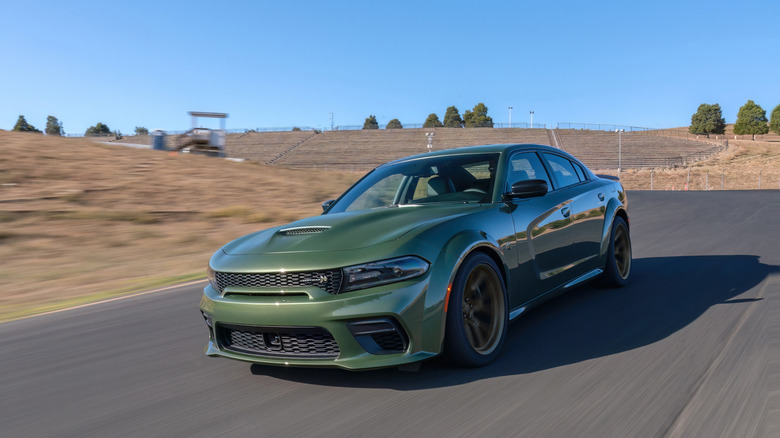
The reality is that there is very little depreciation between the two cars at this end of the spectrum. The difference in value retention is largely negligible, making it challenging to declare a clear winner in terms of depreciation. Ultimately, the decision comes down to individual preferences and priorities.
Ultimately, both the Dodge Challenger and Charger have proven themselves to be excellent investments for those seeking a rare and highly sought-after muscle car. Their exceptional value retention is a testament to their enduring appeal and desirability among collectors and enthusiasts alike.
Both models have maintained their value exceptionally well due to their rarity and collectibility.