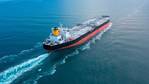



The Japanese government has been backing this project since its inception, and now Japan Engine Corporation and Kawasaki Heavy Industries are making significant strides towards commercializing hydrogen-fueled vessels. The collaboration involves several major players in the industry, including Mitsui O.S.K. Lines, MOL Drybulk, Onomichi Dockyard, and ClassNK.
The engine in question is designed for large commercial vessels and has achieved hydrogen co-firing across all cylinders, reaching a ratio of more than 95% at full load while maintaining stable operation. This achievement demonstrates the potential of hydrogen as a clean-burning fuel source for maritime transportation. However, further testing will be necessary to optimize performance.
The development of hydrogen-fueled vessels has gained momentum in recent years, with most projects focusing on smaller ships operating over short distances. The success of this project could pave the way for longer-distance, high-output operations by combining a low-speed two-stroke engine with liquefied hydrogen fuel.
A 17,500-deadweight-tonne multi-purpose vessel is scheduled to be delivered in January 2027 and will feature the new engine. This vessel is expected to embark on a three-year demonstration program from fiscal year 2028 under the operation of MOL and MOL Drybulk.
Kawasaki Heavy Industries is developing the marine hydrogen fuel supply system for the vessel, while ClassNK will conduct safety evaluations throughout the project. The initiative aims to support the development of large hydrogen-fueled merchant ships and reduce greenhouse gas emissions from the maritime sector.
The successful co-firing of hydrogen on a full-scale main engine marks a significant milestone in the development of hydrogen-powered shipping. This achievement highlights the potential for hydrogen as a low-carbon fuel source for maritime transportation, which could help mitigate climate change impacts.
As the world transitions towards cleaner energy sources, the maritime sector is under increasing pressure to reduce its environmental footprint. Hydrogen-fueled vessels offer a promising solution, with the potential to significantly lower emissions and improve air quality in ports and surrounding areas.
The successful trial of this engine demonstrates the feasibility of hydrogen-powered shipping on a commercial scale. However, further research and development are necessary to overcome technical challenges and ensure widespread adoption.
Ultimately, the success of this project will depend on its ability to demonstrate cost-effectiveness and scalability. If successful, it could pave the way for a new era of sustainable maritime transportation.
The successful co-firing of hydrogen on a full-scale main engine marks a significant milestone in the development of hydrogen-powered shipping, with potential implications for reducing greenhouse gas emissions from the maritime sector.