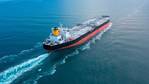


Mitsui O.S.K. Lines, Hitachi and Hitachi Systems have signed a memorandum of understanding to develop floating data centers by converting second-hand vessels, aiming to meet growing demand driven by artificial intelligence. The initiative is expected to target Japan as the primary market, alongside Malaysia and the United States, where the Hitachi group already operates land-based data center services. This move marks a significant step towards addressing the increasing pressure on land availability, infrastructure and energy resources in the region.
The concept of floating data centers involves converting existing ships into data centers, allowing deployment in ports or rivers and enabling relocation based on demand. This approach could provide an attractive alternative to traditional land-based facilities, particularly for companies looking to expand their operations in areas with limited space. The use of seawater or river water for cooling also offers a potential cost savings.
Mitsui O.S.K. Lines will be responsible for vessel conversion planning, maritime operations, coordination with port authorities and financing structures, while Hitachi and Hitachi Systems will handle data center design, IT infrastructure, operations and customer engagement. The partnership between the companies will bring together their expertise in ship conversion and data center management to create a unique solution for the growing demand for cloud computing services.
The development of floating data centers could shorten development timelines to around one year for vessel conversion, compared with longer construction periods for land-based facilities. This could make it easier for companies to quickly scale up or down in response to changing market conditions. The use of existing ship systems and hulls could also reduce initial investment costs.
Mitsui O.S.K. Lines noted that the floating data centers could offer large-scale capacity comparable to major onshore facilities, while reducing environmental impact. This is particularly important as demand for data centers has risen rapidly in recent years alongside the expansion of generative AI, increasing pressure on land availability, infrastructure and energy resources.
The initiative also highlights the growing importance of sustainability in the data center industry. As companies look to reduce their carbon footprint and minimize their environmental impact, innovative solutions like floating data centers are becoming increasingly attractive. The use of seawater or river water for cooling is a significant step towards reducing energy consumption and greenhouse gas emissions.
While there are still many technical and logistical challenges to overcome, the development of floating data centers has the potential to transform the industry. With the growing demand for cloud computing services and the need for more sustainable solutions, this initiative could be a game-changer for companies looking to stay ahead of the curve.
The partnership between Mitsui O.S.K. Lines, Hitachi and Hitachi Systems marks an important step towards realizing this vision. As the industry continues to evolve, it will be interesting to see how floating data centers are received by customers and whether they become a mainstream solution for companies looking to expand their operations.
Overall, the development of floating data centers offers a promising new direction for the data center industry. With its potential to reduce construction time, environmental impact and initial investment costs, this innovative solution is likely to attract significant attention from companies looking to stay ahead of the curve.
The development of floating data centers could revolutionize the industry with its potential to reduce construction time and environmental impact.