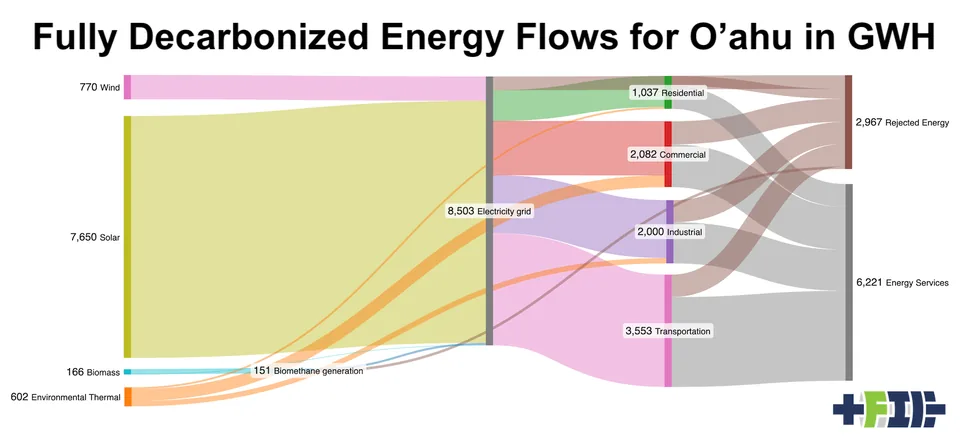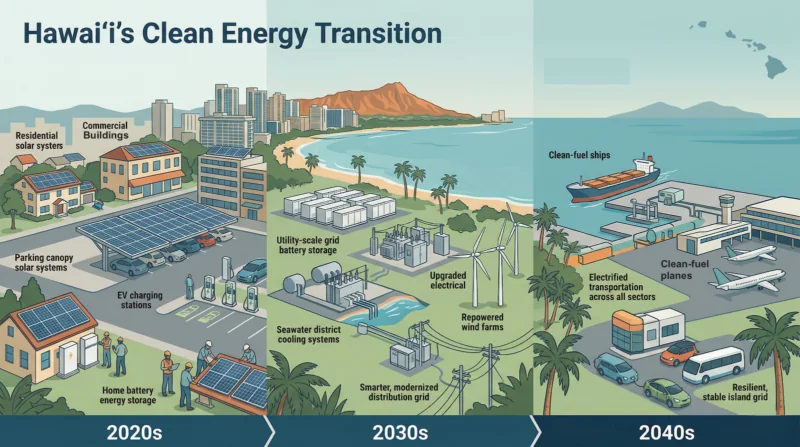
Hawaiʻi, an isolated archipelago with no continental grid behind it, is faced with the daunting task of building a cleaner, more resilient, and affordable energy system. The question of whether Hawaiʻi can achieve this goal has been persistently asked due to its unique energy challenges.
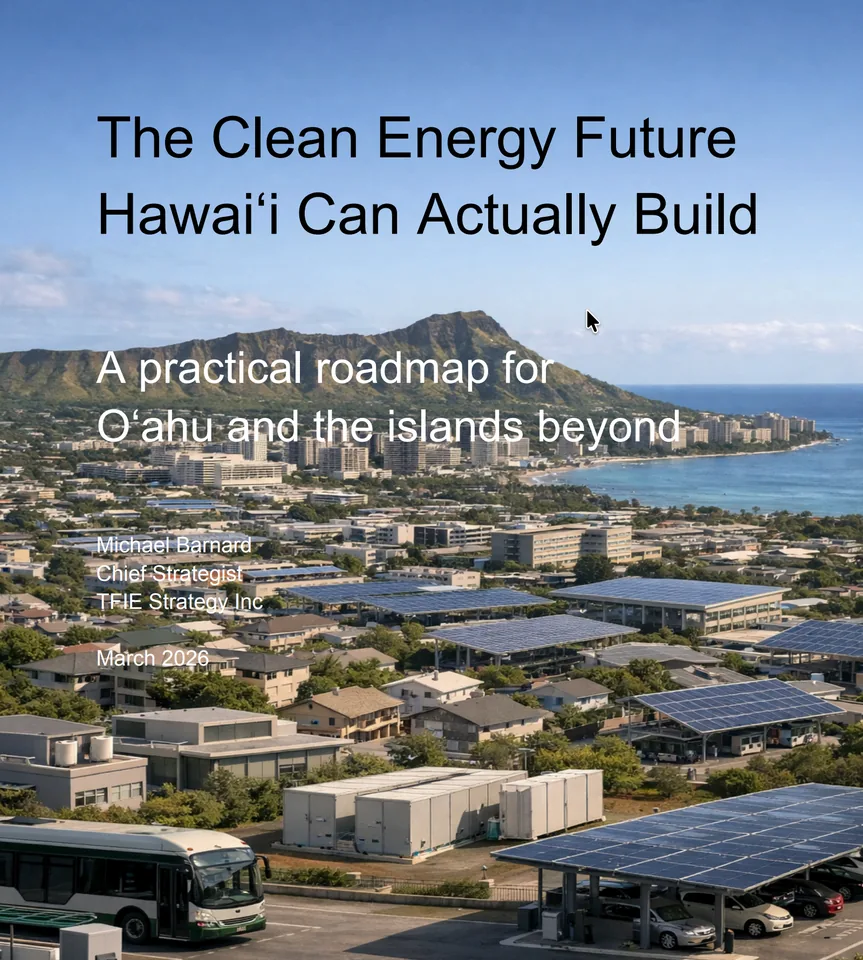
The newly published white paper, The Clean Energy Future Hawaiʻi Can Actually Build, provides a practical roadmap for Oʻahu and the islands beyond. The paper is based on explorations published in CleanTechnica and has been extended into a coherent whole. By clarifying what appears technically and economically possible, this work tests the arithmetic, infrastructure logic, and system boundaries.
Hawaiʻi is often treated as a single energy system, but in reality, it is a collection of electrically isolated island grids connected only by shipping. Each island must generate and balance electricity in real time while sharing a petroleum supply chain. This highlights the need for a more nuanced understanding of the state's energy landscape.
Population and activity are concentrated on Oʻahu, with about 1.0 million of the state's 1.44 million residents. However, energy demand does not map cleanly to population due to factors such as aviation, tourism, and longer travel distances.
The total statewide energy consumption is about 100 TWh per year, with Oʻahu responsible for about 62 TWh. Electricity is only about 7 to 8 TWh of that on Oʻahu. Transportation dominates at roughly 60% of total energy consumption.
Defining the problem correctly is crucial in addressing Hawaiʻi's energy challenges. By excluding overseas aviation fuel, maritime bunkering, and military fuel use from the calculation, the scale of the problem dramatically changes. On Oʻahu, crude oil inputs fall from about 53,000 GWh to about 30,000 GWh.
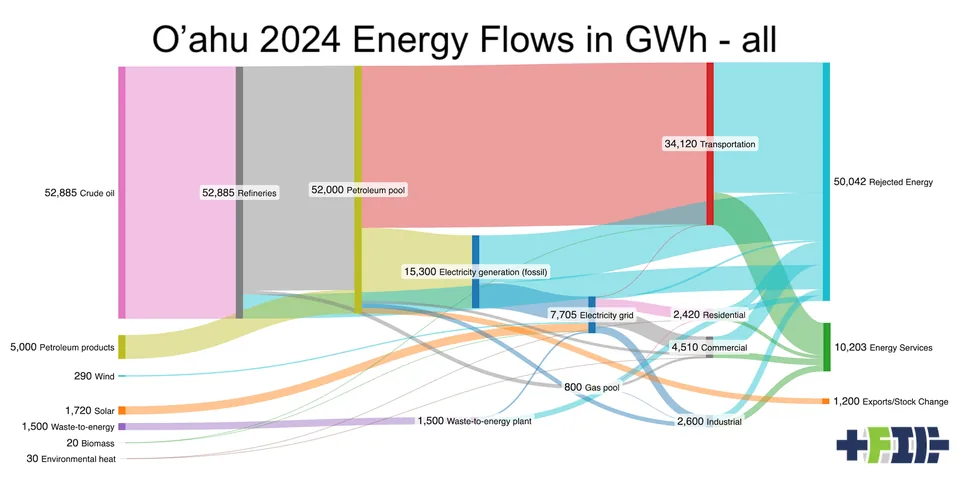
The remaining system represents homes, businesses, local transport, and industry, which is large but manageable. This distinction highlights the importance of aligning the system boundary with what local policy and infrastructure can influence.
By focusing on this manageable sector, the white paper provides a clear direction for Hawaiʻi's energy transition. The analysis reveals that most of the remaining system is within reach, making island energy independence a feasible goal.
The practical roadmap outlined in the white paper offers a promising solution to Hawaiʻi's unique energy challenges. By adopting sustainable energy solutions and improving infrastructure, the state can build a cleaner, more resilient, and affordable energy system that meets its needs.