
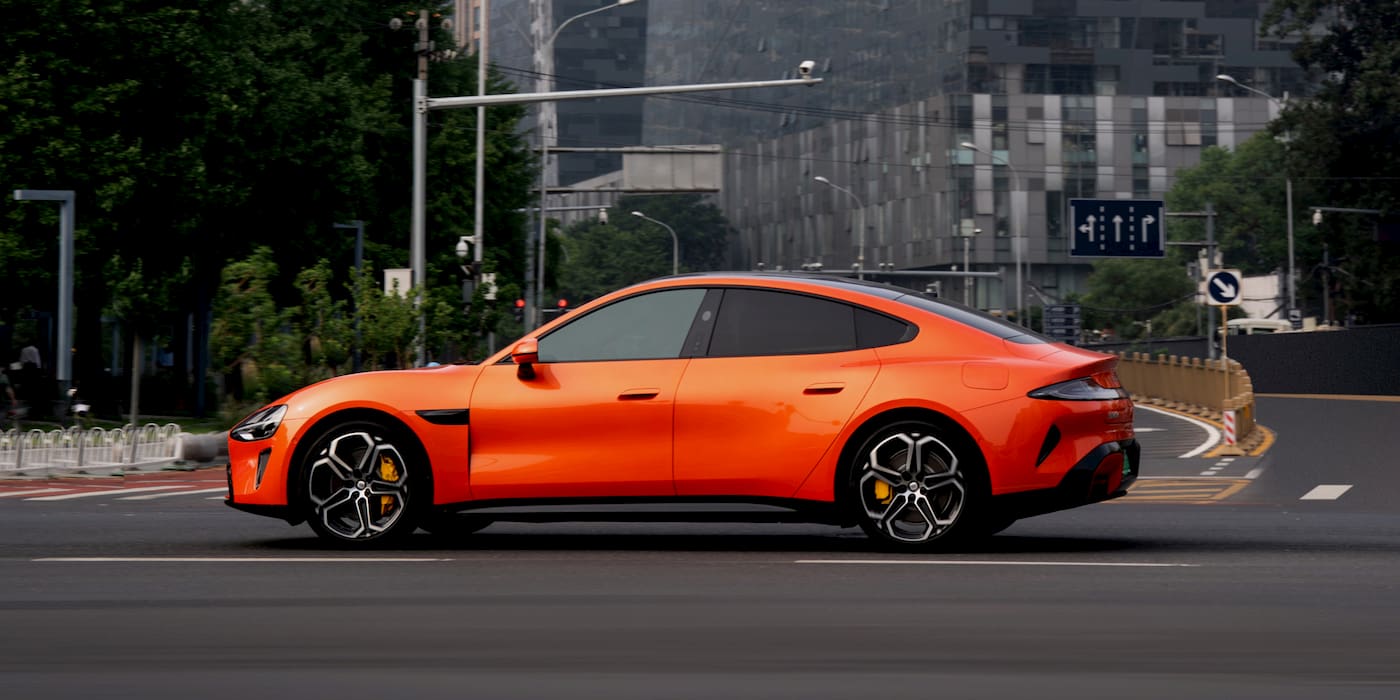
5%. The data comes from owner Mr. Feng, who drives his SU7 Pro an average of 600 km (373 miles) per day, roughly equivalent to a New York-to-Boston round trip every single day.
Xiaomi staff told Mr. Feng that the results were genuinely surprising, as he had assumed it would be down to 90% at best. In fact, the battery has gone through approximately 506 complete charge-discharge cycles, with actual partial charging cycles likely much higher due to most owners charging between 20-80% rather than doing full cycles.
To put this in perspective, the data was shared by social media user 'Jackson's Sunset Drive' on Bilibili and caught the attention of Xiaomi CEO Lei Jun, who shared it on Weibo. Mr. Feng isn't done pushing limits, aiming to become the first person to put 600,000 km on an SU7 within three years.
He has calculated the operating costs and saved over $14,300 in fuel costs alone compared to a conventional vehicle. This real-world data matters more than lab tests and warranty specifications, especially for a brand like Xiaomi that is relatively new to the EV market. 5% battery capacity is remarkable, suggesting that modern EV batteries, when properly engineered, can far exceed conservative warranty thresholds.
The timing is notable too, as Xiaomi's first-generation SU7 has ended production and been replaced by a refreshed version. For current owners worried about long-term value, this data point should put minds at ease.
This impressive battery longevity test highlights the potential for modern EV batteries to far exceed warranty thresholds when properly maintained. As the EV market continues to evolve, it will be interesting to see how manufacturers address issues like battery degradation and long-term durability.