
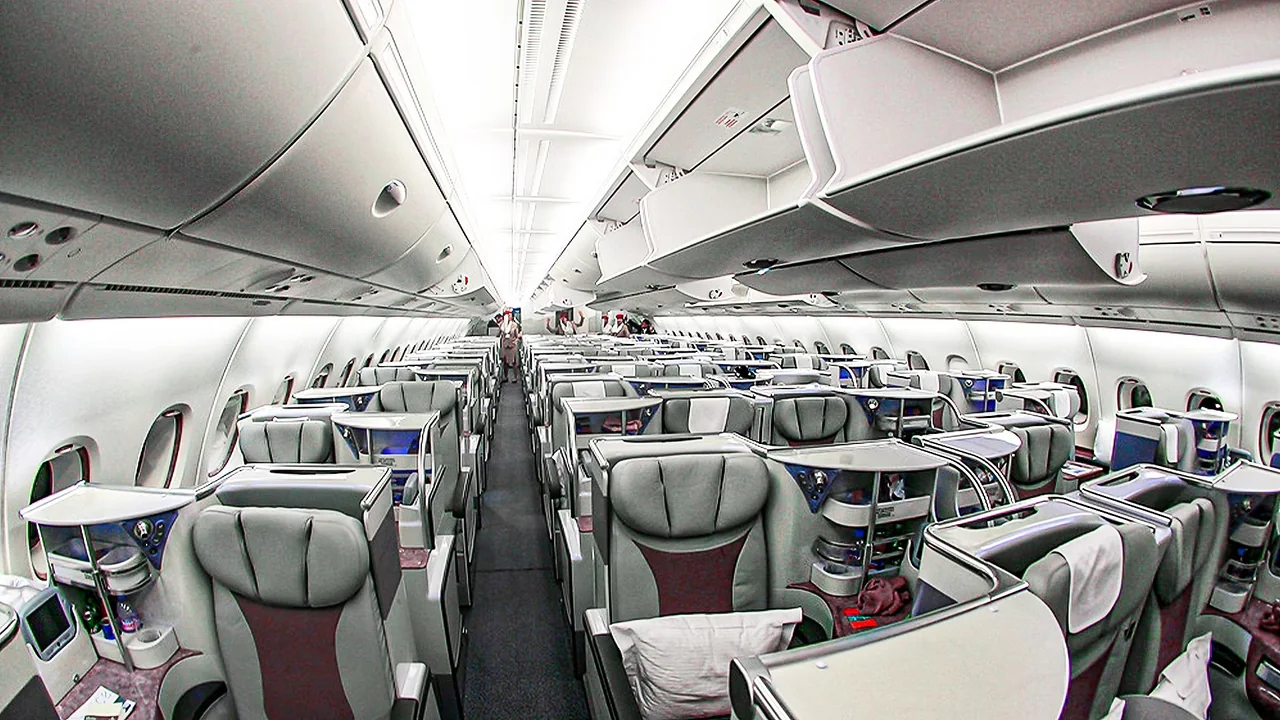
The Airbus A380's cabin layout is often misunderstood as simply being a large passenger space. However, this perspective overlooks the aircraft's true genius: its ability to separate functions with precision. Behind the polished surfaces and mood lighting lies an intricate architecture that divides space between customer experience, crew workflow, operational control, and fatigue management. This separation of functions is what makes the A380 so compelling to analyze years after its production ended.
The A380's massive size gives cabin designers unprecedented freedom to create unique zones and hidden thresholds. With two full-length passenger decks offering a vast amount of floor area, the aircraft remains the only commercial jet of its kind ever designed. This scale allows for clever layering of spaces that most passengers never notice, blurring the lines between luxury and logistics.
One of the A380's charming secrets is the 'Harry Potter cupboard,' a tiny compartment tucked under the forward staircase on some aircraft. To passengers, it appears as dead space, but crew members know it as a purser's office, where they can manage paperwork, monitor cabin operations, and control in-flight entertainment systems.

The A380's dedicated crew workspace is a rare feature in modern aircraft, where airlines have prioritized seat density over operational niches. The hidden office represents the superjumbo's design philosophy: not just as a passenger platform but also as a layered workspace. This approach ensures that even seemingly whimsical features serve serious systems design.
The A380's cabin layout is a masterclass in balancing competing demands. On one hand, it provides an exceptional customer experience with luxurious amenities and spacious cabins. On the other hand, it requires careful management of crew workflow, operational control, and fatigue prevention to ensure safe and efficient flight operations.
As airlines continue to prioritize passenger comfort and efficiency, the A380's innovative design serves as a valuable reference point. By understanding how the aircraft balances competing demands, designers can create more functional and comfortable cabins in future aircraft.

The A380's cabin architecture also highlights the importance of ergonomics and workflow in commercial aviation. By designing spaces that accommodate both crew and passengers, airlines can improve overall passenger experience and reduce fatigue among flight attendants.
The A380's hidden features demonstrate the value of investing in thoughtful design and operational planning. As the industry continues to evolve, it is essential to recognize the importance of balancing competing demands and prioritizing crew welfare.
In conclusion, the Airbus A380's cabin layout is a remarkable example of innovative design and systems thinking. By understanding its unique features and design philosophy, airlines can create more functional, comfortable, and efficient cabins in future aircraft.

The A380's unique cabin layout is a testament to the aircraft's innovative design, which balances luxury and logistics.