

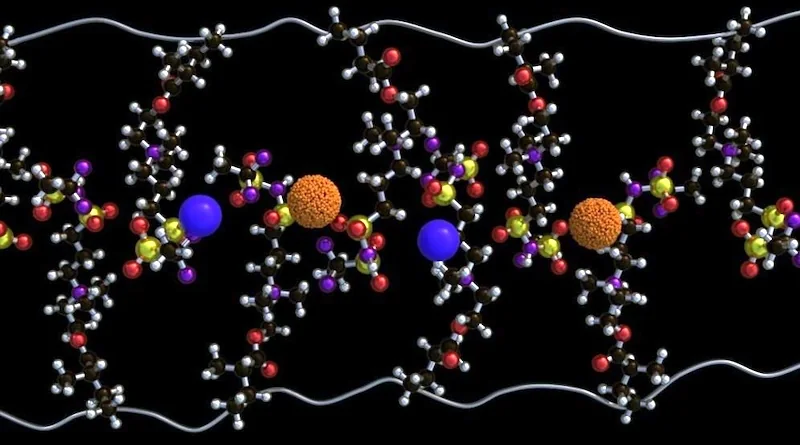
Researchers at Oak Ridge National Laboratory have made a groundbreaking discovery in the field of solid-state batteries, paving the way for a new generation of more efficient and sustainable energy storage solutions. The breakthrough centers around zwitterions, a type of molecule that plays a crucial role in creating a new electrolyte formula. This development is significant as it marks a major step towards replacing traditional liquid electrolytes with more advanced solid-state materials.
The use of zwitterions has been shown to enhance the performance and stability of solid-state batteries, while also reducing costs and environmental impacts associated with traditional battery production methods. By leveraging the unique properties of these molecules, researchers aim to create a new class of batteries that can support widespread adoption of electric vehicles and renewable energy sources.
The Oak Ridge National Laboratory team has been working tirelessly to optimize the structure and composition of their zwitterion-based electrolyte formula. Through extensive experimentation and computational modeling, they have identified key factors that influence the performance and stability of these materials. The results of this research are expected to have a profound impact on the development of next-generation solid-state batteries.
One of the most significant challenges facing researchers in this field is the need to balance competing demands for performance, cost, and environmental sustainability. Traditional battery production methods often rely on toxic materials and high-energy processes that can compromise safety and efficiency. In contrast, zwitterion-based electrolytes offer a promising alternative that could help mitigate these issues.
The potential applications of this technology extend far beyond the realm of energy storage. As researchers continue to explore the properties and behavior of zwitterions, they may uncover new uses for these molecules in fields such as medicine, materials science, and electronics.
While significant progress has been made in recent years, there is still much work to be done before solid-state batteries can reach widespread adoption. The Oak Ridge National Laboratory team is committed to ongoing research and development, working closely with industry partners and other experts to advance the state-of-the-art in this field.
The discovery of zwitterions as a key component of new electrolyte formulas represents a major breakthrough in the quest for more efficient and sustainable energy storage solutions. As researchers continue to explore the properties and behavior of these molecules, we can expect significant advances in the development of next-generation solid-state batteries.
The potential benefits of this technology are vast and varied, from improved performance and reduced costs to enhanced safety and environmental sustainability. As the field continues to evolve, it will be exciting to see how researchers and industry partners work together to bring these innovations to market.
While the journey ahead will undoubtedly be challenging, the discovery of zwitterions as a key component of new electrolyte formulas offers a promising glimpse into a future where energy storage solutions are more efficient, sustainable, and accessible than ever before.