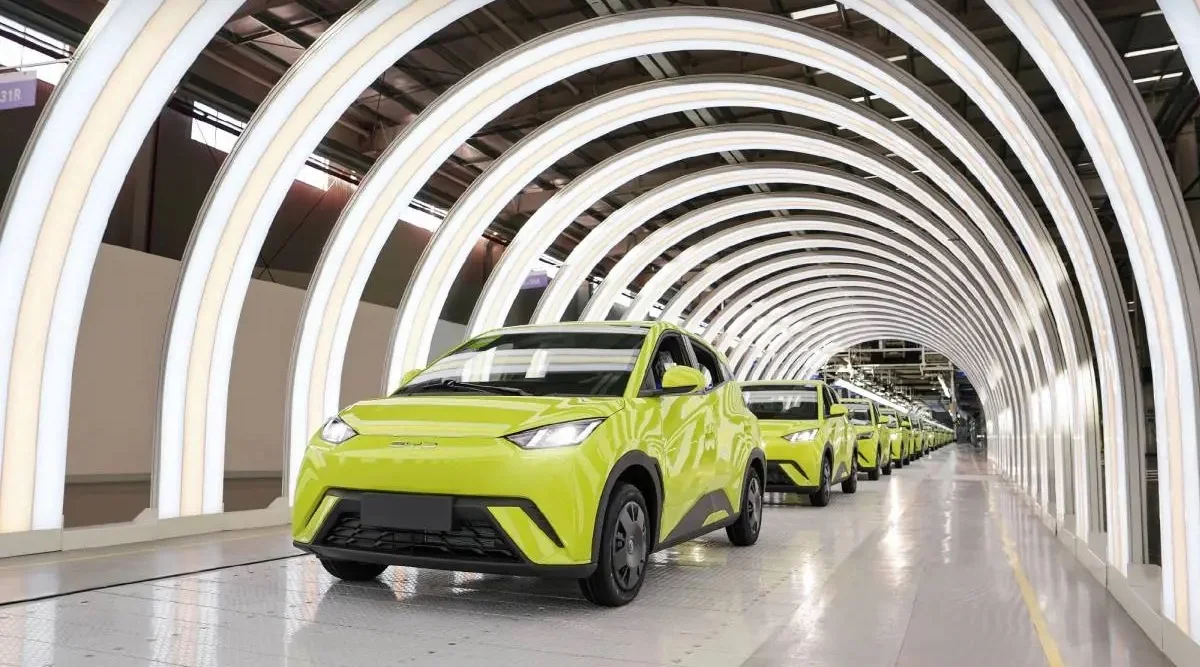
BYD is making waves in the automotive industry by exploring the possibility of acquiring underutilized factories in Europe from Stellantis and other automakers. The Chinese EV company is looking to capitalize on the growing demand for electric vehicles in the region.
The European auto market has been struggling with declining sales and increasing competition, but BYD sees an opportunity to fill the gap with its expanding portfolio of electric vehicles. With a focus on sustainability and clean energy, BYD is well-positioned to take advantage of the EU's efforts to reduce greenhouse gas emissions.
BYD is not just looking at Stellantis, but also other companies that may be willing to sell their spare capacity. The company has already established a presence in Hungary and Turkey, with new factories set to open in 2026 and 2027. However, it's clear that BYD wants to expand its operations further into the European market.
The potential acquisition of underutilized factories could lead to significant job creation in Europe, as well as increased growth for the region's automotive industry. With BYD poised to take advantage of spare capacity, it's likely that we'll see a shift towards more sustainable and clean energy-based manufacturing practices.
BYD is currently the largest plugin vehicle producer in the world, with sales surpassing those of Geely and Tesla in 2025. The company's focus on electric vehicles has paid off, with its market share growing significantly in Europe. However, BYD still faces challenges, including a slowdown in sales this year.
The EU's tariffs on Chinese-made electric cars could be a major factor in BYD's decision to expand into the European market. By acquiring underutilized factories, BYD can avoid these tariffs and reduce its costs. This move could also help to increase competition in the region, driving innovation and growth.
Stellantis owns several struggling automotive brands, including Abarth, Alfa Romeo, and Opel. It's unclear which of these brands might be willing to sell spare capacity to BYD, but it's likely that we'll see some consolidation in the European market. The potential acquisition could also lead to job losses for workers at underutilized factories.
BYD has stated its preference for not getting into joint ventures with other companies. Instead, the company prefers to operate independently and partner with manufacturers on a project-by-project basis. This approach allows BYD to maintain control over its operations and avoid potential conflicts with partners.
The move by BYD could have significant implications for the European auto market, with several companies potentially selling spare capacity to the Chinese EV company. As the industry continues to evolve, it's likely that we'll see more consolidation and changes in the market. One thing is certain, however: BYD is poised to play a major role in shaping the future of sustainable energy-based manufacturing.
The move could lead to a significant shift in the European auto market, with BYD poised to capitalize on spare capacity.