The National Laboratory of the Rockies' (NLR's) Kestrel supercomputer has played a pivotal role in accelerating applied energy research, with the laboratory's Fiscal Year 2025 Advanced Computing Annual Report showcasing its capabilities. The report highlights the growing importance of high-performance computing and artificial intelligence (AI) in advancing scientific discovery across various fields, including materials science, integrated energy systems, manufacturing, fluid dynamics, and more.
The Kestrel supercomputer has supported over 500 modeling and simulation projects, with dozens of collaborators contributing to these efforts. This significant increase in computational power has enabled researchers to tackle complex problems and produce a substantial number of technical outputs, including 293 peer-reviewed publications.
According to the report, NLR's high-performance computing system, Kestrel, and other resources, such as hybrid cloud computing, have helped advance scientific research across various disciplines. The laboratory's advanced computing capabilities contribute to U.S. Department of Energy (DOE) programs and can boost discovery in applied energy research.
The upgrades to the Kestrel supercomputer for Fiscal Year 2025 have expanded performance and capacity, meeting the demands of AI-enabled research. These enhancements include upgrades to central processing unit racks and graphics processing unit resources, boosting throughput for emerging AI and machine-learning workflows.
Memory capacity was also expanded on a targeted subset of central processing unit and graphics processing unit nodes, enabling researchers to tackle larger models, higher-resolution datasets, and more complex systems. This expansion has significantly improved the laboratory's ability to support large-scale research projects.
The Kestrel supercomputer's upgrades have enabled researchers to explore new materials, optimize industrial reactors, and improve energy system planning. These efforts can lead to significant advancements in energy efficiency, sustainability, and innovation.
NLR's ElectroCat modeling team uses machine learning powered by the Kestrel supercomputer to discover cost-effective alternatives for scarce metals used in battery and energy storage technologies. This effort aims to speed up screening of critical-mineral-free electrocatalysts and identify efficient options.
The BioReactorDesign open-source modeling tool allows new bioreactor designs to be tested and optimized virtually before they are built. Using accurate, computationally efficient predictions of gas-liquid flow behavior, this modeling effort aims to reduce the risks and costs associated with traditional bioreactor scaleup.
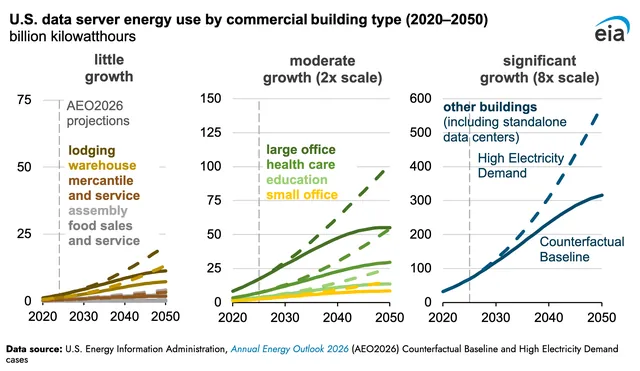
Furthermore, NLR's demand-side grid (dsgrid) team uses sector-specific energy modeling expertise to understand current and future U.S. energy demands. By leveraging advanced computing capabilities, researchers can develop more accurate models of energy systems, leading to better decision-making and policy development.
Advances in AI and high-performance computing are transforming energy research.