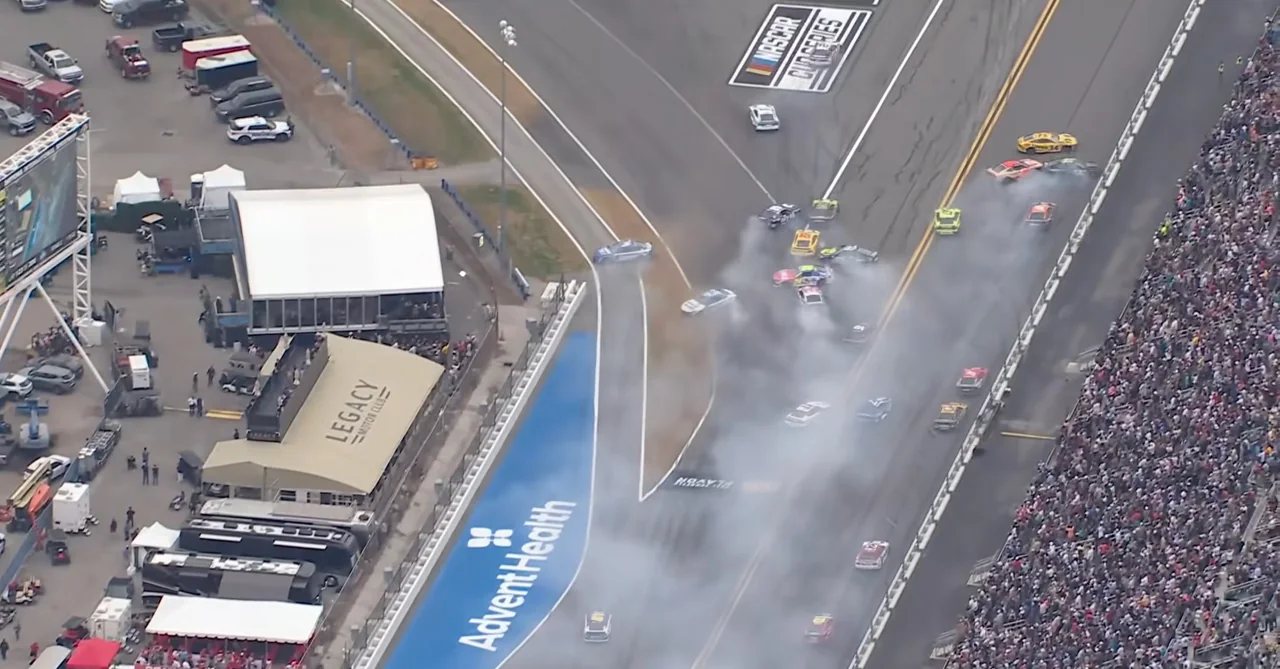
Sunday afternoon's Daytona 500 was marked by a dramatic and devastating crash involving Justin Allgaier, who had taken the lead early in the stage. The incident occurred when Denny Hamlin attempted to pass Allgaier on the top, causing both drivers to check up and collect a large portion of the lead pack. This was not an isolated incident, as a similar crash had occurred earlier in the race, resulting in six cars being involved in a multi-car pileup. The high-speed nature of NASCAR's Daytona 500 makes it prone to catastrophic crashes, highlighting the need for improved safety features.
Despite the chaos, some drivers were able to navigate the wreckage and continue racing. John Hunter Nemechek, who had led 19 laps early, was able to pull away with minimal damage and finish the stage in a respectable position. Bubba Wallace also managed to avoid the worst of the crash and took the stage victory, narrowly edging out Ryan Blaney and Joey Logano.
The Daytona 500 is one of the most prestigious events in NASCAR's Cup Series, and this year's race did not disappoint in terms of drama and excitement. However, the high-speed nature of the event also raises concerns about driver safety and the need for improved protective measures. The fact that multiple drivers were involved in a significant crash highlights the risks associated with racing at such high speeds.
Allgaier, who had been leading the stage when he crashed, was forced to retire from the race due to sustained damage. He attributed his decision to check up on Hamlin to a miscalculation, stating that he thought Hamlin would push past him on the top. However, this incident serves as a reminder of the importance of proper racing technique and situational awareness.
The stage two victory for Wallace was a welcome relief for fans who had been watching the drama unfold throughout the event. Despite the chaos, Wallace's victory was a testament to his skill and experience behind the wheel. He will now go on to lead the field into Green for the start of the final stage, where he will face off against Nemechek and other top contenders.
The Daytona 500 is often referred to as the 'Super Bowl' of NASCAR, and this year's event did not disappoint in terms of excitement and drama. However, the high-speed nature of the event also raises concerns about driver safety and the need for improved protective measures. As the sport continues to evolve, it will be interesting to see how teams and drivers adapt to new technologies and safety features.
The final stage of the Daytona 500 is sure to be a thrilling conclusion to this year's event. With Wallace leading the field into Green, fans can expect plenty of action and excitement as the top contenders battle for the win. Will Wallace be able to hold off Nemechek and other challengers, or will another driver emerge victorious?
The Daytona 500 is a true test of skill and endurance for NASCAR drivers. The high-speed nature of the event demands that drivers have quick reflexes and sharp instincts behind the wheel. As the sport continues to evolve, it will be interesting to see how teams and drivers adapt to new technologies and safety features.
Despite the drama and excitement of this year's Daytona 500, there is still much work to be done in terms of improving driver safety. The fact that multiple drivers were involved in a significant crash highlights the risks associated with racing at such high speeds. As the sport continues to evolve, it will be important for teams and manufacturers to prioritize safety features and technologies that can help reduce the risk of injury or worse.
The high-speed nature of NASCAR's Daytona 500 makes it prone to catastrophic crashes, highlighting the need for improved safety features.