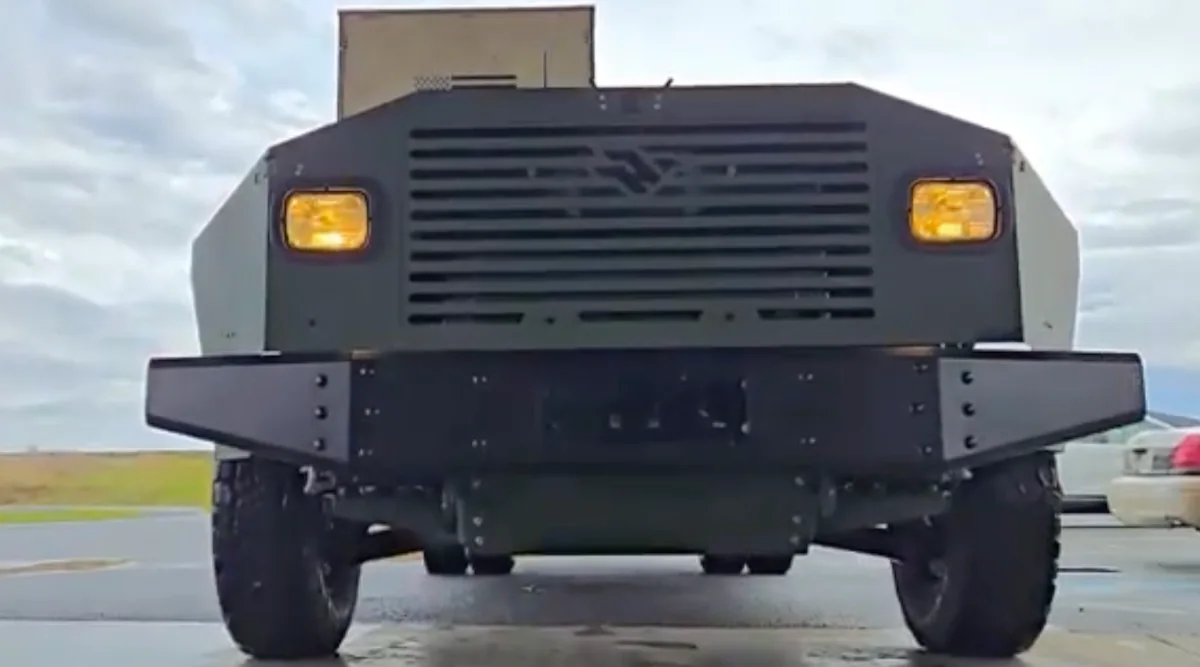
The US Army has been cautiously dipping its toes into the world of electric vehicle technology, but its efforts have been met with limited success in recent years. The momentum seemed to fizzle out entirely after federal energy policy took a sharp U-turn last year. However, it appears that the idea of pairing electric vehicles with gas-powered range extenders may still have legs.
Range extenders have become a familiar feature in the civilian electric vehicle market, allowing drivers to combine the benefits of electric drive with the security of a gasoline tank. The powertrain is electric, but the tank is used to run a generator as needed.
Automakers such as Volkswagen's Scout Motors branch have been using range extenders to attract customers who need to visit a gas station occasionally. However, critics argue that these systems add complexity and expense to vehicles, potentially raising maintenance and repair costs.
The US Army has taken a different approach to electrification, focusing on anti-idling kits that can power auxiliary systems and enable operators to shut down noisy diesel engines instead of hitting idle mode. The kits have been tested on medium-class tactical vehicles and shown promise in reducing fuel consumption by 10-20%.
In the next step up the electrification ladder, the Army is preparing to introduce integrated power kits capable of delivering high-voltage DC power. These kits will have a significant impact on logistics and the military workforce, as well as raw fuel consumption.
Maj. Gen. Michelle Donahue, commander of Combined Arms Support Command, has stated that integrated power kits could eliminate up to 12 fuel truck companies from the Army's roster. This would be a major win for sustainability initiatives and reduce the military's reliance on fossil fuels.
The US Army's growing interest in battery power is a significant development in its efforts to reduce its environmental impact. As the military continues to explore new ways to electrify its vehicles, it is likely that we will see more innovative solutions emerge in the coming years.
Considering the Army's growing interest in battery power and its potential applications, it is only one small step from integrated power kits to electric vehicles with range extenders. This could potentially mark a significant shift towards a more sustainable future for military transportation.
The trend of integrating advanced power systems into military vehicles has significant implications for logistics and the military workforce.