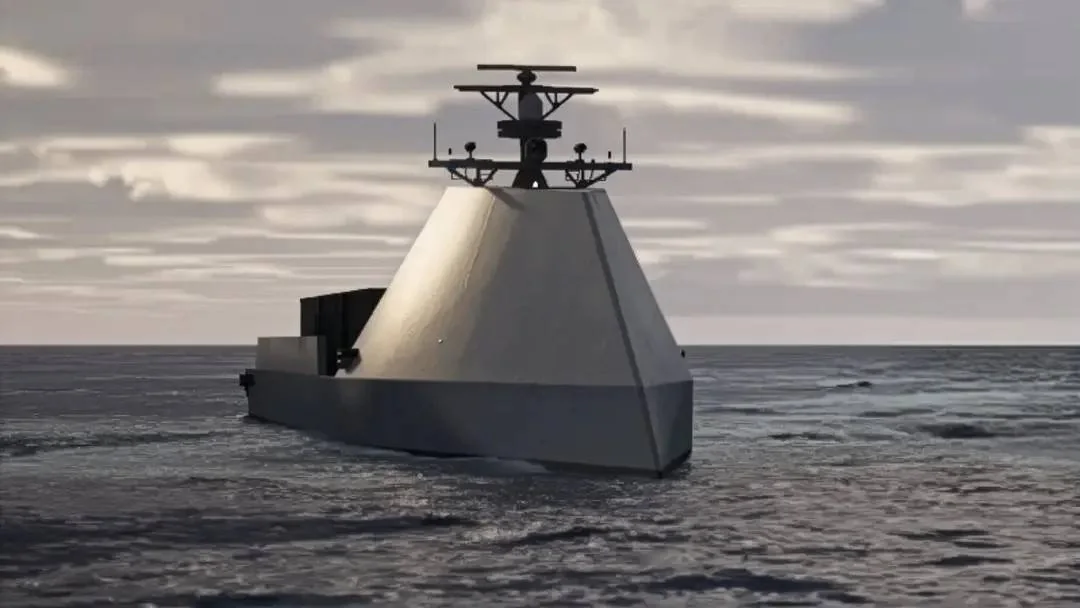
The U.S. Navy has selected HII’s ROMULUS unmanned surface vessel to advance to the at-sea testing phase of the Medium Unmanned Surface Vessel (MUSV) program. This milestone marks a significant step forward for the Navy's efforts to integrate autonomous systems into its operations.
The selection of HII's ROMULUS USV is a testament to the company's extensive experience in developing autonomous unmanned maritime systems. As a global leader in this field, HII has demonstrated its ability to deliver mission-ready autonomous capabilities that support the Navy's evolving operational requirements.
HII's Odyssey Autonomous Control Solutions (ACS) is a key differentiator of the ROMULUS USV solution. This proven autonomy software suite enables intuitive command and control of autonomous platforms and swarms across domains, enhancing fleet lethality, survivability, and operational effectiveness.
The ROMULUS family of Unmanned Surface Vessels is designed to meet the current and emerging requirements of the U.S. Navy, U.S. Marine Corps, joint forces, and allies. They deliver high-endurance, sustained open-ocean autonomy with a focus on lethality, cost, efficiency, and scalability.
The ROMULUS family of USVs will support missions including intelligence, surveillance, and reconnaissance; counter-unmanned air systems; mine countermeasures; strike; and the launch and recovery of unmanned underwater vehicles and unmanned aerial vehicles (UAV). Paired with HII's REMUS UUVs, ROMULUS extends undersea reach and supports a scalable dual-domain force package built for distributed maritime operations.
The Navy's selection of HII's ROMULUS USV represents a significant investment in the development of autonomous systems. As the Navy continues to evolve its operational requirements, the integration of autonomous systems will play an increasingly important role in supporting its mission objectives.
The use of autonomous systems in maritime operations is expected to have a significant impact on the future of naval warfare. The ability to conduct complex tasks without human intervention will enable the Navy to respond more quickly and effectively to emerging threats.
HII's ROMULUS USV is designed to operate in a variety of environments, from open ocean to coastal waters. Its high-endurance autonomy and scalability make it an attractive solution for a range of maritime applications.
The selection of HII's ROMULUS USV marks an important milestone in the development of autonomous systems for maritime operations. As the Navy continues to explore the potential of autonomous systems, this project will play a key role in shaping the future of naval warfare.
The selection of HII's ROMULUS USV demonstrates the growing importance of autonomous systems in maritime operations.