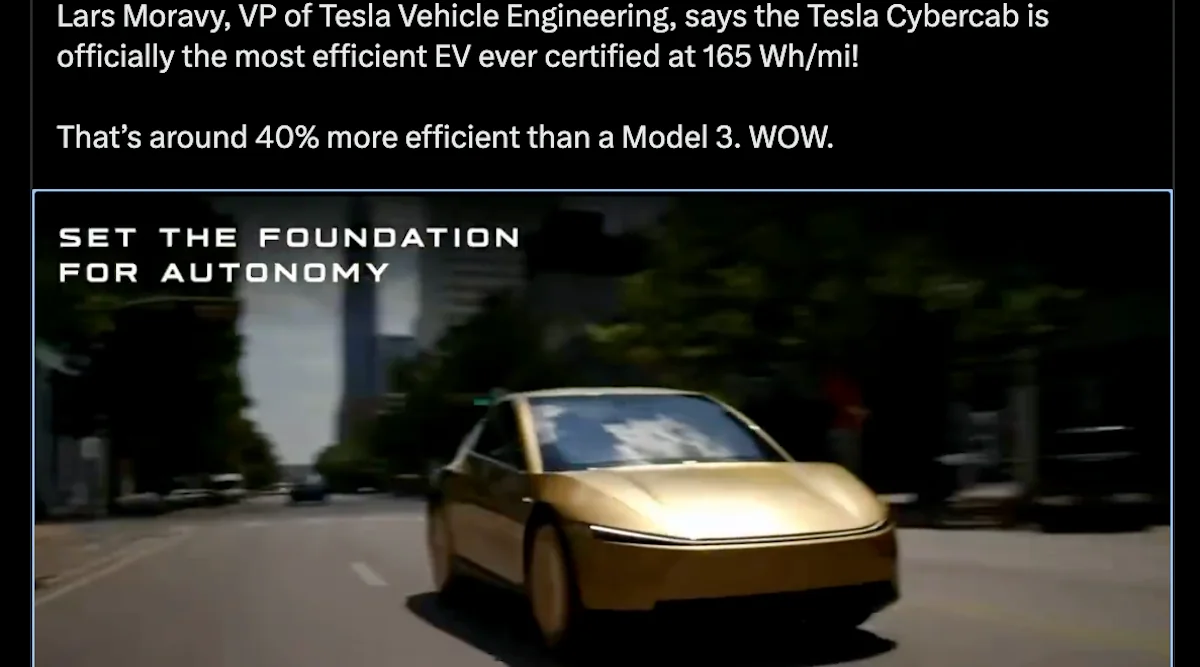
The Tesla Cybercab has achieved a remarkable efficiency rating of 165 Wh/mile, making it one of the most efficient electric vehicles on the market. This translates to an estimated running cost of just 2.6¢/mile, significantly lower than comparable models like the Lucid Air Pure, which boasts a 230 Wh/mile efficiency. The Cybercab's impressive efficiency is a testament to Tesla's innovative design and engineering efforts.
The Cybercab's small size is a key factor in its exceptional efficiency. By reducing weight through minimalistic design, Tesla has been able to achieve remarkable aerodynamic properties, further enhancing the vehicle's overall efficiency. This approach also allows for reduced production costs, making the Cybercab an attractive option for those seeking affordable electric transportation.
However, despite its impressive efficiency, the Cybercab faces significant challenges in terms of widespread adoption. Its limited capacity and lack of cargo space make it less suitable for many use cases, such as long-distance travel or heavy-duty hauling. This limitation may deter some potential customers, who prioritize these features when choosing an electric vehicle.

The Cybercab's success hinges on Tesla's ability to develop reliable Full Self Driving (FSD) capabilities. Without FSD, the vehicle's efficiency is largely moot, and its deployment in high-traffic areas or with human passengers would be impractical. As such, it remains to be seen whether Tesla can overcome these hurdles and make the Cybercab a viable option for widespread adoption.
Tesla fans often assume that the Cybercab could be deployed en masse tomorrow, but critics argue that this is overly optimistic. The lack of adequate self-driving hardware and capability would likely hinder the vehicle's adoption, at least in the short term. It will be interesting to see how Tesla addresses these concerns and whether its FSD technology can meet the necessary standards.
The Cybercab's efficiency rating raises important questions about the future of autonomous transportation. As electric vehicles continue to gain popularity, their ability to operate safely and efficiently without human intervention becomes increasingly crucial. The success of the Cybercab will depend on Tesla's ability to balance innovation with practicality and safety considerations.
Despite its limitations, the Cybercab represents an exciting step forward in the development of electric vehicles. Its unique design and efficiency capabilities make it an attractive option for those seeking a sustainable and environmentally friendly transportation solution.
The widespread adoption of autonomous electric vehicles like the Cybercab will require significant advancements in areas such as FSD technology, battery life, and charging infrastructure. As these technologies continue to evolve, we can expect to see more efficient and practical electric vehicles on the market.
Ultimately, the success or failure of the Tesla Cybercab will depend on its ability to address the challenges it poses. With its impressive efficiency rating and innovative design, the Cybercab offers a compelling vision for the future of electric transportation – but only time will tell if it can overcome its limitations.
The Cybercab's efficiency is impressive, but its limitations must be addressed.