
The European Union's car CO2 standards are set to undergo a review, with a focus on creating a mechanism for low-carbon steel credits. This could support the scale-up and commercialization of green steel projects in Europe. The automotive sector has a large demand for steel, making it an attractive market for green steel producers.
A well-designed mechanism would prioritize primary steel production, combined with post-consumer scrap, to minimize emissions. This approach would also ensure that investors and carmakers receive regulatory certainty on the definition of low-carbon steel.
T&E's main policy asks focus the mechanism on the cleanest steel pathways from 2035 onwards, rewarding only fossil-free primary steel. This would send a strong investment signal for genuinely near-zero steel production.
Defining eligible low-carbon steel strictly and quickly is crucial to giving investors and carmakers regulatory certainty. A clear methodology should be adopted by the end of 2026 to define 'low-carbon' steel, avoiding weaker or transitional pathways that could undermine investment.
The mechanism should maintain a dedicated credit mechanism for green steel only, removing competing flexibilities that would dilute demand for green steel. This approach would ensure that investors and carmakers prioritize low-carbon steel production.
Introducing a limited transition phase from 2030 would reward early movers in the green steel market. However, credits should be tied to strict conditions, such as being capped at 3% of carmakers' CO2 target from 2030-2034.
Primary steel should be prioritized, combined with post-consumer scrap, to minimize emissions and ensure that investors receive regulatory certainty. A dynamic emission baseline taking scrap content into account would reflect actual emission saving efforts in primary steel making.
Only EU-made green steel should qualify for credits, while allowing limited use of imported green iron from 2035 onwards, with a maximum of 50% of eligible steel produced from imported green HBI.
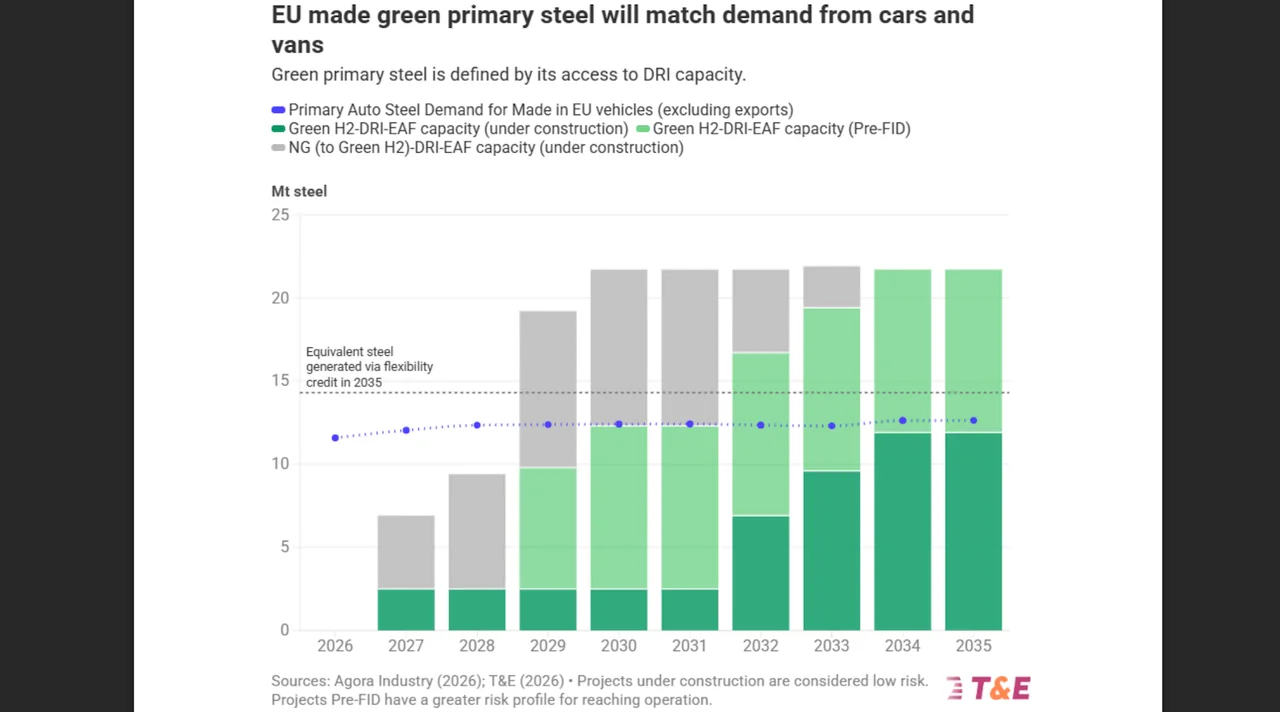
The EU's low-carbon steel credit mechanism has the potential to create a significant lead market for green steel in Europe, supporting the scale-up and commercialization of green steel projects. With already sufficient low-carbon steel available in Europe by 2030, this policy could have a positive impact on climate and industrial benefits.
The EU's low-carbon steel credit mechanism has the potential to create a significant lead market for green steel in Europe.