

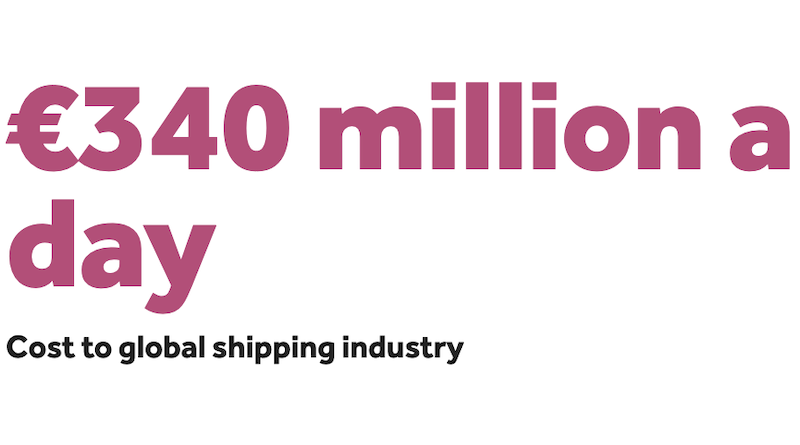
The shipping industry is facing unprecedented fuel price volatility due to the ongoing conflict in the Gulf, with marine fuel prices reaching €941 per tonne in Singapore. This represents a 223% increase since the start of 2026. As a result, shipping companies are incurring significant additional fuel costs, with over €4.6 billion incurred since February 28. The industry is directly exposed to fuel price fluctuations and supply disruptions, making it essential to explore alternative fuels and efficiency measures.
The cost gap between fossil fuels and e-fuels has narrowed significantly, with the cost of e-fuels becoming increasingly competitive. As a result, shipping companies are reassessing their fuel choices, and T&E's research shows that the cost gap has shrunk to near parity in some ports. This trend may be temporary, but it highlights the need for the industry to invest in clean fuels and energy efficiency measures.
The conflict is causing chaos in the Strait of Hormuz, which is a critical chokepoint for global maritime trade. However, its impact will be felt most on oil markets, where prices are skyrocketing. The war is also highlighting the need for greater investment in European e-fuels and energy efficiency measures to reduce the industry's exposure to fuel price shocks.
Eloi Nordé, shipping policy officer at T&E, believes that the crisis should be a catalyst for more investment in European e-fuels and greater uptake of energy efficiency measures. He notes that some governments and parts of the industry have been skeptical about the costs of green maritime measures, but these costs pale in comparison to the disruption caused by the conflict.
Unlike fossil fuels, which rely on geopolitically exposed routes, e-fuels can be produced locally, reducing exposure to external shocks and strengthening energy security. Scaling up domestic production will therefore play a crucial role in reducing the industry's reliance on fuel price volatility.
Ships that can be electrified, such as short sea cargo vessels and ferries, are the low-hanging fruit for reducing pressure on the fuel market. Eloi Nordé notes that these vessels could already be electrified at a lower cost than their fossil equivalents, which would significantly reduce fuel consumption.
In addition to electrification, efficiency measures such as slow steaming and wind-assistance can deliver huge fuel savings. T&E's analysis shows that deploying modern wind-assist technologies in the form of modern sails can cut fuel consumption for ocean-going vessels by as much as 18%. This highlights the potential for significant reductions in fuel costs through the adoption of these measures.
T&E is calling on European policymakers to accelerate investment in European e-fuels and energy efficiency measures. The organization believes that this will be crucial in reducing the industry's exposure to fuel price shocks and strengthening energy security.
The shipping industry is facing an unprecedented challenge, but it also presents an opportunity for innovation and growth. By investing in clean fuels and energy efficiency measures, the industry can reduce its reliance on fossil fuels and create a more sustainable future.
The war is costing the industry millions every day, and its impact will be felt most on oil markets.