
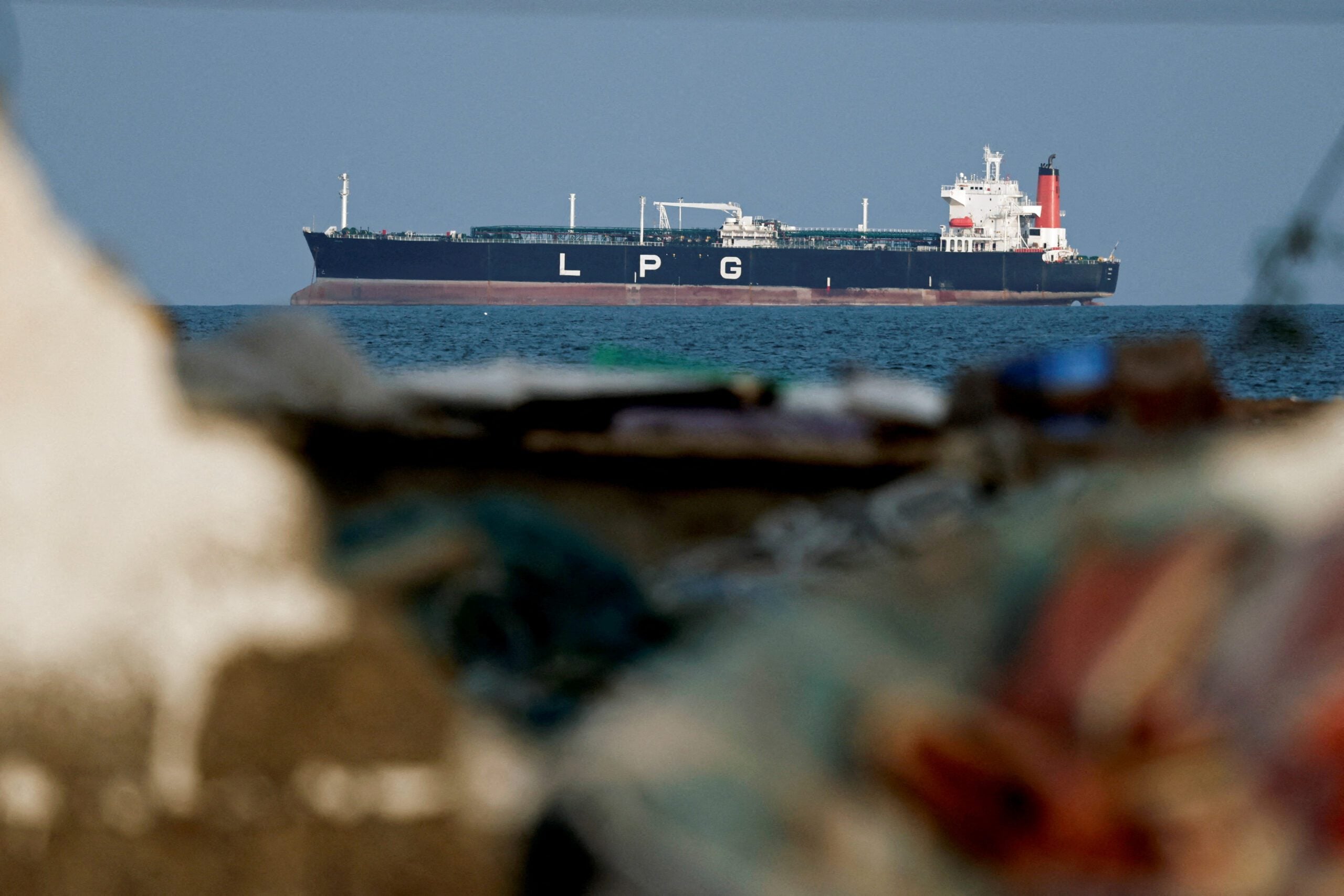
India is facing one of its worst gas crises in decades, with the government cutting supplies for industries to shield households from any shortage of cooking gas. The country consumed 33.15 million metric tons of LPG last year, with imports accounting for about 60% of demand. About 90% of those imports came from the Middle East. This reliance on foreign imports has made India vulnerable to disruptions in global supply chains.
The U.S.-Israeli war against Iran has all but halted shipping through the strait, but Iran said this week that non-hostile vessels may transit the waterway if they coordinate with Iranian authorities. The recent tanker traffic across the Strait of Hormuz signals a shift in India's efforts to secure its LPG imports amidst the ongoing tensions with Iran.
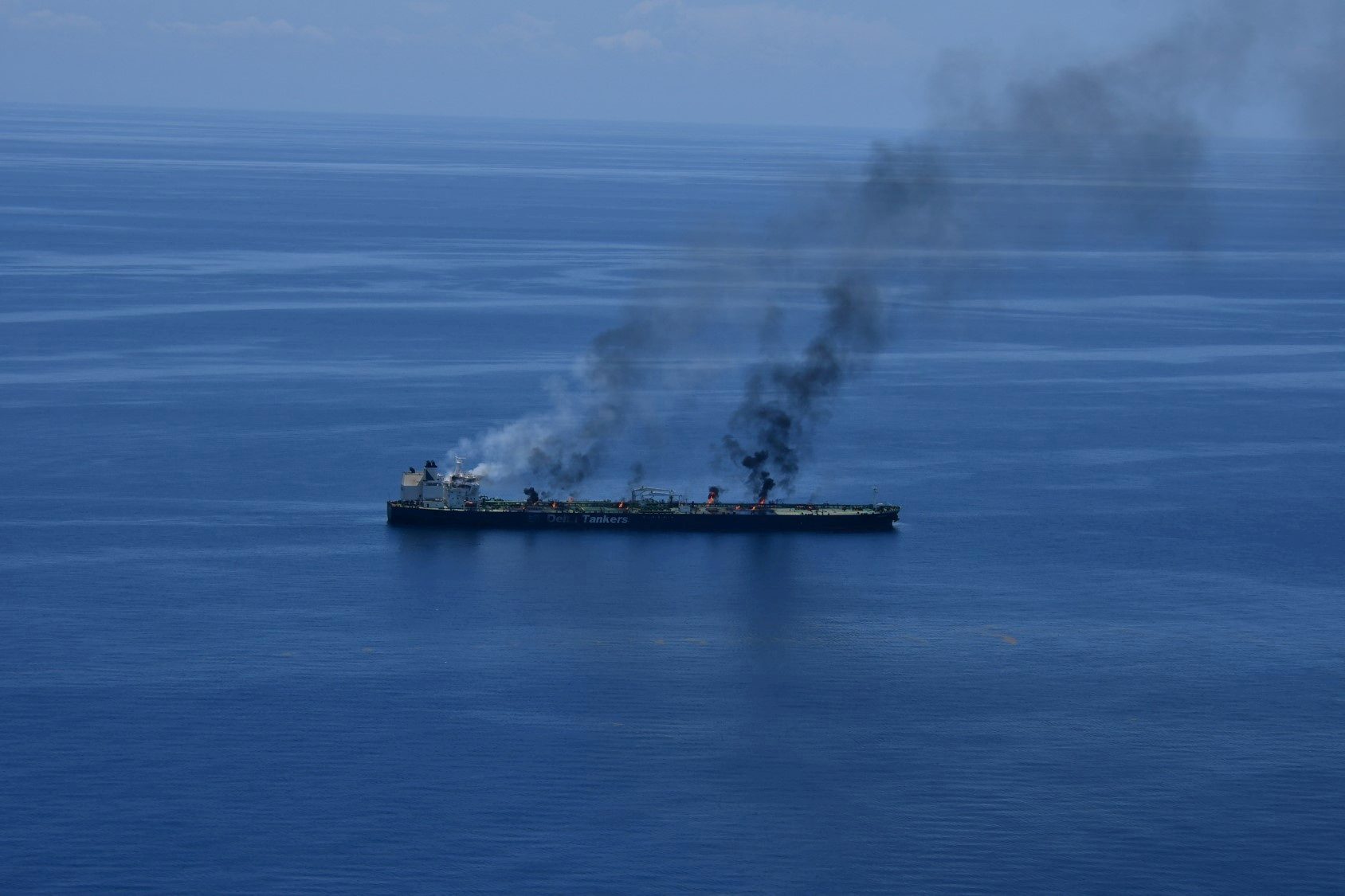
Two liquefied petroleum gas tankers, BW Elm and BW Tyr, are crossing the Strait of Hormuz bound for India, according to ship tracking data from LSEG and Kpler. The two India-flagged vessels have crossed the Gulf area and are in the eastern Strait of Hormuz, the data showed.

India is gradually moving its stranded LPG cargoes out from the strait, with four LPG tankers moved so far – Shivalik, Nanda Devi, Pine Gas, and Jag Vasant. As of Friday, 20 Indian-flagged ships including five LPG carriers were stranded in the Gulf, Rajesh Kumar Sinha, special secretary in the federal shipping ministry, said.
LPG carriers Jag Vikram, Green Asha and Green Sanvi are still in the western Strait of Hormuz, LSEG data show. Despite the ongoing tensions, India is taking steps to ensure a steady supply of LPG to its citizens.
The country's reliance on foreign imports has made it vulnerable to disruptions in global supply chains. With the U.S.-Israeli war against Iran having all but halted shipping through the strait, India needs to find alternative routes to secure its LPG imports.
India is loading LPG onto its empty vessels stranded in the Gulf. This move aims to mitigate the impact of the ongoing crisis and ensure a steady supply of cooking gas to households.
The government's decision to cut supplies for industries to shield households from any shortage of cooking gas has been met with criticism from some quarters. However, this measure is aimed at protecting the most vulnerable segments of society.
As the situation continues to unfold, India's ability to navigate the complex web of global supply chains and geopolitics will be crucial in ensuring a steady supply of LPG to its citizens.
The recent tanker traffic across the Strait of Hormuz marks an important development in India's efforts to secure its LPG imports. With tensions between Iran and the West showing no signs of easing, India needs to remain vigilant and proactive in securing its energy supplies.
The recent surge in tanker traffic across the Strait of Hormuz signals a shift in India's efforts to secure its LPG imports amidst the ongoing tensions with Iran.