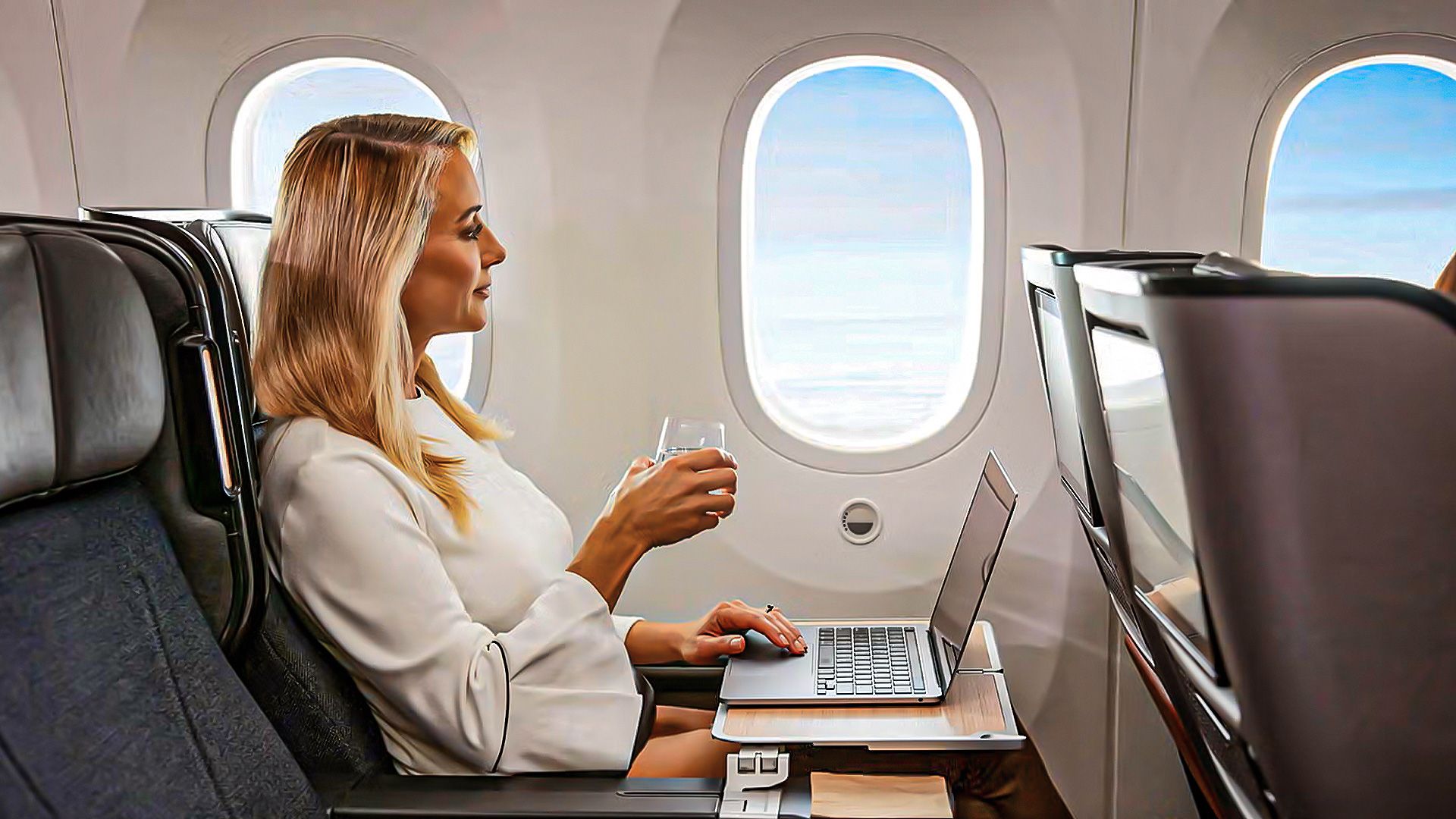
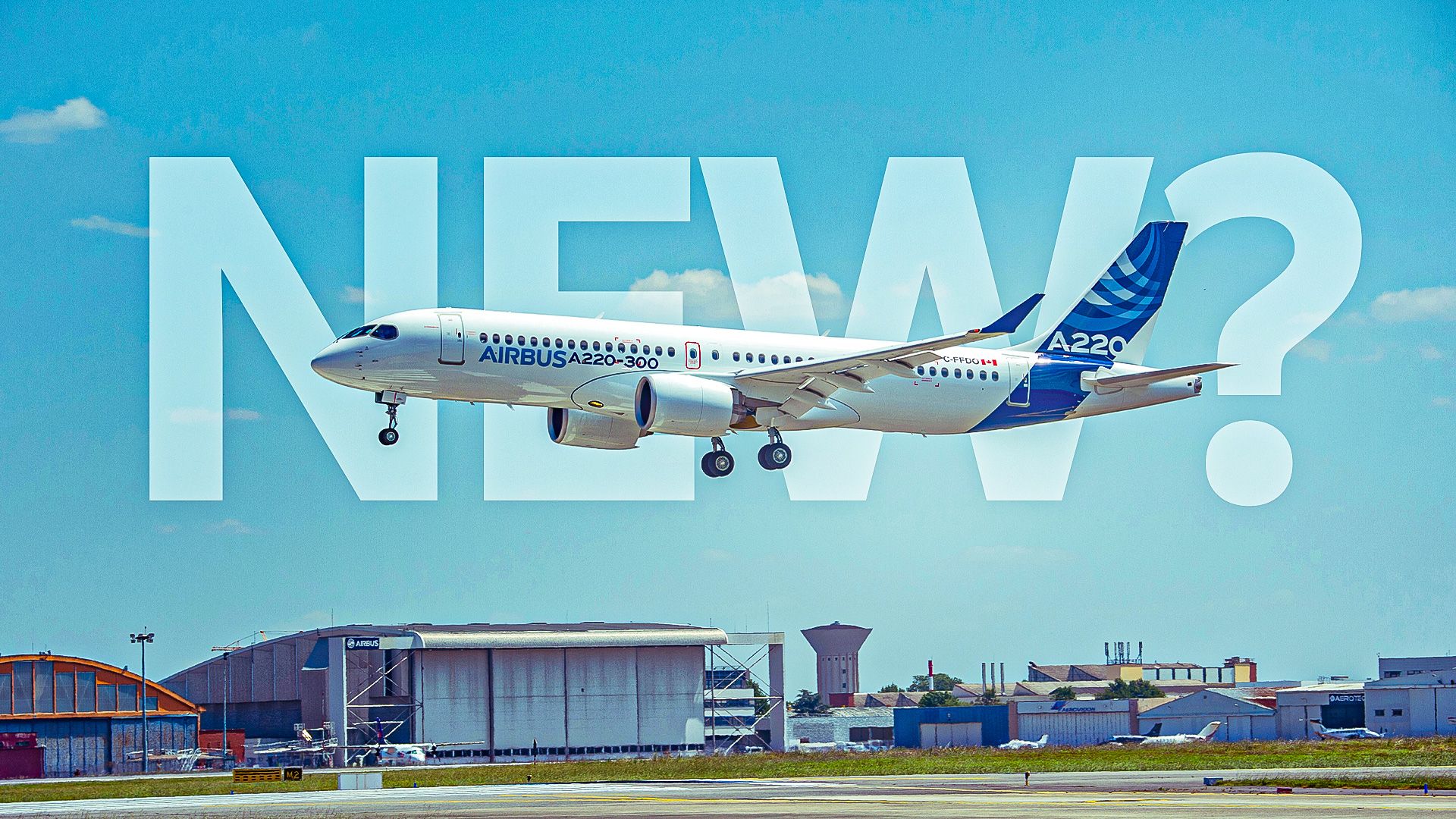
The Airbus A220, originally known as the Bombardier C Series, has been undergoing an interior upgrade with the arrival of Airspace, an award-winning design concept that focuses on delivering an exceptional passenger experience. The upgrade is expected to arrive this year, with retrofits being available in the next few years for older A220 aircraft as well. This development brings the A220 in line with other modern Airbus aircraft families, such as the A350, A330neo and A320neo, featuring lighter, larger, and simpler storage, and upgraded lighting. The Airspace upgrade is a significant step towards enhancing the passenger experience and increasing economic viability for airlines operating the A220.
The Airspace cabin aims to be a relaxing, inspiring, and beautiful space for passengers, enhancing their onboard experience. Simultaneously, it aims to increase functionality and the economic viability of the plane, which is a desirable aspect for airlines. Highly customizable under-bin lights offer airlines a flexible canvas on which to promote their brand. With 16 million LED colors, it is easy to create a comfortable ambiance for passengers throughout the day and night.
The Airspace design takes advantage of the A220's existing features, such as its large windows measuring 11 inches by 16 inches, making them larger than those found on the Boeing 777. The tapered wall around each window creates a unique aesthetic, allowing plenty of natural light to enter the cabin through one or two large windows per row.
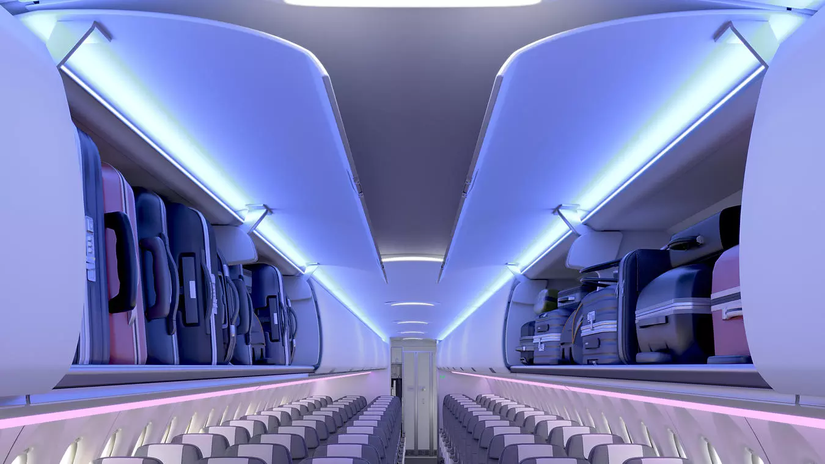
The Airspace XL bins are another key feature, offering 20% less weight and a 15% increase in bag capacity compared to the original overhead storage compartments. This not only reduces the aircraft's weight but also simplifies baggage loading and bin closing mechanisms, leading to improved turnaround times at airports.
The A220 has benefited from recent technological advancements, which have significantly increased fuel efficiency in commercial aviation. With its twinjet design, the A220 is well-positioned to capitalize on these advancements and offer airlines a more efficient and cost-effective option for short-haul and regional flights.
The introduction of the Airspace upgrade marks an important milestone for the A220, as it brings the aircraft's interior up to modern standards. This development will likely have a positive impact on airlines operating the A220, allowing them to enhance their passenger experience and increase revenue through more efficient operations.

As the A220 continues to gain traction in the commercial aviation market, it is clear that Airbus has made significant investments in its design and technology. The Airspace upgrade is a testament to this commitment, offering airlines a unique opportunity to differentiate themselves through their onboard experience.
The availability of retrofits for older A220 aircraft will also provide airlines with flexibility in terms of upgrading their fleets. This will enable them to take advantage of the benefits offered by the Airspace upgrade while minimizing costs and disruptions.
With the introduction of the 160-seat A220-300 variant expected in 2027, Airbus has further expanded its product offerings for the A220 family. This development is likely to have a significant impact on the regional and short-haul markets, offering airlines more options for efficient and cost-effective operations.
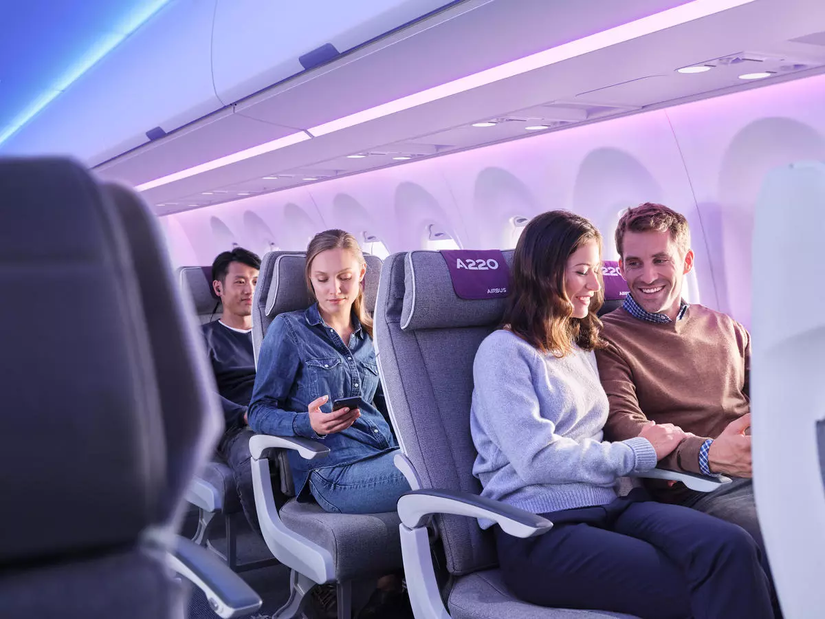
The Airspace upgrade is a significant step towards enhancing the passenger experience and increasing economic viability for airlines operating the A220.